Company Overview
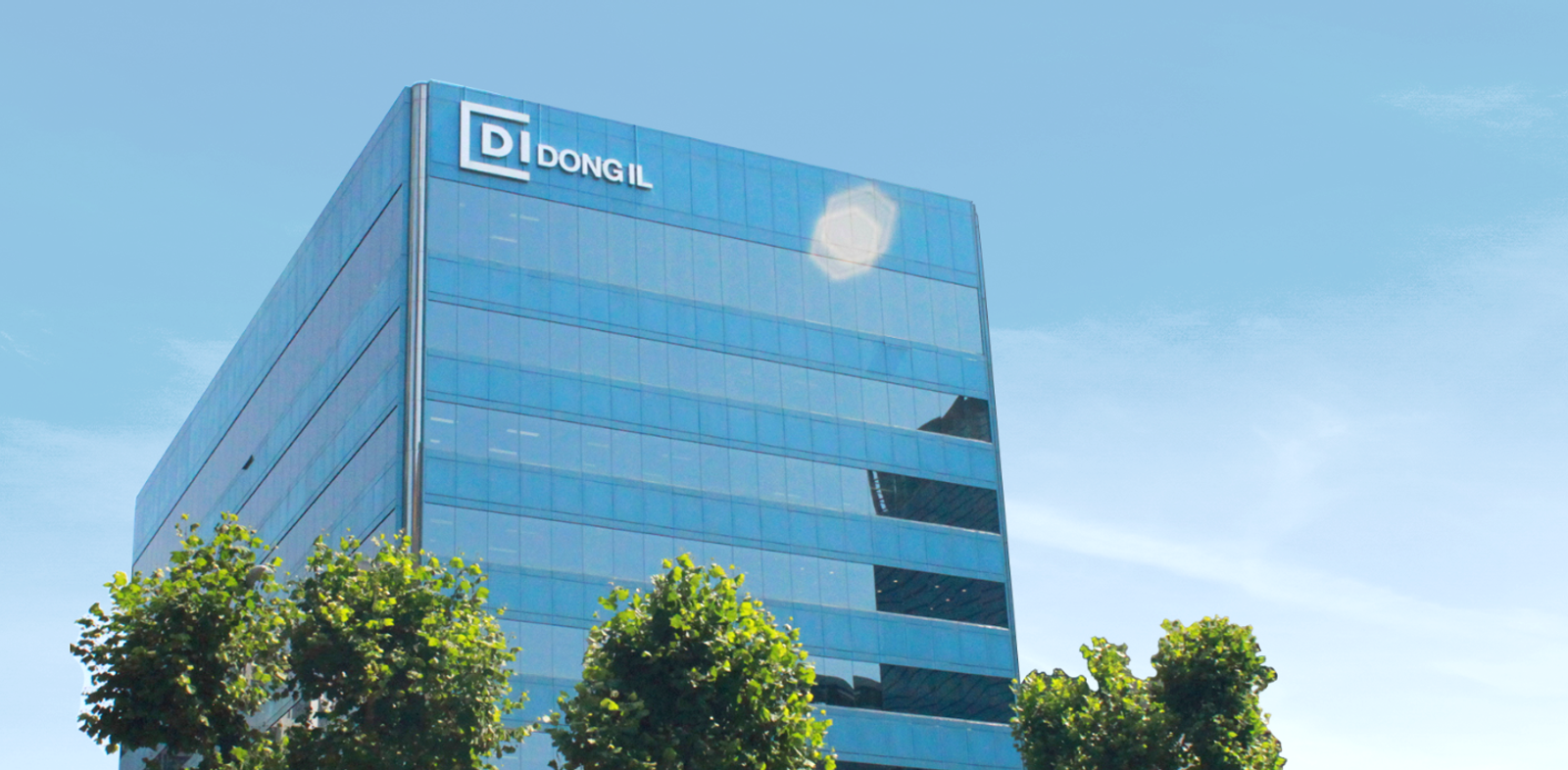
DI Dongil is one of South Korea's longest-established textile and materials companies, founded in 1954 as Dongil Spinning. It has since reinvented itself as a mid-sized industrial manufacturer focused on lightweight advanced materials, including carbon-fibre composites and aluminium products. Listed on the KOSPI — South Korea's main stock exchange — the company has spent the past decade repositioning itself as a "future materials" specialist, shedding its origins in cotton spinning and synthetic fibres.
DI Dongil has attracted considerable attention as a candidate for South Korea's "Value-Up" programme, a government-backed initiative launched in the 2020s to encourage listed companies to close the gap between their market valuations and underlying asset values. The company's case for inclusion was straightforward: its price-to-book ratio (PBR) had languished below 1.0 for years, meaning the market valued it at less than the book value of its net assets. A large stock of treasury shares and an opaque ownership structure added to investor frustration. Since 2024, DI Dongil has responded with a series of shareholder-friendly measures and governance reforms.
Business Profile
*From spinning mills to advanced materials*
DI Dongil operates across three main divisions: textiles, aluminium, and carbon-fibre composites. The textile business, once the group's core, has steadily given way to higher-margin industrial materials. Its subsidiary Dongil Aluminium produces lightweight aluminium extrusions for the automotive and aerospace industries, where demand for weight reduction is strong. The carbon-composite division, though still in an earlier stage of development, is central to the company's ambition to lead in next-generation industrial materials — a brand identity it has been actively cultivating as of 2025.
*Financial performance*
Precise quarterly figures are subject to revision, but the broad arc of recent performance is as follows. The company returned to modest recovery in 2023 after a dip in 2022 caused by rising raw material costs and weakening global demand. From 2024, profitability has been supported by operational restructuring measures running in parallel with its shareholder-return programme. The absorption of Dongil Aluminium, announced in 2025, is expected to reshape the group's consolidated financials from the point of completion.
Value-Up Milestones
*January 2024 — Controversy before the curtain rises*
DI Dongil's value-up journey began on an awkward note. In January 2024, it emerged that members of the controlling shareholder family had sold a portion of their stakes shortly before the company announced a share cancellation programme. Critics argued the timing was calculated: when treasury shares are cancelled, the remaining shareholders — including the controlling family — automatically see their proportional ownership rise. The suggestion was that the family had sold shares at prevailing prices before the cancellation inflated their remaining stake, raising questions about whether the measure was designed primarily to benefit minority shareholders or to serve succession planning within the founding family. The episode cast a shadow over subsequent announcements.
*March 2025 — A 240 billion-won cancellation and a new audit committee*
In March 2025, DI Dongil announced it would cancel treasury shares worth 240 billion won (approximately $175 million), an unusually large commitment for a mid-sized Korean manufacturer. The company described the move as part of a broader commitment to improving corporate value through operational efficiency and closer engagement with shareholders. Markets responded positively in the short term.
Simultaneously, the company established a formal audit committee to replace its previous, less rigorous oversight structure. Composed primarily of outside experts, the new committee was intended to strengthen checks on management and satisfy the governance criteria associated with the government's Value-Up programme. The dual announcement — share cancellation plus governance reform — was widely read as a package designed to signal seriousness of intent.
*May 2025 — Merging Dongil Aluminium*
On 1st May 2025, DI Dongil announced it would absorb Dongil Aluminium through a full merger. The rationale was straightforward: simplifying a layered holding structure, eliminating duplication, and capturing operational synergies to improve profit margins and capital efficiency. Markets interpreted the move as a concrete step towards structural value creation rather than mere financial engineering. Investors nonetheless kept a close eye on the merger ratio and the protections afforded to minority shareholders in the subsidiary.
*August 2025 — All treasury shares cancelled*
By August 2025, DI Dongil had completed the cancellation of its entire treasury share holding. This fulfilled the commitment made in March and removed any residual concern that shares held in treasury might eventually be reissued and dilute existing investors. The completion was broadly welcomed as a demonstration that the company's shareholder-return promises were being followed through.
*December 2025 — A 5% stock dividend*
On 19th December 2025, DI Dongil announced a stock dividend of 0.05 shares per ordinary share — equivalent to 5%. The company framed it as part of its continued commitment to rewarding shareholders. However, stock dividends increase the total number of shares in circulation without any cash leaving the company, making them a less potent form of shareholder return than cash dividends. Some investors noted an apparent tension: having spent months cancelling shares to reduce the float, the company was now issuing new ones. The policy logic was not immediately obvious to all observers.
Assessment
By the standards of mid-sized Korean manufacturers, DI Dongil's value-up efforts have been notable in both scale and speed. The combination of a large-scale treasury share cancellation, governance reform, structural simplification through merger, and the introduction of a dividend policy represents a more comprehensive package than most peers have attempted. Completing the cancellation — rather than simply holding treasury shares indefinitely — was particularly well received, as it represents an irreversible commitment that directly benefits existing investors.
Yet the ultimate verdict will depend on what follows. Several challenges remain. First, the Dongil Aluminium merger must be concluded on terms that are demonstrably fair to minority shareholders, and the promised synergies must materialise in the income statement. Second, a durable re-rating above a PBR of 1.0 requires genuine improvement in profitability, not merely financial restructuring — and that, in turn, depends on the carbon-composite and aluminium businesses delivering meaningful earnings growth. Third, the 5% stock dividend needs to be clarified: is it a one-off measure or the foundation of a lasting dividend policy? Investors will want to see cash dividends alongside, or instead of, further stock issuances.
Controversies and Limitations
*The succession question*
The most corrosive concern hanging over DI Dongil's value-up narrative is the January 2024 episode involving the controlling family's share sales. Whether the timing was coincidental or deliberate, it created an impression that the founding family may have used the cancellation programme to serve their own interests first. That suspicion, once planted, has coloured the market's reading of every subsequent announcement.
*A re-rating that did not fully materialise*
Reports from December 2025 suggest that, despite the series of announcements, DI Dongil's share price had not been re-rated to the degree investors had hoped. Some in the market described the outcome as a disappointment — a case of being "let down by the value-up programme." Macro headwinds, sector-wide pressure on industrial manufacturers, and broader scepticism about the government's Value-Up initiative all played a role. But the shortfall also reflects a market view that financial measures alone cannot substitute for organic earnings improvement.
*The stock dividend paradox*
The December stock dividend is, at best, an ambiguous signal. Unlike a cash dividend, it costs the company nothing in liquidity terms; it simply creates new shares. Following a period during which DI Dongil went to considerable lengths to shrink its share count, issuing new stock — even at a modest 5% rate — risks undermining the narrative of disciplined capital management.
*Structural headwinds*
Beneath the announcements lies a harder problem. DI Dongil competes in industries — textiles, aluminium, industrial composites — where margins are structurally thin and competition, particularly from lower-cost Asian rivals, is intense. The carbon-composite business carries significant upfront investment requirements and has yet to generate scale earnings. Without a convincing improvement in the underlying business, no amount of financial engineering will sustain a lasting re-rating. As analysts have repeatedly noted, value-up measures are a necessary condition for closing the discount to book value, but they are not sufficient.
Key Data Summary
Period | Treasury Share Action | Dividend Policy | PBR Level | Governance Event
2023 | — | Small cash dividend | Below 1.0x | —
2024 | Cancellation announced (family sell-down controversy) | Cash dividend maintained | Below 1.0x | Value-Up discussion begins
Mar 2025 | 240bn won cancellation announced | — | Below 1.0x | Audit committee established
May 2025 | — | — | — | Dongil Aluminium merger announced
Aug 2025 | All treasury shares cancelled | — | — | "Shareholder-friendly company" declared
Dec 2025 | — | 5% stock dividend per ordinary share | — | Shareholder return policy reinforced