Company Overview
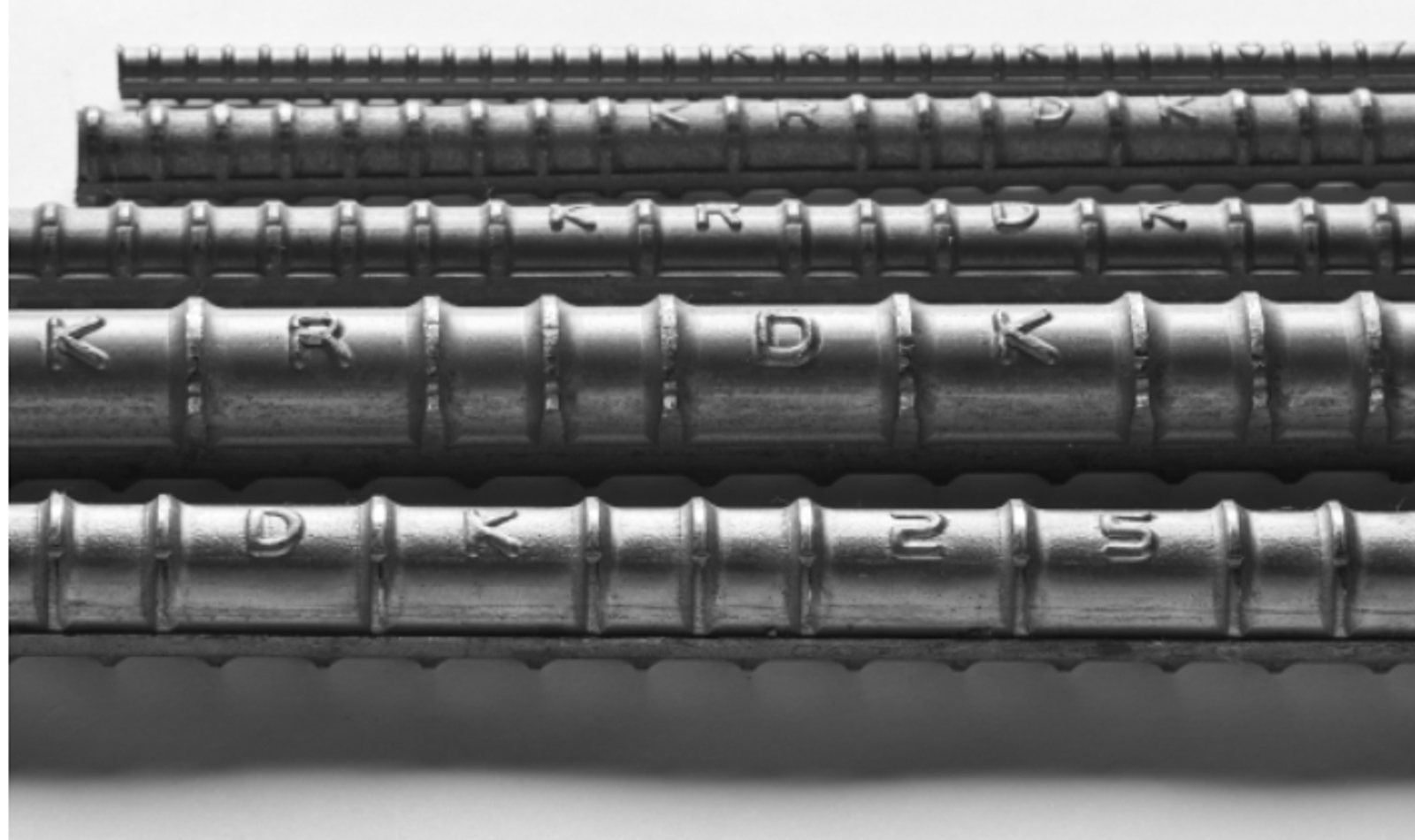
Founded in 1954, Dongguk Steel is one of South Korea's established steel specialists, producing a broad range of products including hot-rolled and cold-rolled coil, heavy plate, and structural steel sections. The group operates through a holding-company structure, with Dongguk Holdings at the apex and operating subsidiaries — Dongguk Steel and Dongguk CM — beneath it.
The company has long been cited as a textbook example of the "Korea discount": the persistent tendency of South Korean stocks to trade well below their intrinsic worth. Its price-to-book ratio (PBR) has languished between 0.2 and 0.3 times for years, a level that signals deep investor scepticism.
When South Korean financial regulators launched a corporate "value-up" initiative in 2023 — a programme designed to prod listed companies into improving capital efficiency and shareholder returns — Dongguk Holdings and Dongguk Steel moved to address the discount through expanded payouts and governance reform. The group has gone so far as to declare publicly that dividends should exceed the interest rate on bank deposits, signalling a genuine shift in internal thinking about shareholder obligations. Heavy borrowings and the inherent earnings volatility of the steel industry, however, remain formidable structural obstacles.
Business Foundation and Financial Performance
*The nature of the steel business*
Dongguk Holdings manages its steel subsidiaries in a sector where fortunes are tightly bound to South Korea's construction cycle and global shipbuilding activity. Raw-material costs — primarily steel scrap and semi-finished slabs — are highly volatile, and the persistent undercutting of prices by Chinese producers puts constant pressure on margins. Beyond its steel core, the group is reported to be exploring new ventures in artificial-intelligence data-centre infrastructure.
*Financial results by year*
Year | Dongguk Holdings Operating Profit | Change year-on-year | Key factors
2022 | ~₩58bn (est.) | — | Post-boom earnings contraction begins
2023 | ~₩58bn (est.) | Flat | Slowing Chinese demand; falling steel prices
2024 | ₩39.5bn | ▼ ~32% | Construction slump; rising input costs
In 2024, Dongguk Holdings reported operating profit of ₩39.5bn (roughly $29m), a fall of approximately 32% from the previous year. Weakening demand for structural steel sections — driven by South Korea's housing and construction downturn — combined with persistent cost pressures to deliver the sharp decline. Despite the deteriorating results, management maintained its commitment to shareholder returns, a stance that markets interpreted as a moderately encouraging signal.
Key Value-Up Milestones
*August 2025 — A public pledge: dividends must beat bank deposit rates*
At a public forum called "Value-Up 5000" in August 2025, a senior Dongguk Steel group representative declared that shareholder dividends should, at a minimum, exceed the prevailing bank deposit rate. With South Korean deposit rates running at roughly 3% at the time, the statement effectively set a floor for the group's dividend yield target. The announcement attracted considerable attention from retail shareholders and institutional investors alike, as it framed shareholder returns not as a discretionary gesture but as a binding management principle.
*February 2026 — Dongguk Holdings cancels entire treasury-share holding*
In February 2026, Dongguk Holdings announced it would cancel its entire treasury-share position, equivalent to 2.2% of shares outstanding. Treasury-share cancellation — as distinct from merely holding or selling buyback shares — permanently reduces the share count and enhances per-share value, with no risk that the shares will later be re-issued in ways that dilute existing investors. The market responded positively. Alongside the cancellation, the company announced a capital restructuring combining a free-of-charge capital reduction (known in Korea as a "bonus capital reduction") with a share split. The capital reduction was designed to improve the balance-sheet structure; the share split aimed to lower the per-share price and so broaden access for smaller investors. Together, the measures were seen as a comprehensive prescription for breaking out of the group's persistent undervaluation.
*April 2026 — First formal corporate-value enhancement plan published*
In April 2026, Dongguk Steel filed its first official corporate-value enhancement disclosure under the regulatory value-up framework, placing shareholder value at the centre of the document. The plan set out specific targets and timetables, covering sustained and increased dividend payments, more efficient capital allocation, and a road map for restoring profitability.
*June 2026 — Dongguk Holdings ring-fences ₩581.1bn for dividends*
In June 2026, Dongguk Holdings announced it had secured ₩581.1bn (approximately $425m) as a dedicated dividend reserve, funded through the capital restructuring measures — including the bonus capital reduction — executed earlier in the year. The disclosure formally put a figure on the company's capacity to pay, signalling that the group intends to sustain shareholder returns irrespective of short-term swings in operating performance.
Challenges and Assessment
*Outstanding structural challenges*
For Dongguk Holdings and Dongguk Steel to sustain their value-up momentum, three structural problems require resolution.
The first is debt. Carrying a heavy debt load while committing to generous dividends raises legitimate questions about financial sustainability. Servicing interest costs and funding distributions simultaneously demands reliable and substantial free cash flow — something steel companies, with their large capital expenditure requirements and working-capital needs, cannot always guarantee.
The second is the industry cycle. A 32% drop in operating profit in a single year illustrates the earnings volatility inherent in steel. Chinese overcapacity and a prolonged domestic construction slump are not problems that resolve quickly. If earnings continue to deteriorate, even a ₩581.1bn dividend reserve offers no long-term guarantee.
The third is diversification. The group's stated ambitions in AI data-centre infrastructure remain unproven. Whether a steel specialist can build a meaningful revenue stream in that space has yet to be demonstrated.
*Overall assessment*
Within South Korea's steel sector, Dongguk Holdings and Dongguk Steel stand out as relatively proactive practitioners of the value-up approach. The cancellation of all treasury shares, the capital restructuring, and the public identification of a ₩581.1bn dividend reserve collectively suggest the group has moved beyond rhetoric into execution. Nevertheless, few analysts expect the extreme valuation discount — a PBR of around 0.2 times — to close quickly. The structural characteristics of the steel industry, its earnings volatility, and the debt overhang combine to cap how far shareholder-return initiatives alone can lift the stock.
Controversies and Limitations
*Can high dividends coexist with heavy debt?*
Reporting in January 2026 highlighted the central tension in Dongguk Steel's value-up story: the conflict between the will to pay high dividends — partly to defend against a PBR of 0.2 times — and the interest burden generated by substantial borrowings. Steel companies typically face large capital expenditure demands and high working-capital requirements, leaving limited free cash flow. Promising shareholders a specific return while managing significant debt creates a financial tightrope, and concerns persist that the commitment could, over the medium term, weaken the balance sheet.
*Is the capital restructuring more form than substance?*
A bonus capital reduction combined with a share split are standard tools of capital-structure management, but critics note that they do not, in themselves, alter the underlying value of the enterprise. The treasury-share cancellation sends a positive signal, yet at 2.2% of total shares, the scale is modest; any share-price boost may prove short-lived. The question of whether the shareholder-return programme has sufficient scale to produce a durable re-rating remains open.
*Value-up without earnings recovery has structural limits*
Ultimately, investors price companies on the prospect of sustained earnings growth. Dividends and buybacks are supporting tools, not substitutes. As long as steel-industry conditions remain depressed, even an energetic shareholder-return programme faces a ceiling. The 32% fall in operating profit recorded in 2024 is the most pointed piece of evidence for this view.
Key Figures at a Glance
Period | Operating Profit (Dongguk Holdings) | Dividend-related | Treasury Shares | PBR
2024 | ₩39.5bn (▼32%) | High-dividend policy maintained | — | ~0.2×
2025 | — | Target: yield above deposit rate declared | — | ~0.2×
Feb 2026 | — | — | Full 2.2% holding cancelled | —
Apr 2026 | — | Corporate-value plan published | — | —
Jun 2026 | — | ₩581.1bn dividend reserve secured | — | —