Company Overview
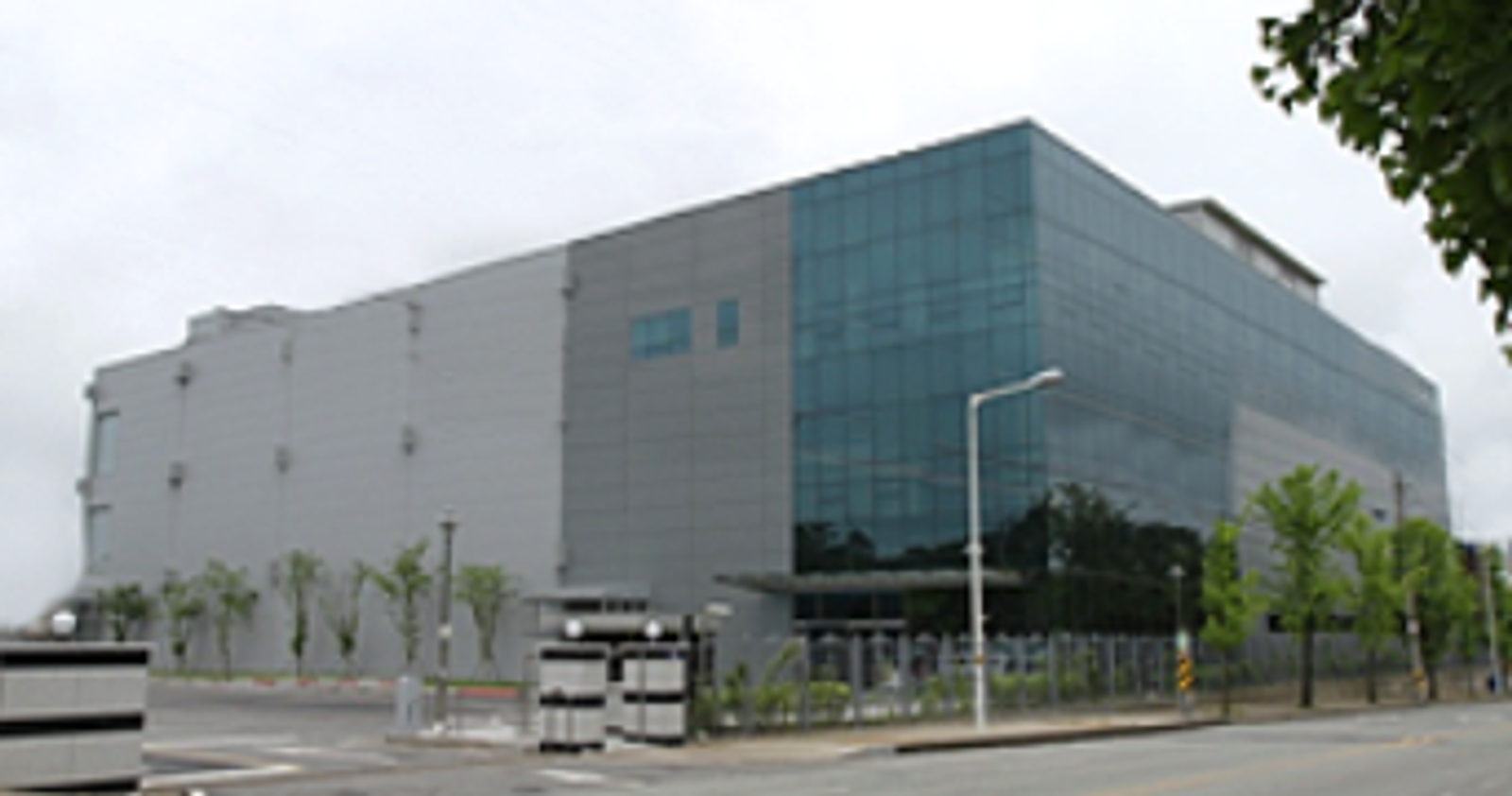
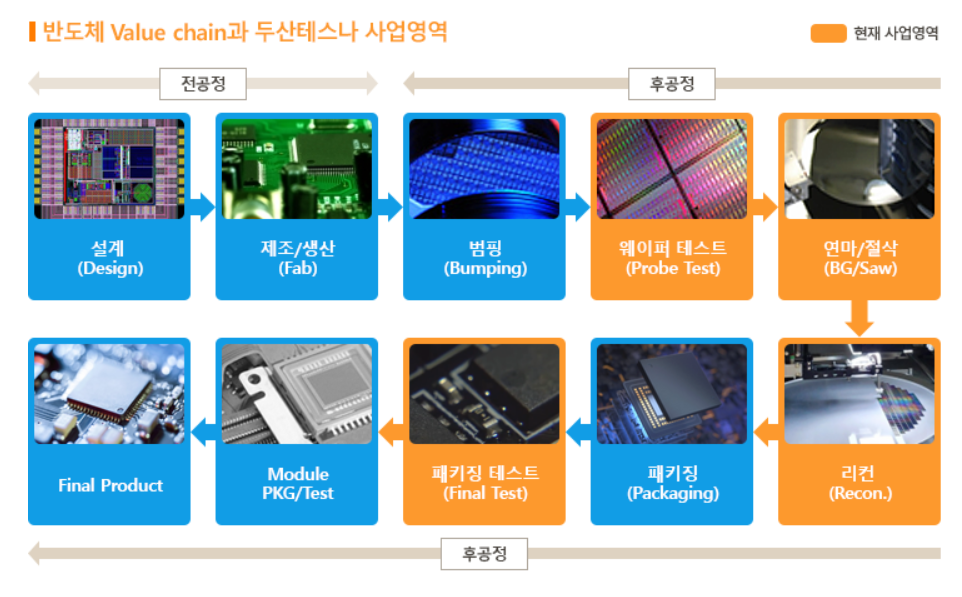
Doosan Tesna is a specialist semiconductor testing company within the Doosan Group, one of South Korea's large family-controlled conglomerates (chaebol). Listed on the KOSDAQ, South Korea's technology-focused exchange, it occupies a significant position in the outsourced semiconductor assembly and test (OSAT) industry, focusing primarily on wafer-level and final package testing.
Samsung Electronics is its dominant customer, which means Doosan Tesna's financial performance is tightly coupled to Samsung's foundry and memory production volumes. This dual identity—subsidiary of a major conglomerate operating in a structurally growing industry—has made it a perennial focus of institutional and foreign investors.
When the Korea Exchange launched the "Korea Value-up Index" in the second half of 2024, Doosan Tesna was included in the inaugural constituent list, having been assessed on shareholder return policies, corporate governance, and profitability metrics. Yet it was subsequently dropped during the index's first regular rebalancing in the second half of 2025, prompting a sharp reassessment of the company's fundamentals. Doosan Tesna now finds itself navigating the overlapping pressures of the semiconductor industry cycle and lingering governance concerns—experiencing both the benefits and the burdens of South Korea's value-up policy drive.
Business and Financial Performance
Business Structure and Market Position
Doosan Tesna's core operations comprise wafer testing and final (package) testing. Its customer base is heavily concentrated on Samsung Electronics, so Samsung's order flow and capital expenditure plans are direct determinants of Doosan Tesna's results. In July 2025, for instance, news of a Samsung order caused Doosan Tesna's shares—along with those of peer firm Nepes Arc—to rally sharply. This dependence on a single blue-chip customer is simultaneously the company's greatest source of earnings stability and its most significant vulnerability.
The broader semiconductor back-end testing market benefits from powerful structural growth drivers: surging demand for artificial intelligence chips, high-bandwidth memory (HBM), and on-device AI applications. Doosan Tesna is widely regarded as a direct beneficiary of these trends, and it featured prominently on multiple brokerage "best pick" lists for 2026.
Financial Performance
The table below summarises key financial metrics, based on publicly available information and industry estimates.
Year | Revenue (bn KRW) | Operating Profit (bn KRW) | Operating Margin (%) | Notes
2021 | ~230 | ~43 | ~18.7% | Beneficiary of semiconductor super-cycle 2022 | ~260 | ~48 | ~18.5% | Rising test demand from Samsung Electronics 2023 | ~210 | ~28 | ~13.3% | Impact of semiconductor down-cycle 2024 | ~250 | ~39 | ~15.6% | Industry recovery; AI demand contribution 2025 | ~280 | ~45 | ~16.1% | Strong Samsung Electronics order momentum
The cyclicality of the semiconductor industry is clearly reflected in these figures. Operating profit fell sharply during the 2023 downturn before recovering through 2024 and 2025 on the back of growing AI chip demand.
*Note: Figures are denominated in billions of Korean won (approximately USD 1 = KRW 1,370).*
Value-Up Milestones
Second Half 2024 — Inclusion in the Korea Value-Up Index: A Catalyst for Shareholder Return Reform
The Korea Exchange's launch of the Korea Value-Up Index in 2024 was modelled on Japan's Tokyo Stock Exchange campaign to improve listed companies' capital efficiency and investor returns. Doosan Tesna's selection as a founding constituent prompted it to formalise its shareholder return commitments and develop a concrete plan for enhancing corporate value. Inclusion in the index served as a catalyst for institutional inflows, and the stock responded positively.
June 2025 — Removal from the Value-Up Index: Market Disappointment
The decision to drop Doosan Tesna from the index at its first regular review in June 2025 had an impact well beyond a routine index rebalancing. Several brokerages downgraded the stock, with some issuing outright sell recommendations. Because index inclusion had underpinned a valuation premium, removal triggered a fundamental reassessment. Analysts cited below-par shareholder return metrics and deteriorating profitability indicators as the principal reasons for the exclusion.
October 2025 — Management Reshuffle
Doosan Tesna carried out a senior management reorganisation in October 2025. The changes were interpreted as an effort to sharpen the company's semiconductor business competitiveness and strengthen internal governance. The timing coincided with growing visibility around the fifth-generation succession process within the broader Doosan Group, suggesting that group-wide strategic realignment was beginning to filter through to the subsidiary.
April 2026 — Corporate Value Enhancement Plan: A Public Recommitment
In April 2026, Doosan Tesna published a formal "2026 Corporate Value Enhancement Plan," in line with South Korean financial regulators' push for listed companies to make voluntary value-up disclosures. The plan is reported to include specific shareholder return targets, capital efficiency improvement measures, dividend growth, treasury share policies, and medium-to-long-term profitability goals. Markets have broadly interpreted the disclosure as an active effort to rebuild investor confidence following the index exclusion.
May 2026 — Return to Brokerage Favour
By May 2026, Doosan Tesna was reappearing on brokerage research lists as a stock poised for re-rating, alongside companies such as HL Mando and Samsung SDS. Analysts pointed to recovering AI semiconductor demand and renewed Samsung Electronics order momentum as the twin drivers of restored investment appeal.
Challenges and Assessment
Key Challenges
The most pressing task facing Doosan Tesna is achieving a genuine, measurable improvement in shareholder return metrics—the prerequisite for rejoining the Korea Value-Up Index. The company has long been criticised for a dividend yield and payout ratio that trail sector peers. Declarations of intent are no longer sufficient; the company must now demonstrate execution.
Customer concentration is equally critical. Doosan Tesna's fortunes remain hostage to shifts in Samsung Electronics' foundry competitiveness and capital expenditure decisions. Reducing dependence on a single customer through diversification is straightforward in principle but difficult in practice given the depth of the Samsung relationship.
The trajectory of Doosan Group's succession process adds a further layer of uncertainty. Reports that Park Sang-su, a member of the controlling family, has pivoted from the semiconductor business to the group's Bobcat (construction equipment) division have fuelled speculation that the group's strategic commitment to semiconductors may be waning—with potential consequences for the resources and autonomy Doosan Tesna can expect.
Overall Assessment
Doosan Tesna possesses clear technical capabilities and a credible market position in the high-value-added back-end testing segment. Its initial enthusiasm for the value-up programme and the formal plan published in 2026 deserve credit.
However, market scepticism lingers as to whether tangible metrics have improved sufficiently since the index exclusion. The crucial test will be whether the April 2026 plan is backed by hard numbers and binding timetables, or amounts to little more than aspirational language. Whether Doosan Tesna can harness the powerful AI semiconductor demand cycle to simultaneously improve profitability and shareholder returns will determine whether its value-up ambitions succeed or stall.
Controversies and Structural Constraints
The Fallout from Index Exclusion
The June 2025 index removal was more than a passive adjustment. In a market where value-up index-linked exchange-traded funds funnel institutional money into constituent stocks, exclusion represents a direct and immediate withdrawal of demand-side support. The wave of sell recommendations that followed was a natural consequence. Doosan Tesna has become something of a cautionary case study in how quickly index-driven valuation premiums can reverse.
Group Governance Uncertainty
The Doosan Group succession process is a source of persistent uncertainty for Doosan Tesna investors. As resource allocation and strategic priorities are recalibrated across the group's subsidiaries, it is unclear how much capital and managerial attention will flow to the semiconductor testing business. The reported shift of the fifth-generation heir apparent away from semiconductors towards Bobcat has been read by some market participants as a signal that the semiconductor unit may slip down the group's list of priorities.
Short-Selling Pressure
Doosan Tesna appeared among the most heavily short-sold stocks on the KOSDAQ in April 2026, a recurring pattern that reflects ongoing concerns about earnings volatility and valuation. Sustained short interest dilutes the impact of long-term value-creation messaging and contributes to elevated share-price volatility.
The Structural Limits of Shareholder Returns
Perhaps the most fundamental constraint is structural. Semiconductor testing is a capital-intensive business: equipment must be continuously refreshed to keep pace with advances in chip design and process technology. The resulting capital expenditure demands compress free cash flow, making it genuinely difficult to expand dividends and buy back shares simultaneously. This is not a problem unique to Doosan Tesna; it is an industry-wide dilemma shared by all pure-play test and packaging specialists. Meeting the Korea Value-Up Index's return criteria while funding the investment required to stay competitive is a harder balancing act than the company's public commitments might suggest.
Key Metrics Summary
Year | Operating Profit (bn KRW) | Dividend (KRW/share) | Treasury Shares | PBR (x) | Value-Up Index Status
2021 | ~43 | Unconfirmed | N/A | — | N/A (pre-launch) 2022 | ~48 | Unconfirmed | N/A | — | N/A (pre-launch) 2023 | ~28 | Unconfirmed | N/A | — | N/A (pre-launch) 2024 | ~39 | Unconfirmed | Unconfirmed | — | Included 2025 | ~45 | Unconfirmed | Unconfirmed | — | Excluded (June 2025) 2026 | Under estimation | Unconfirmed | Value enhancement plan published | — | Pursuing re-inclusion
Key Highlights: - 2024: Founding constituent of the Korea Value-Up Index; value enhancement momentum established - June 2025: Dropped at first regular index rebalancing; multiple brokerage downgrades follow - April 2026: Formal corporate value enhancement plan disclosed; commitment to re-rating reaffirmed - 2026 AI semiconductor tailwind: Earnings recovery expected via Samsung Electronics order linkage; returns to brokerage "best pick" lists