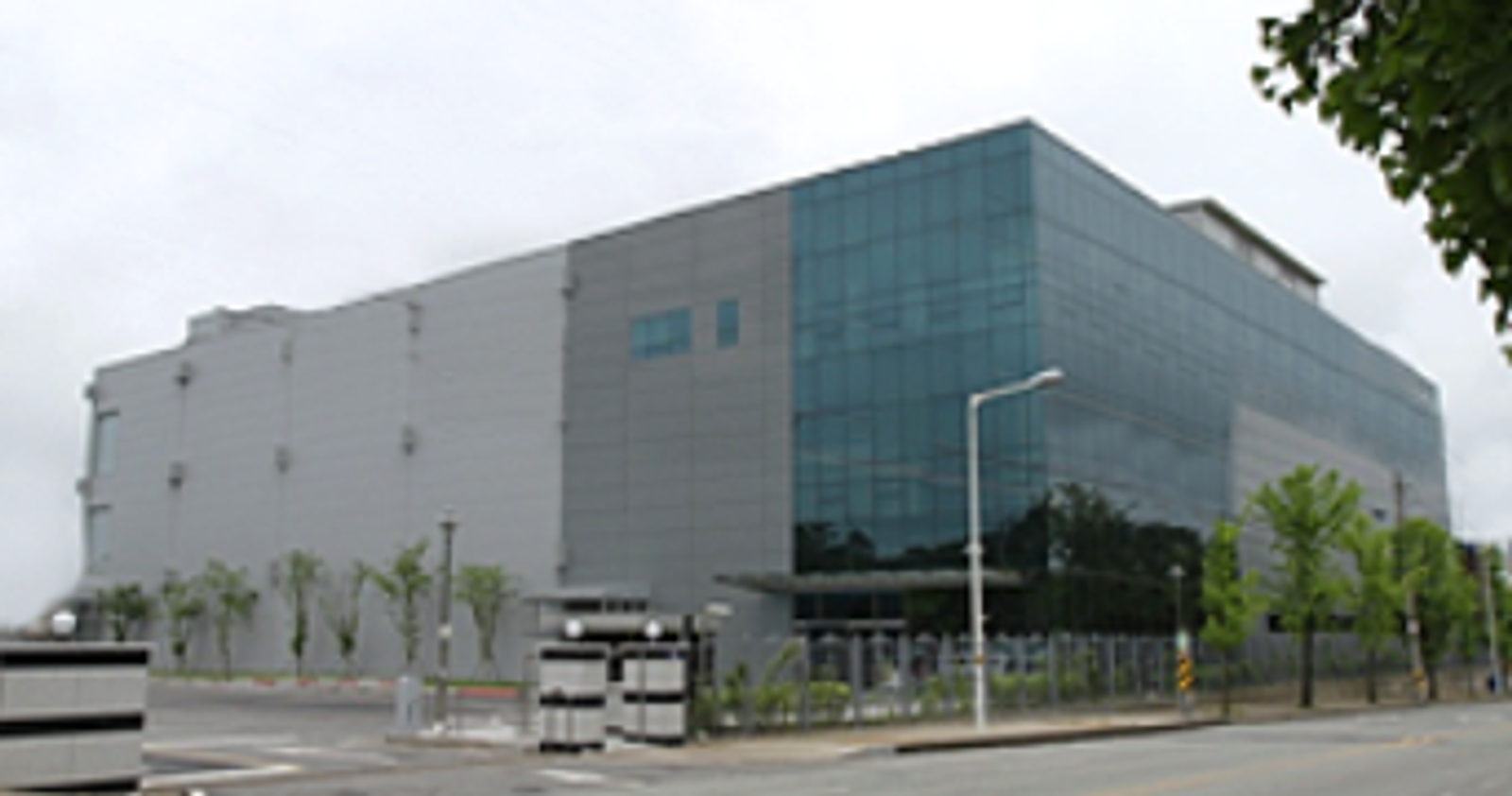
iM Securities initiated coverage of Doosan Tesna (KOSPI: 131970) on the 6th, arguing that a sweeping round of equipment investment this year sets the stage for record financial results in 2027.
The brokerage's research team forecast revenues of 493.2 billion won and operating profit of 104.6 billion won for 2027, implying an operating margin of 21.2%. That would surpass by roughly 56% the 67.2 billion won operating profit the company posted in 2022—its previous all-time high.
Founded in 2002, Doosan Tesna specialises in back-end testing services for system semiconductors—the final-stage quality and performance checks that chips must pass before shipment. Its revenue mix in the first half of this year comprised wafer testing (91.7%), package testing (7.2%), and display-driver testing (1.1%). Key product categories include system-on-chip (SoC), CMOS image sensors (CIS), microcontroller units (MCU), and smart-card integrated circuits.
A near-400 billion won equipment build-out
The central pillar of iM Securities' bull case is an extraordinary concentration of capital expenditure. Last October, Doosan Tesna agreed to acquire 171.4 billion won worth of semiconductor test equipment from suppliers including Advantest, Intera, and Semes. In April this year the company raised that commitment to 205.3 billion won, then separately agreed to purchase a further 190.9 billion won of test equipment from Teradyne and Semes. Combined, the two tranches amount to nearly 400 billion won in equipment spending compressed into a short period.
According to iM Securities, the first tranche is earmarked for wafer and package testing of Nvidia's Groq 3 LPU (Language Processing Unit), a chip manufactured by Samsung Foundry on its 4-nanometre process. Testing operations are expected to begin in November this year, with a meaningful revenue contribution anticipated from 2027 onwards.
The second tranche will be deployed for CIS testing on behalf of Apple, with production scheduled to commence in the second quarter of 2027—another key driver of top-line growth that year.
On top of these two anchors, iM Securities believes Doosan Tesna is well placed to win orders for Tesla's AI5 chip, expected to enter mass production in the second half of 2027. The company already conducts testing for Tesla's current AI4 chip, giving it a competitive advantage in securing the follow-on contract.
The brokerage also cited potential spillover benefits from an upturn in Samsung Foundry's order book. As Samsung wins more chip fabrication contracts, demand for back-end testing services rises in tandem—and Doosan Tesna, as an established partner, is positioned to capture that incremental work.
Paju to Pyeongtaek: building for the longer term
Beyond the immediate equipment purchases, the company is investing 230.3 billion won in a second factory in Pyeongtaek, due for completion in November 2027. The new facility will expand wafer-testing capacity and lay the groundwork for a more substantial package-testing business. With both wafer and package testing under one roof, management hopes to offer customers integrated, turnkey testing contracts—a model that tends to command higher pricing and larger order volumes.
A hole in the near-term numbers
The near-term picture is less flattering. After revenues rose from 338.7 billion won in 2023 to 363.7 billion won in 2024, they fell 16.5% to 303.9 billion won in 2025. Operating profit, which peaked at 67.2 billion won in 2022, deteriorated steadily before tipping into a loss of 900 million won last year. iM Securities projects a return to profitability in 2026, with revenues of 333.5 billion won and operating profit of 33.8 billion won, though both metrics remain well below their historical peaks.
The risks are considerable
Investors should scrutinise the assumptions underpinning the recovery scenario. The 2027 earnings target requires several external variables to align: Samsung Foundry must execute the Nvidia Groq 3 LPU production ramp on schedule; Apple must follow through on its CIS supply-chain plans; and Tesla must hit its AI5 mass-production timeline. Samsung Foundry, in particular, continues to struggle to close the yield and customer-acquisition gap with TSMC. Should its order intake grow more slowly than expected, the downstream benefit to Doosan Tesna would be correspondingly delayed.
The share price already reflects considerable optimism. At 107,800 won as of 2nd October 2026—2.6 times the 52-week low of 40,950 won—the stock has delivered an absolute return of 137.8% over the past twelve months. With elevated expectations already baked in, investors face meaningful volatility risk if the earnings recovery materialises later or more gradually than the base case assumes. Notably, iM Securities itself issued the report with a "Not Rated" designation, offering no formal price target.