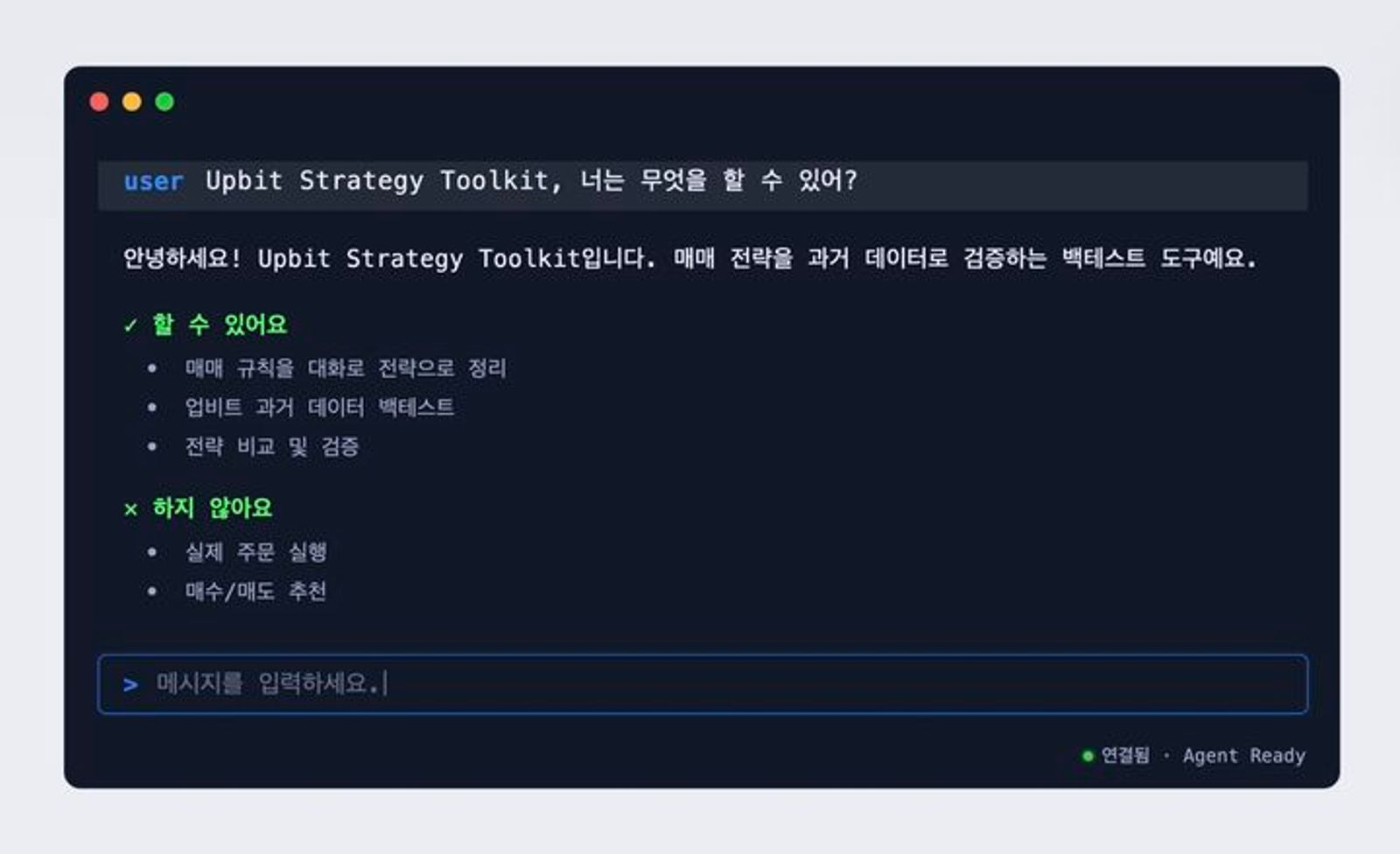
Dunamu, the operator of Upbit — South Korea's dominant cryptocurrency exchange — has unveiled a tool called the Upbit Strategy Toolkit, marking a significant shift in how domestic crypto platforms compete. Rather than simply matching buyers and sellers, Dunamu is positioning itself as the infrastructure layer for investor decision-making.
What the toolkit does
At its core, the Upbit Strategy Toolkit is a backtesting engine. It takes a trading strategy defined by the user, applies it to historical market data using AI algorithms, and produces key performance metrics: returns, maximum drawdown (MDD), and win rates. Until now, such capabilities were largely the preserve of quantitative traders and algorithmic developers with specialist skills. Dunamu is attempting to democratise that access.
The tool goes further than simple data retrieval. It is reported to include an AI-driven optimisation function that analyses a user's strategy parameters and suggests improvements — making it an interactive platform that nudges investors towards better-constructed strategies rather than merely displaying past results. The ambition, in short, is to wean retail investors off instinct and onto evidence.
A global trend, with a local gap
Dunamu's move sits squarely within a broader wave of AI integration across global financial platforms. Coinbase has already launched AI-powered portfolio analysis tools; Binance has opened algorithmic trading bots to ordinary users. In traditional finance, BlackRock's Aladdin platform has become the standard-bearer for AI-driven risk analysis, demonstrating how investment decision-making can be systematised at scale.
In South Korea, securities brokerages have experimented with robo-advisory services, but nothing comparable has existed for the cryptocurrency market specifically — a market characterised by round-the-clock trading, extreme volatility, and an expansive altcoin ecosystem. The Upbit Strategy Toolkit is a direct attempt to fill that void.
Promise and peril
Reaction from the market is divided. Proponents argue the tool could meaningfully narrow the information gap between institutional and retail participants — a disparity that has long drawn criticism in crypto markets. Consumer protection specialists suggest that strategy-verification tools could carry an educational benefit: by forcing investors to confront risk metrics explicitly, they may curb impulsive trading.
The sceptics are equally vocal. Backtesting on historical data is no guarantee of future performance — a caveat so familiar in quantitative finance that it has become a cliché. The risk of overfitting is particularly acute: a strategy can be calibrated to fit past data beautifully while performing poorly in live markets. There is also a behavioural concern. Some investors may treat a favourable AI-generated result as a green light for larger, bolder positions — the opposite of the cautious outcome the tool is meant to encourage.
Crypto market analysts warn that if the toolkit comes to be seen as a seal of approval for any given strategy, disputes over platform liability could multiply. They are pressing Dunamu to build robust risk disclosures into the product from the outset.
Regulation as context
Dunamu's timing is not coincidental. Since South Korea's Act on Protection of Virtual Asset Users came into force in 2024, exchanges have faced significantly strengthened obligations towards their customers. At the same time, the old revenue model — collecting transaction fees and little else — is under strain. Offering value-added services has become strategically necessary.
With financial regulators deepening their engagement with crypto market oversight, getting ahead of investor-protection requirements carries its own strategic logic. For Dunamu, launching a tool of this kind is also a signal: that it is a responsible actor capable of navigating an increasingly regulated environment, not merely a speculative marketplace.
The company faces a dual challenge — defending its position as Korea's number-one exchange while building the kind of capabilities that can compete globally. AI-powered investment tools serve both objectives: they showcase technical credibility and, by deepening user engagement, create meaningful switching costs.
The test ahead
Experts caution that the toolkit's success will depend as much on investor education and transparent risk communication as on the underlying technology. Three requirements stand out: algorithmic transparency, so users understand how AI recommendations are generated; clear disclosure of the gap between simulated and live-market results; and safeguards to prevent unsophisticated investors from misusing the tool.
Crypto assets are moving steadily into the mainstream of regulated finance. AI-driven investment infrastructure could accelerate that maturation. But no algorithm, however refined, can relieve investors of the ultimate responsibility for their own decisions. Whether Dunamu's new toolkit genuinely serves its users — or merely flatters them with the illusion of rigour — is a question the market is only beginning to answer.