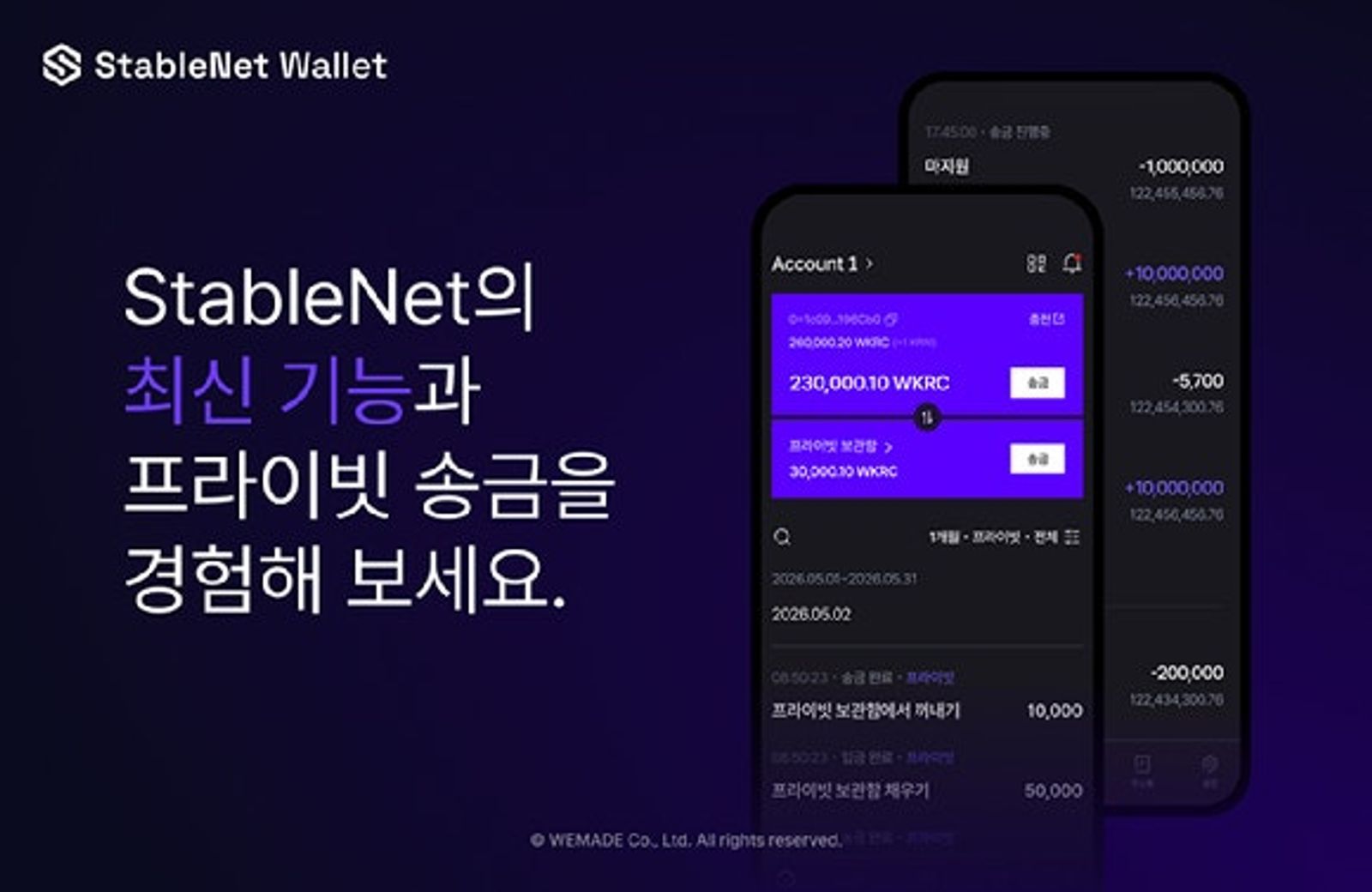
Wemade, one of South Korea's prominent gaming companies, launched version 2 of its StableNet Wallet on 15th July 2026, marking its most serious push yet into the fiercely competitive market for Web3 digital wallets. The upgrade, built on the company's proprietary public blockchain platform WEMIX 3.0, is being read by industry observers as a strategic move to broaden the WEMIX ecosystem and accelerate its global reach — rather than a routine product refresh.
What has changed in StableNet Wallet V2
StableNet Wallet is Wemade's native digital asset wallet, designed to serve as the primary gateway into the WEMIX 3.0 blockchain ecosystem. Version 2 brings a comprehensive redesign of the user interface and experience, enhanced management of assets across multiple blockchains, deeper integration with decentralised finance (DeFi) services, and an upgraded security architecture.
Perhaps the most consequential change is a simplified onboarding process aimed squarely at users with no prior experience of cryptocurrency. One of the most persistent barriers to mainstream adoption of Web3 wallets has been the management of seed phrases — the strings of words that serve as master keys to a wallet — which can be irretrievably lost. The new version addresses this by offering social login-based account recovery, a significant concession to usability over cryptographic purism.
A crowded and fast-growing market
The global Web3 wallet market is already dominated by well-entrenched players. MetaMask, Trust Wallet, and Phantom collectively command hundreds of millions of registered users. According to Allied Market Research, the global cryptocurrency wallet market was valued at roughly $10.2 billion in 2023 and is projected to grow at a compound annual rate of 24.4%, reaching approximately $77.6 billion by 2032.
For StableNet Wallet to carve out a meaningful position in this landscape, analysts say Wemade must strike a delicate balance: deepening the loyalty of users already within the WEMIX ecosystem while simultaneously opening the wallet to holders of assets on other blockchains. "The advantage of a native-chain wallet is that it reduces friction costs within its own ecosystem," said one blockchain industry insider. "But ultimately, how much external liquidity and how many outside users it can absorb will determine whether it survives over the long term."
Strategic context: rebuilding an ecosystem — and a reputation
Wemade launched the WEMIX token in 2021 and has since built a blockchain ecosystem centred on play-to-earn (P2E) gaming, in which players can earn tradeable digital assets through gameplay. The journey has not been smooth. In late 2022, WEMIX was forcibly delisted from major South Korean cryptocurrency exchanges after regulators and exchange operators concluded that the circulating supply of tokens had been misrepresented — a damaging episode that badly eroded investor confidence. The token was subsequently relisted, but restoring trust has remained an overriding preoccupation.
Viewed through this lens, StableNet Wallet V2 is as much an act of institutional repair as a product launch. The wallet sits at the centre of a constellation of WEMIX services that Wemade has been steadily assembling: the DeFi platform KLEVA, an NFT marketplace, and the WEMIX$ stablecoin. As the entry point and data hub for all of these services, the wallet occupies a position of outsized strategic importance. It is also notable that the ecosystem expansion strategy initiated under former chief executive Chang Hyun-guk appears to be continuing uninterrupted under the current management.
Lessons from abroad: when gaming companies build blockchains
Wemade is not the first gaming company to attempt this. Sky Mavis, the developer behind the play-to-earn phenomenon Axie Infinity, built the Ronin Network and an accompanying wallet, at one point recording 2.8 million daily active users. In 2022, however, the project suffered a hack that resulted in losses of $625 million, demonstrating that a wallet's security vulnerabilities can become an existential threat to an entire ecosystem.
Immutable, by contrast, took a different path with its Passport wallet, pivoting towards a business-to-business model tailored to game developers. By 2024, it had secured partnerships with more than 300 game studios. The common thread among the more successful gaming-native wallets has been a simultaneous focus on two things: robust security and the aggressive expansion of partnerships.
Risks: security, regulation, and lingering scepticism
The optimistic case for StableNet Wallet V2 is not without its counterarguments. According to the blockchain security firm CertiK's annual report, hacks and fraud in the Web3 sector cost approximately $1.8 billion in 2023 alone, with attacks targeting wallet vulnerabilities on the rise. The period immediately following a major new software release is typically when undiscovered security flaws are most likely to be exploited.
The regulatory environment adds further complexity. South Korea's Act on the Protection of Virtual Asset Users, which came into force in July 2024, is gradually being extended beyond exchanges to encompass wallet service providers. Internationally, the European Union's Markets in Crypto-Assets (MiCA) regulation is now fully in effect, and the United States is actively debating stablecoin legislation. Each of these developments represents a regulatory hurdle that Wemade must clear as it pursues international markets.
Outlook
The fate of StableNet Wallet V2 is inseparable from the broader trajectory of the WEMIX ecosystem. No matter how polished the technology, a wallet is only as compelling as the services and assets available within it. Without a vibrant and growing ecosystem to inhabit, even a well-designed wallet will struggle to retain users.
The reverse is also true. If V2 integrates seamlessly with WEMIX's gaming, DeFi, and NFT services and delivers a meaningfully better user experience, it could demonstrate that a Korean technology company is capable of building a self-sustaining blockchain ecosystem competitive on a global scale. Whether Wemade can shake off the shadow of its past credibility crisis and use StableNet Wallet V2 to open a genuine gateway to mainstream Web3 adoption is now one of the more closely watched questions in the Korean technology industry.