Company Overview
Hana Micron (KOSDAQ: 067310) is a specialist in outsourced semiconductor assembly and test (OSAT) — the back-end stage of chip manufacturing that encompasses packaging and testing. Founded in 1997, the company has grown by serving South Korea's semiconductor giants, Samsung Electronics and SK Hynix, and has established itself as one of the most prominent OSAT players on the KOSDAQ, the country's technology-focused stock exchange.
Two forces have propelled Hana Micron into the centre of South Korea's corporate-governance debate. The first is a compelling business opportunity: surging demand for advanced packaging technology driven by the artificial intelligence boom. The second is more contentious: a governance dispute that erupted as the founding family sought to pass control to the second generation. From mid-2025, the company pursued a sweeping restructuring — converting to a holding-company structure through a spin-off — framing it alongside an ambitious vision to break into the global top five OSAT providers. But a shareholder revolt by retail investors forced a rethink, making shareholder returns and governance reform the defining tests of the company's credibility.
Business and Financial Performance
*Technology and capabilities*
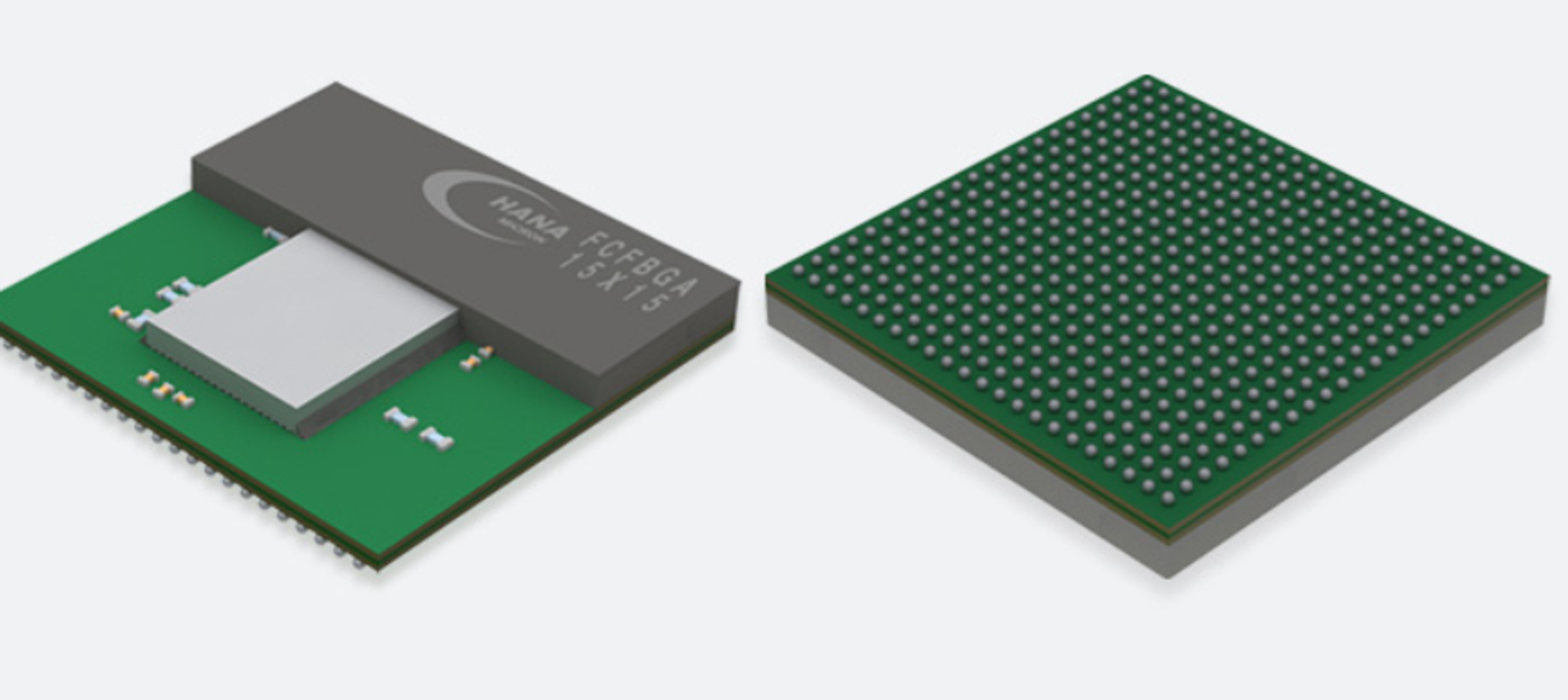
Hana Micron's core competitive strength lies in its accumulated expertise in semiconductor packaging and testing. The company began with memory module assembly and burn-in testing — a process that weeds out early chip failures — and has since broadened its portfolio into high-bandwidth memory (HBM) packaging, wafer-level packaging (WLP), and advanced heterogeneous integration, which combines different types of chips into a single package. In June 2026, the company received a best-paper award at ECTC 2025 (Electronic Components and Technology Conference), one of the semiconductor industry's most prestigious academic forums, providing independent validation of its technical credentials.
Capital investment has kept pace. Reports from early 2026 indicate that Hana Micron has been expanding its manufacturing capacity to absorb rising volumes of outsourced work — a trend driven by booming demand for AI accelerators and high-performance computing chips, which is pushing chipmakers to rely more heavily on third-party assemblers.
*Financial performance*
Hana Micron was caught in the semiconductor industry's prolonged downcycle through 2024, but has since entered a recovery phase powered by AI-related demand. In March 2026, the company confirmed that consolidated revenues had surpassed 1.5 trillion won (approximately $1.1bn).
Year | Estimated Revenue | Estimated Operating Profit | Key Developments
2022 | ~900bn won | Profitable | Memory cycle peak
2023 | Declining | Margins deteriorating | Semiconductor downcycle
2024 | Recovering | Gradual improvement | AI demand recovery anticipated
2025 | Estimated >1 trillion won | Improving | Holding-company restructuring launched
2026 | >1.5 trillion won | Further improvement expected | Capacity expansion; ECTC award
*Figures are estimates based on published reports; some remain unconfirmed.*
Value-up Milestones
*July 2025 — Growth strategy and global ambitions announced*
In July 2025, Hana Micron made a formal presentation to investors laying out its strategy to enter the global OSAT top five. The plan detailed expanded technology investment and a more sophisticated business structure, and reportedly included concrete shareholder-return commitments — dividend increases and treasury-share policies — aligned with South Korea's broader regulatory push to close the so-called "Korea Discount," the persistent gap between Korean stocks and their international peers.
*July 2025 — Holding-company conversion and spin-off announced*
In the same month, Hana Micron announced plans to convert to a holding-company structure by spinning off its OSAT and materials-components-equipment businesses into separate listed entities through a proportional spin-off (known locally as an "in-kind division"), in which existing shareholders receive shares in both the new entities. The company argued this would sharpen operational focus and unlock value. The market, however, was sceptical. The restructuring was widely seen as a vehicle for the founder's son to consolidate control — what analysts described as the first piece of a "succession puzzle." Retail investors braced for a fight.
*July 2025 — Retail investors block the spin-off*
By late July, the spin-off had been derailed. Retail shareholders — colloquially known as "ants" in Korean market parlance — voted against the proposal in sufficient numbers to block it. Their objection was straightforward: the restructuring appeared designed to entrench the controlling family's grip and ease the transfer of power to the next generation at the expense of ordinary shareholders. The episode became a landmark case in South Korea's nascent shareholder-activism movement, and brought Hana Micron's governance shortcomings into sharp relief.
*March 2026 — Revenue milestone and renewed shareholder-return pledge*
In March 2026, alongside confirming the 1.5-trillion-won revenue milestone, Hana Micron reiterated its commitment to stronger shareholder returns, with policy designed to deliver higher dividends as profitability improves. Market analysts flagged the company's shareholder-return trajectory and governance evolution as key investment considerations.
*April 2026 — Capacity expansion to capture outsourcing surge*
Reporting in April 2026 confirmed that Hana Micron was actively expanding production infrastructure to meet a surge in outsourced packaging orders, particularly for AI server chips. This capacity build-out is regarded as the material foundation for a sustained step-change in revenue.
*June 2026 — ECTC 2025 best-paper award*
The ECTC award in June 2026 provided external recognition of Hana Micron's advanced packaging capabilities on the global stage, lending technical credibility to the company's stated ambition of reaching the OSAT top five.
Challenges and Assessment
*Key challenges ahead*
The most pressing task facing Hana Micron is restoring market confidence in its governance. The failed spin-off of 2025 demonstrated clearly that structural reorganisations must be backed by tangible, shareholder-friendly policies — not merely accompanying rhetoric. Commentators argue that the company needs to go beyond announcing dividend increases and instead adopt a durable framework that could include treasury-share cancellations, a defined payout-ratio target, and a more independent board.
The second challenge is capital allocation. The company faces a structural dilemma: competing aggressively for AI-era opportunities requires heavy capital expenditure, while shareholders are demanding a greater share of profits. Striking a credible balance will be essential.
Third, should the founding family wish to revisit succession arrangements, the process must be transparent and procedurally legitimate. The market will not tolerate a repeat of 2025.
*Overall assessment*
Hana Micron's efforts to enhance its valuation present a mixed picture. On the positive side, the company has delivered genuine revenue growth by riding the AI megatrend, earned external recognition for its technology, and crossed a meaningful revenue threshold. These are real achievements for a specialist assembler.
Yet the market's verdict on the company's governance remains harsh. The 2025 spin-off episode illustrated how quickly investor scepticism can crystallise when shareholder-return pledges and structural reorganisations are announced together. Analysts argue that for Hana Micron to fulfil the spirit of South Korea's corporate value-up programme — a government-backed initiative urging listed companies to close the gap between their book and market values — shareholder returns must be embedded as a core principle of management, not treated as a by-product of hitting sales targets.
Controversies and Structural Constraints
*The spin-off: business logic or succession vehicle?*
The governance controversy reached its peak with the July 2025 spin-off announcement. The company maintained that separating the OSAT and materials businesses would sharpen each division's strategic focus. The market disagreed. Investors suspected the proposed structure was engineered to concentrate equity ownership in the hands of the second-generation heir more efficiently. Korean press coverage explicitly framed the move as the "full-scale launch of second-generation management." The subsequent defeat at the shareholder vote — driven by organised retail-investor opposition — made the episode a defining moment for minority shareholder activism on the KOSDAQ.
*The substance of shareholder-return commitments*
Hana Micron's pledge to improve shareholder returns was welcomed in principle, but observers noted an absence of specifics: no stated dividend-payout ratio, no concrete treasury-share cancellation plan, and no detailed financing roadmap. Critics suggested the announcement was primarily designed to quell the shareholder backlash over the spin-off rather than representing a genuine strategic reorientation.
*Structural valuation discount*
OSAT companies face inherent structural pressures: a high fixed-cost base and limited pricing power relative to large chipmaker clients. Hana Micron's persistently low price-to-book ratio (PBR) reflects not only these industry dynamics but also a market discount for governance opacity. Analysts broadly agree that restoring the stock to a PBR of 1x — the benchmark set by South Korea's value-up programme — will require governance reform as a precondition, not merely improved earnings.
Summary Data
Year | Est. Revenue | Est. Operating Profit | Dividend Policy | Treasury Shares | Est. PBR
2022 | ~900bn won | Profitable | Modest dividend | n/a | Below 1x
2023 | Declining | Deteriorating | Reduced dividend | n/a | Deepening discount
2024 | Recovering | Gradually improving | Modest dividend | n/a | Discount persisting
2025 | >1 trillion won | Improving | Enhanced returns pledged | Under consideration | Recovery anticipated
2026 | >1.5 trillion won | Further improvement expected | Pledge reaffirmed | Unconfirmed | Recovery expected
*PBR figures are market estimates. Precise figures should be verified against quarterly filings.*