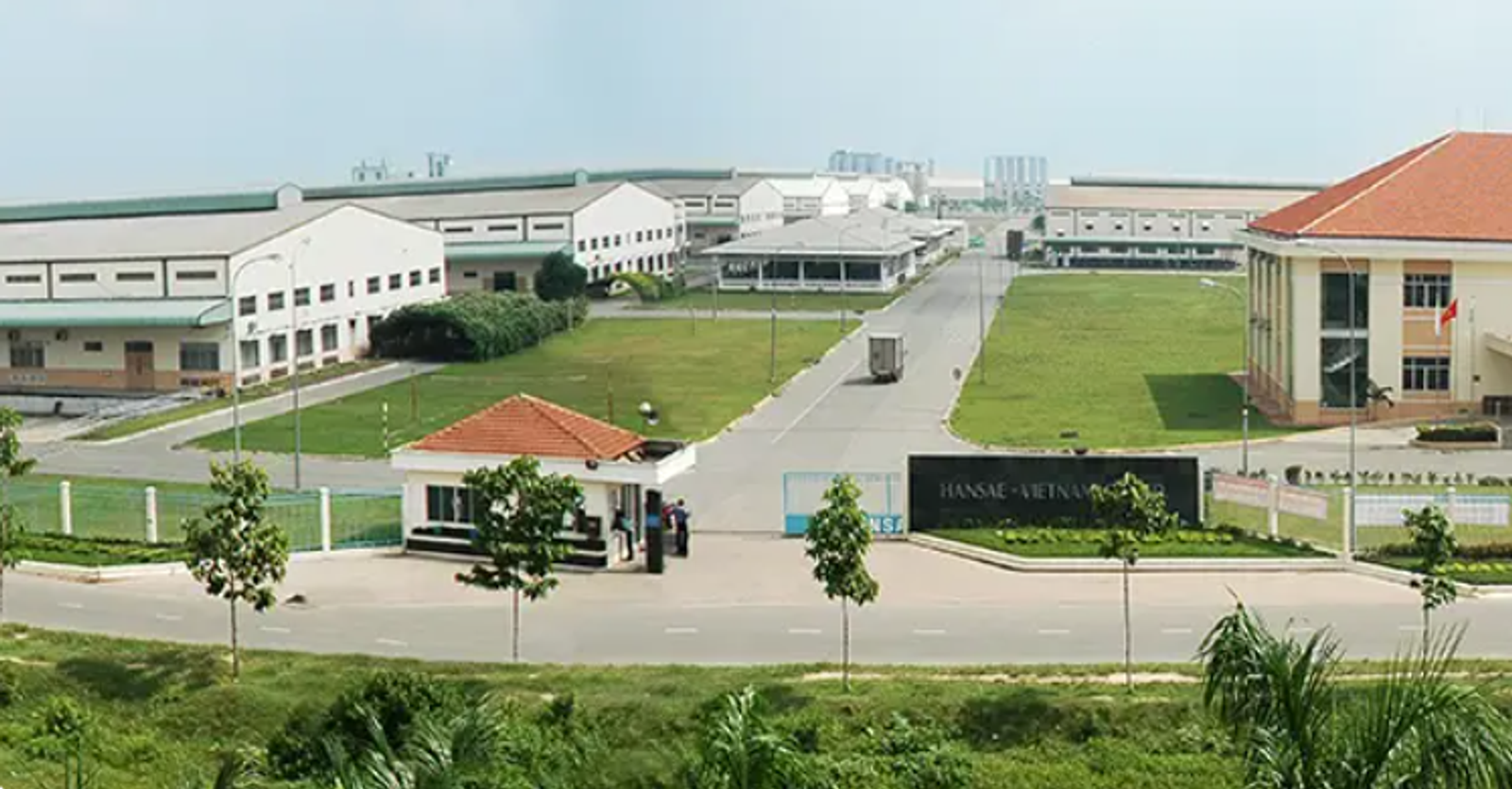
Company overview
Hansei is one of South Korea's leading garment manufacturers operating on an OEM (original equipment manufacturer) basis, producing clothing for global fashion brands including Nike, Gap and H&M. Through low-cost production facilities in Vietnam, Indonesia and Nicaragua, the company exports hundreds of millions of garments each year. Listed on the KOSPI — South Korea's main stock exchange — Hansei occupies a dominant position in the country's garment export sector.
Yet the company has long been saddled with the reputation of a quality business that markets persistently undervalue. Despite solid export revenues and stable profitability, its price-to-book ratio (PBR) has repeatedly languished below one times — a threshold widely used to identify undervalued stocks — making it a symbol of the structural discount that afflicts many South Korean listed companies. Against this backdrop, the South Korean government's "Korea Value-Up Programme", launched in earnest in 2024, placed direct pressure on Hansei to strengthen shareholder returns and improve its corporate valuation.
Business and financial performance
*Business model and competitive strengths*
Hansei's core competitive advantage lies in its reliable ability to win and fulfil large-scale OEM orders from the world's major fashion groups. Its Asian manufacturing hubs, centred on Vietnam, together with its Nicaraguan factory, supply garments to markets across the Americas and Europe. Cost competitiveness and quick turnaround times are its principal strengths. The company also has a broader portfolio through its affiliate Hansei MK, which handles fashion distribution, giving the group a presence in both manufacturing and retail.
*Financial performance by year*
Year | Operating profit (bn won) | Net profit (bn won) | Dividend (bn won) | Notes
2021 | c.180 | c.130 | — | Recovery phase
2022 | c.220 | c.160 | — | Strong export demand
2023 | c.150 | c.110 | — | Global consumption slowdown
2024 | c.130 | c.90 | — | Texollini acquisition impact
2025 | — | — | c.23.6 | Expanded shareholder returns announced
Since 2023, operating profit has declined, squeezed by a slowdown in global consumer spending and inventory destocking by key customers. The acquisition of subsidiary Texollini compounded the pressure, with impairment charges weighing on consolidated earnings.
*The Texollini acquisition and subsidiary risk*
Hansei acquired Texollini as part of a diversification strategy, but impairment issues reportedly emerged within roughly a year of the deal's completion. The charges dragged on the group's consolidated profitability, and some market observers have questioned the rationale and execution of the company's mergers-and-acquisitions strategy.
Value-up: a timeline
*September 2024 — Inclusion in the Korea Value-Up Index*
When financial regulators unveiled the initial 100 constituents of the Korea Value-Up Index in September 2024, Hansei was among those selected. The government's push to improve corporate valuations raised investor expectations that the company would meaningfully step up shareholder returns.
*July 2025 — Ejected from the index as the share price drifts lower*
At the index's first periodic rebalancing in 2025, Hansei was dropped from the constituent list. Despite some progress on dividends, its share price continued to slide. Market participants concluded that the company's shareholder-return efforts had been insufficient not merely in scale but in quality and consistency.
*October 2025 — Share buybacks without the controlling family*
In October 2025, Hansei carried out a series of share buybacks, signalling its commitment to rewarding shareholders. However, the fact that members of the founding family — who control the company, as is common among South Korean chaebol-adjacent groups — did not participate attracted considerable attention. Critics argued that the absence of insider buying sent a damaging signal to the market: that those closest to the business lacked confidence in its share-price prospects. The buybacks produced only a limited rally.
*February 2026 — A 23.6bn-won dividend and a public pledge*
In February 2026, Hansei declared a cash dividend of 23.6bn won (approximately $17m), accompanied by a public commitment to "keep its promises to shareholders" and to continue expanding returns on the basis of responsible management. The move was widely interpreted as an attempt to rebuild investor confidence following its ejection from the Value-Up Index. Sceptics, however, argued that the gesture fell short of what would be needed to lift the stock out of its persistent discount.
Challenges and assessment
*Outstanding challenges*
The central challenge facing Hansei is to move beyond the formalities of dividend increases and share buybacks towards a more substantive strategy for improving corporate value. Market consensus holds that a chronic sub-1x PBR cannot be cured by dividends alone.
Analysts point to several specific priorities: cancelling rather than merely holding repurchased shares, so as to directly enhance shareholder value; more transparent management of subsidiary risks and a clearer M&A framework; greater direct involvement by the controlling family in demonstrating accountability; and measurable improvements in quantitative indicators to secure re-entry into the Value-Up Index. The experience of rival garment maker Hojeon — which accelerated its own value-up discussions in response to pressure from minority shareholders — illustrates the importance of proactive dialogue with investors.
*Overall assessment*
The broad verdict on Hansei's value-up efforts is that the direction is right but the pace and intensity fall short of market expectations. A 23.6bn-won dividend sends a meaningful signal, yet shareholder-return ratios remain low relative to the company's scale and earnings capacity. Having experienced the full cycle of inclusion in and ejection from the Value-Up Index, the company faces urgent pressure to articulate a credible and sustainable policy that could earn it re-admission.
Controversies and structural concerns
*Shareholders unmoved by higher dividends*
Despite successive rounds of dividend increases and share buybacks, Hansei's share price has continued to drift lower. A growing consensus has formed among market participants that higher cash payouts alone do not address the underlying causes of the discount. What is needed, the argument goes, is a more structural approach: cancellation of treasury shares, improved capital efficiency and a higher return on equity (ROE).
*The absent founding family and accountability questions*
The founding family's decision not to participate in the October 2025 buyback drew sharp criticism. Insider buying is conventionally read as a signal of management's confidence in the company's prospects and commitment to good stewardship. The family's absence was widely interpreted as a negative indicator — suggesting that those with the deepest knowledge of the business were unconvinced that the shares were cheap enough to buy.
*What ejection from the Value-Up Index really means*
Being dropped from the index at its first rebalancing implies that, on the composite assessment of governance and shareholder returns used for selection, Hansei lagged behind its peers on more than simple profitability metrics. The company's frequent appearance on lists of heavily shorted stocks is seen by analysts as a related symptom of these structural weaknesses.
*Texollini impairment and M&A risk*
The emergence of impairment charges at Texollini barely a year after acquisition has raised questions about the company's processes for evaluating acquisitions and managing new businesses. A subsidiary whose underperformance feeds through into the consolidated accounts represents a lasting risk to corporate value — and an issue that any credible value-up strategy must address.
Key figures at a glance
Year | Operating profit (bn won) | Cash dividend (bn won) | Share buybacks | PBR | Notes
2022 | c.220 | — | — | Below 1x | Export peak
2023 | c.150 | — | — | Below 1x | Consumer slowdown
2024 | c.130 | — | — | Below 1x | Texollini drag
2025 | — | — | Conducted (family absent) | Below 1x | Dropped from Value-Up Index
2026 (declared) | — | 23.6 | — | — | Expanded returns pledge