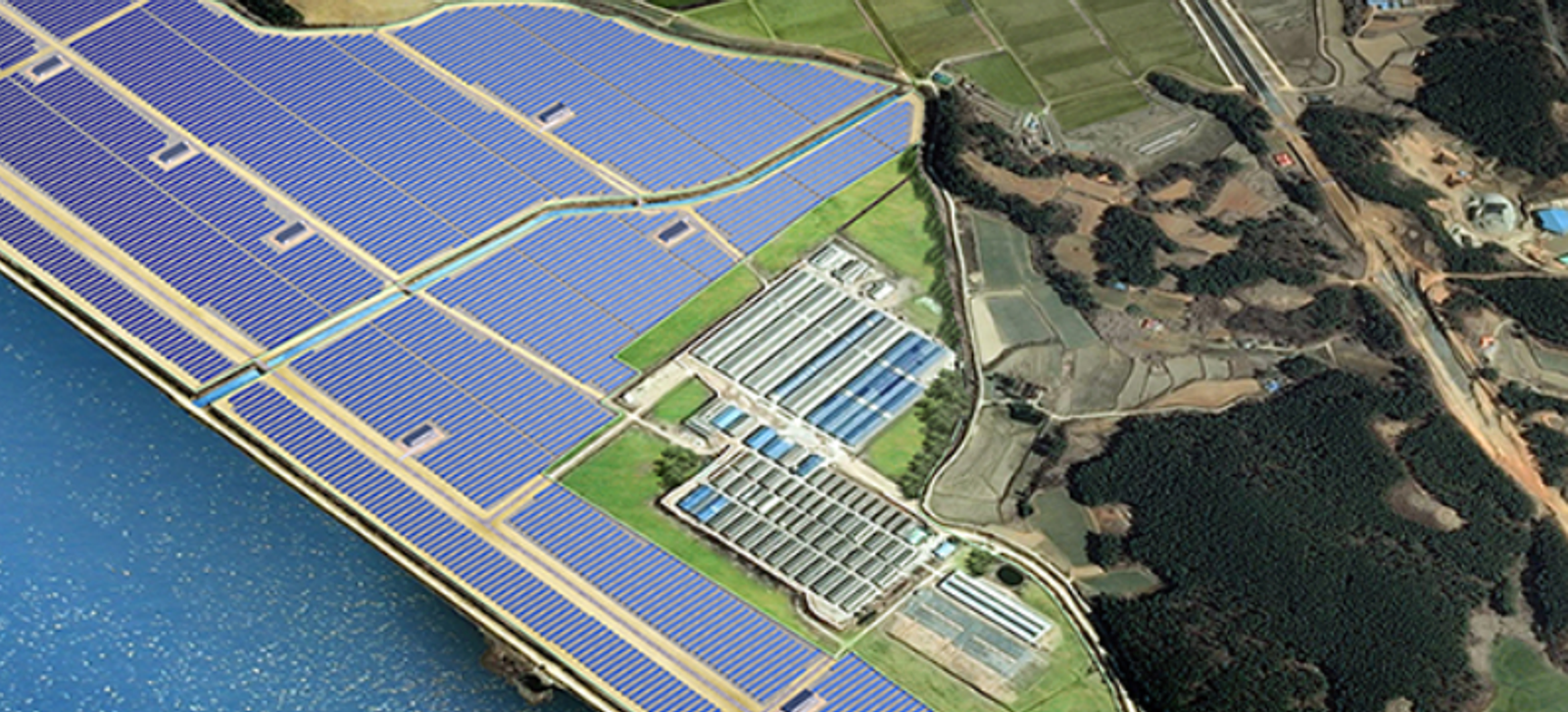
Company Overview
HD Hyundai Energy Solutions (KOSPI: 322000) is the solar-module manufacturing and energy-solutions arm of the HD Hyundai group, one of South Korea's largest industrial conglomerates (known locally as a chaebol). Listed on the KOSPI in 2019, the company has grown in step with expanding domestic and international solar markets, and has become a focal point of the group's broader "value-up" programme — a shareholder-value enhancement drive that HD Hyundai formalised in earnest during 2023 and 2024.
The company holds a leading position in South Korea's solar-module market, supplying residential, commercial, and utility-scale customers at home while pushing exports abroad, particularly to the United States. Its profile has been raised further by two converging forces: Washington's Inflation Reduction Act (IRA), which has spurred demand for non-Chinese solar modules, and Seoul's domestic renewable-energy expansion agenda. As HD Hyundai group-wide policies on higher dividends and improved corporate governance filter down to subsidiaries, HD Hyundai Energy Solutions' shareholder-return commitments have become a key focus for institutional and foreign investors alike.
The company is generally regarded as one of the more fundamentally sound names in South Korea's solar sector, balancing policy tailwinds with genuine profitability. Yet it faces structural headwinds — volatile energy policy and intensifying global competition — that lend complexity to any assessment of its value-up credentials.
Business and Financial Performance
*Business structure and competitive position*
The company's core business is the manufacture and sale of solar modules. In the United States — its primary export market — it has benefited materially from the IRA's tax credits and from regulations restricting the use of components from Foreign Entities of Concern (FEOC), a designation that effectively penalises Chinese suppliers and gives South Korean manufacturers a competitive edge.
In February 2026, DS Investment & Securities published a detailed research note — internally dubbed a "Buffett Report" — describing HD Hyundai Energy Solutions as poised for a "quantum leap in earnings on the back of American tailwinds, alongside meaningful expansion in the domestic market." By May 2026, the company had reportedly achieved an operating profit margin of 18%, reinforcing its status as a prime beneficiary of solar energy policy.
*Financial performance by year*
The table below summarises the company's trajectory. Note that some figures are based on media reports and broker estimates and may differ from audited filings.
Year | Operating profit (est.) | Operating margin | Key developments
2022 | Tens of billions of won | Low single digits (%) | Pressure from falling global module prices
2023 | Improving | Mid single digits (%) | IRA benefit expectations begin to materialise
2024 | Clear growth | Low double digits (%) | US export volumes expand
2025 | Continued growth | Mid double digits (%) | Domestic renewable-energy policy acts as further tailwind
2026 (H1) | Record level | ~18% | Simultaneous benefit from US and domestic markets confirmed
*Stock price performance*
After a brief correction at the start of 2026, the share price rebounded sharply, surging roughly 25% to reclaim the 100,000-won level. In June 2026, news of a US plan to expand renewable-energy capacity by 100 gigawatts drove a further gain of around 6%. During periods of broad sector strength in solar and renewables, HD Hyundai Energy Solutions has consistently traded as the benchmark name within the group.
Value-Up Milestones
*Second half of 2023 — Group-wide value-up framework adopted*
HD Hyundai group formally designated shareholder-return enhancement and governance reform as core management priorities, setting a group-wide value-up framework that encompassed subsidiaries including HD Hyundai Energy Solutions. From this point, discussions around higher dividends and treasury-share policies began in earnest.
*2024 — IRA and policy benefits take tangible shape*
As the IRA's tax-credit provisions became more concrete, HD Hyundai Energy Solutions' profitability improved markedly. Securities analysts noted that stronger earnings were building the capacity for greater shareholder returns. The competitive advantage enjoyed by South Korean modules — free from FEOC restrictions — enhanced medium-to-long-term earnings visibility, providing a firmer foundation for sustainable value-up commitments.
*2025 — Higher dividends and governance reform formally combined*
At the holding-company level, HD Hyundai publicly committed to pursuing higher dividends and structural governance improvements in tandem. According to reporting from May 2026 on the group's "Value-Up Report No. 22," HD Hyundai was advancing dividend-policy upgrades and greater transparency in corporate governance across its subsidiaries. HD Hyundai Energy Solutions was reported to be reviewing an increase in its dividend payout ratio in line with group policy.
*February 2026 — Bullish broker research amplifies investment case*
DS Investment & Securities' in-depth research note, forecasting a "quantum leap in earnings from American tailwinds," identified the dual benefit of US export growth and domestic market expansion as the central pillars of the value-up investment thesis. The share price rallied sharply in response.
*May 2026 — 18% operating margin confirms capacity for shareholder returns*
The reported operating profit margin of 18% for the first half of 2026 was widely described as exceptionally high by the standards of South Korea's solar sector, materially reinforcing expectations of expanded dividend distributions.
*June 2026 — US 100GW renewable-energy plan adds long-term momentum*
The announcement of a US plan to expand renewable capacity by 100 gigawatts sent HD Hyundai Energy Solutions shares up around 6%, adding to a growing sense in the market that favourable policy conditions on both sides of the Pacific could create a self-reinforcing cycle of improving earnings and strengthening shareholder returns.
Challenges and Assessment
*Key structural challenges*
Three challenges stand out for the company as it seeks to sustain and deepen its value-up credentials.
First, reducing policy dependence. Much of the company's current profitability and market appeal rests on external policy variables — the IRA in the United States and renewable-energy expansion targets in South Korea. A shift in the policy environment could simultaneously damage earnings and erode the capacity for shareholder returns.
Second, developing a self-standing shareholder-return framework. The company's present approach to shareholder returns appears largely driven by group-level directives rather than decisions made independently by its own board. Establishing a clear, predictable, and independently governed policy — covering dividends, share buybacks, and cancellations — would substantially strengthen investor confidence.
Third, holding its ground against intensifying global competition. Chinese solar manufacturers continue to expand aggressively and compete on price. Maintaining South Korea's quality and technological edge is essential to defending profit margins.
*Overall assessment*
HD Hyundai Energy Solutions' value-up history draws favourable marks on two counts. The group-level commitment to shareholder returns and the subsidiary's own earnings improvement are progressing in tandem, creating a mutually reinforcing effect on market credibility. Moreover, the value-up discussion is grounded in real profitability — an 18% operating margin is not a cosmetic exercise — which distinguishes it from companies whose share-price gains reflect little more than policy speculation or headline management. That said, the heavy reliance on policy support and the absence of a fully autonomous shareholder-return governance structure remain the two most significant weaknesses in the overall picture.
Controversies and Limitations
*The limits of group-driven value-up*
A recurring criticism is that HD Hyundai Energy Solutions' shareholder-return policies derive from conglomerate-level directives rather than from independent board decisions. This subsidiary dynamic means that the direction of shareholder returns could shift with changes in group priorities or the intentions of controlling shareholders — an inherent source of uncertainty. Critics argue that a genuinely independent governance framework for shareholder returns has yet to be established.
*Policy risk and sustainability*
South Korea's domestic energy policy has changed frequently with successive administrations, adding meaningful uncertainty to both earnings visibility and the durability of value-up commitments. A change of government or a shift in the country's energy mix policy could alter the solar sector's operating environment rapidly. In the United States, potential amendments to IRA provisions and changes to tariff policy represent additional risks to export performance. The question of how long the current favourable policy backdrop can persist is perhaps the single greatest vulnerability in the value-up investment case.
*Share price volatility and credibility*
The stock's propensity for sharp swings — including the roughly 25% surge in early 2026 — sits uneasily with a long-term value-up narrative. A share price that gyrates in response to solar policy headlines looks more like short-term thematic trading than a durable re-rating of underlying business value. Some observers question whether the focus is genuinely on building intrinsic corporate value or primarily on engineering short-term price gains.
*PBR and the valuation debate*
South Korea's official value-up programme uses the price-to-book ratio (PBR) as a key metric for identifying and addressing undervaluation. For HD Hyundai Energy Solutions, policy tailwinds and earnings improvement have already been substantially reflected in the share price, and the company's valuation has risen considerably from earlier levels. Whether it remains attractive relative to global peers is a matter that market professionals continue to debate.
Summary Data
The following figures are derived from media reports and broker estimates and may differ from audited disclosures. PBR figures are market estimates.
Year | Operating profit (est.) | Operating margin | Dividend policy | Buyback policy | PBR (est.)
2022 | Tens of billions of won | Low single digits (%) | Limited | Negligible | ~1x
2023 | Improving | Mid single digits (%) | Under review | Unconfirmed | ~1x
2024 | Clear growth | Low double digits (%) | Expansion policy set | Linked to group policy | ~1.5x
2025 | Continued growth | Mid double digits (%) | Higher dividends alongside group | Group-level discussion | ~1.8–1.9x
2026 (H1) | Record level | ~18% | Maximum capacity for returns | Under continued review | Not yet compiled