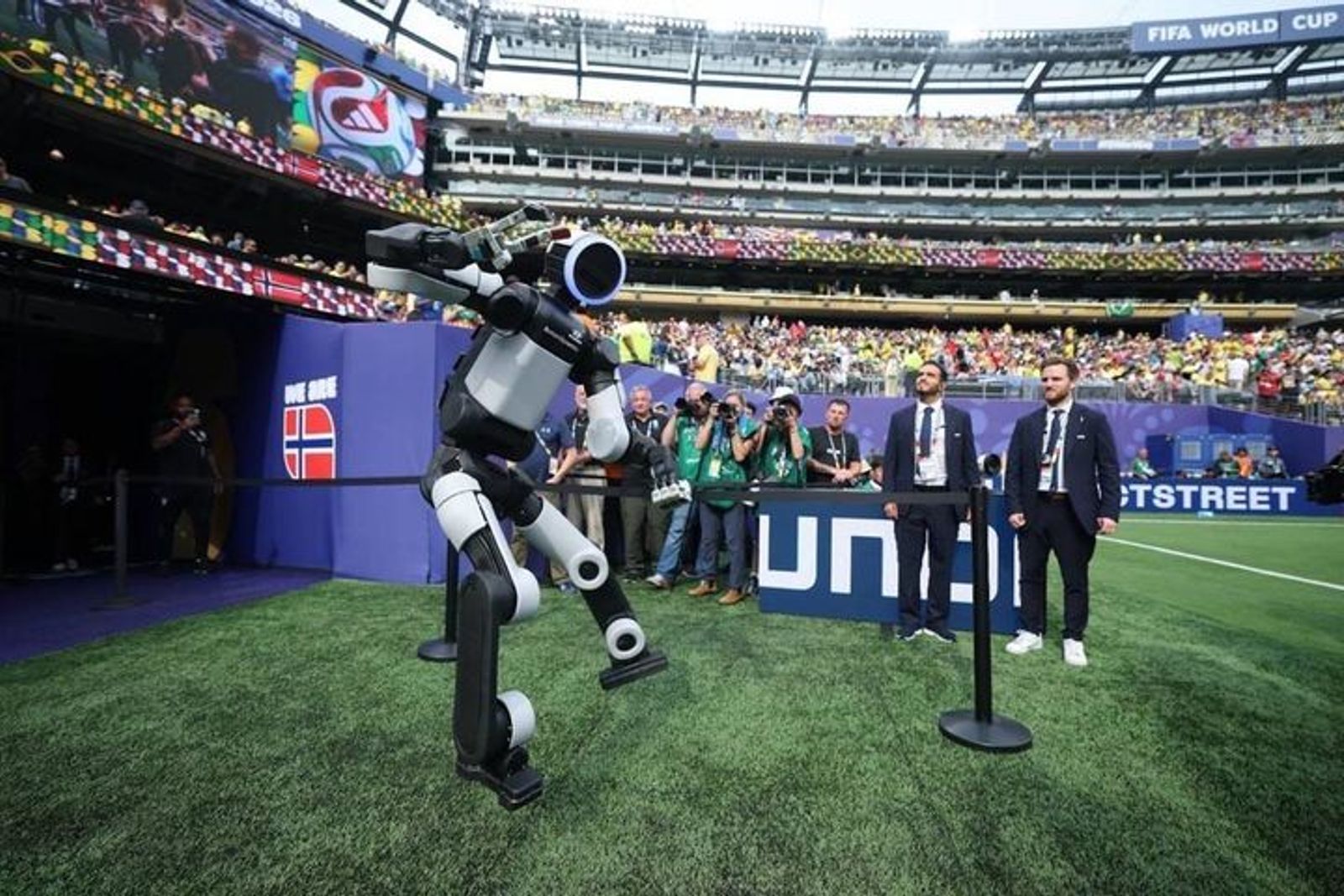
Hyundai Motor Group has finalised its full acquisition of Boston Dynamics, the robotics firm whose agile machines have long defined the frontier of the field, propelling the South Korean automotive conglomerate into the front rank of the global robotics race. The move is more than a routine increase in shareholding: it amounts to a public declaration that Hyundai intends to reinvent itself as a mobility-and-robotics conglomerate rather than a carmaker.
From minority stake to full ownership
Hyundai's relationship with Boston Dynamics began in earnest in 2021, when the group acquired an 80% stake from SoftBank for approximately $880m (around 1trn Korean won at the time), securing managerial control. It has since bought out the remaining shares in stages, completing the full absorption now. The decision reflects a deliberate prioritisation of long-term technological leadership over near-term financial returns. Euisun Chung, Hyundai's executive chairman, has consistently described robotics—alongside electrification and autonomous driving—as one of the group's three strategic pillars for the future, arguing that "robots will be a defining industry for human life."
Boston Dynamics itself has formidable credentials. Spun out of the Massachusetts Institute of Technology in 1992, it developed its core technologies with backing from DARPA, the Pentagon's advanced-research arm. Its roster of robots includes Spot, a four-legged machine used for industrial inspection; Atlas, a bipedal humanoid; and Stretch, designed for warehouse logistics. All three have moved beyond laboratory demonstrations into commercial deployment.
A crowded and lucrative race
Hyundai's push comes amid a broader scramble by technology and automotive giants to dominate the humanoid-robot market. Tesla has deployed its Optimus robot on the floor of its Gigafactory to assist in production, with stated ambitions to manufacture millions of units by 2030. In China, Xiaomi, Huawei, and Unitree are racing to develop low-cost humanoid platforms. Amazon is working with Figure AI to automate fulfilment-centre operations.
The prize is substantial. Goldman Sachs forecasts that the global humanoid-robot market could reach $38bn by 2035. McKinsey estimates that robotics and automation could add as much as $3.7trn to world GDP by 2030. Hyundai's decision to bring Boston Dynamics fully in-house appears timed deliberately to coincide with what many analysts see as the eve of explosive market growth.
Where Hyundai has an edge
Industry analysts identify the core value of the acquisition as the fusion of Boston Dynamics' engineering pedigree with Hyundai's manufacturing muscle. "Boston Dynamics possesses world-class dynamic-control algorithms and actuator technology, but large-scale commercial production has always been its weak point," said an official at the Korea Institute of Robot Industry Advancement. "Combined with Hyundai's global manufacturing network, the synergies could be considerable."
Hyundai has already begun integrating the two operations. Spot robots are deployed at its plants in Ulsan and Asan for automated safety inspections. At its Singapore smart factory, known as the Meta Plant Asia (MPA), the group is piloting human-robot collaborative production processes. Should the next-generation electric Atlas be rolled out across Hyundai's production lines, it could set a new benchmark for factory automation.
The sceptics' case
Yet doubts persist. Boston Dynamics is more than three decades old and has struggled to turn a profit. Uncertainty over its revenue model was noted when SoftBank first acquired the company, and meaningful sales growth from Spot's business-to-business operations took time to materialise even after Hyundai took control in 2021. Some in the investment community argue that while the technology's potential is real, the capital allocation represents an excessive bet relative to near-term shareholder value.
Labour concerns add another layer of complexity. The International Labour Organisation has warned that robots and automation could displace up to 15% of manufacturing jobs in advanced economies over the next decade. Hyundai's own trade unions have formally objected to the accelerating introduction of robots in its factories, and redesigning working conditions to accommodate human-robot collaboration will be a difficult internal negotiation.
Lessons from Japan and America
Japan offers a cautionary tale. Honda began developing its humanoid robot, ASIMO, in 1986, captivating audiences worldwide—yet it was unable to find a viable commercial model and quietly shuttered the project in 2022. By contrast, Japanese industrial-robot makers such as Yaskawa and FANUC, which built their businesses in close partnership with factory customers, continue to hold leading shares of the global market. The lesson is that proximity to industrial ecosystems matters more than technical spectacle.
The American landscape is different. A wave of robotics start-ups founded by alumni of DARPA programmes has emerged, but most are software-first companies with limited capacity to manufacture hardware at scale. Hyundai is one of very few players that combines sophisticated hardware manufacturing with cutting-edge software, a combination that analysts regard as a genuine differentiator.
The bigger vision: when robots become mobility
Hyundai's strategists frame the acquisition within a broader redefinition of mobility itself. If a car moves people across the ground, a humanoid robot moves through space in place of human hands and feet—a new form of mobility in its own right. The group's long-term ambition is to weave together automobiles, urban air mobility (UAM), and robots into a single platform ecosystem.
The South Korean government is providing tailwind. In 2024 it unveiled a master plan for the robotics industry, pledging a significant increase in investment by 2030. The Hyundai-Boston Dynamics combination is widely expected to serve as the anchor of South Korea's national robotics ecosystem.
Ultimately, this acquisition marks a historic inflection point: Hyundai Motor Group is formally setting aside its century-old identity as a carmaker and declaring itself a technology-driven conglomerate. As robots become commonplace in factories, hospitals, and homes, whether Hyundai can shape the architecture of that future will depend not just on its technology, but on the speed and discipline with which it executes.