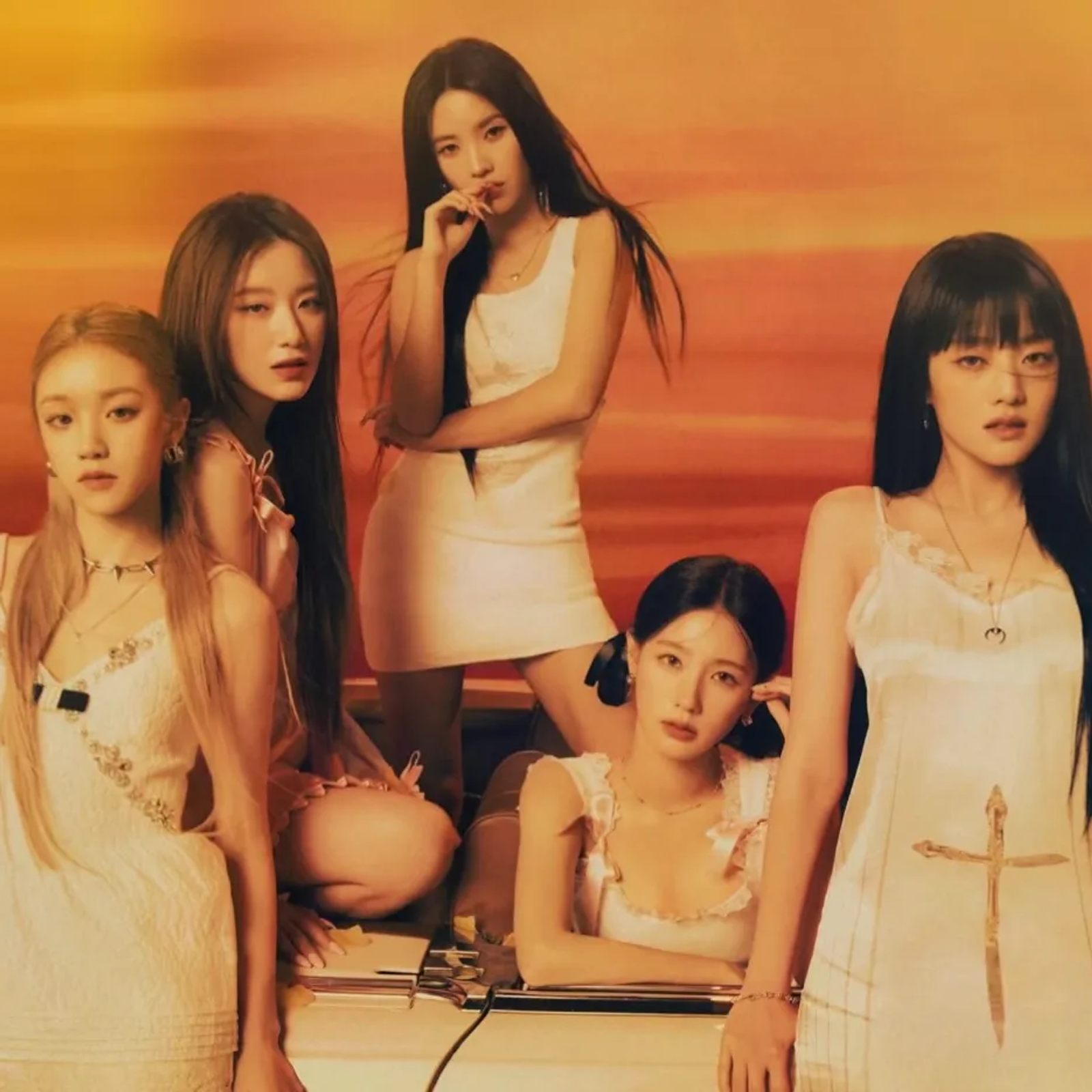
i-dle is a five-member multinational girl group comprising Miyeon, Minnie, Soyeon, Yuqi, and Shuhua. Signed to Cube Entertainment — a mid-tier South Korean talent agency — the group debuted on 2nd May 2018. Their name fuses the English pronoun "I" with the Korean plural suffix "-deul", conveying the idea of distinct individuals united as one. The group originally performed under the name "(G)I-DLE", but rebranded as "i-dle" in 2025 to mark their seventh anniversary and a renewed contract with Cube. Their fanbase goes by the name "NEVERLAND".
From Debut to Dominance
i-dle announced themselves with a bang: their debut single "LATATA" earned them seven rookie-of-the-year awards across South Korea's major music ceremonies. The departure of member Soojin in 2021, which reduced the group from six to five, barely dented their momentum. A string of hits followed — "TOMBOY", "Nxde", "Queencard", and "Super Lady" — and four consecutive releases, from the mini-album *I feel* through to full-length records *I*, *I SWAY*, and *We are*, each sold over one million copies in their opening week.
Much of the credit goes to the group's self-produced model. Leader Soyeon oversees songwriting and composition, giving i-dle a creative independence rare among acts outside South Korea's so-called "Big Three" entertainment conglomerates (HYBE, SM Entertainment, and YG Entertainment).
That independence has not gone unrecognised at award ceremonies. In 2024, the group took the top prize at both the Korea Grand Music Awards and the Melon Music Awards. In 2025, they swept the grand awards at the Asia Star Entertainer Awards and the 34th Seoul Music Awards — the first time a solo female act had claimed the latter prize since Girls' Generation in 2010, and all the more striking given that i-dle are not backed by one of the industry's dominant agencies. From February this year, they have been on their fourth world tour, "2026 i-dle WORLD TOUR [Syncopation]", which includes what is believed to be a K-pop girl group first: a headline show at the Taipei Dome.
Recent Developments
On 6th July, i-dle released their ninth mini-album, *We made*, with lead single "Gimme Dat Love". Earlier in the year, in January, they put out the digital single "Mono" featuring artist skaiwater, which topped charts both at home and abroad. The formal rebranding from "(G)I-DLE" to "i-dle", timed to coincide with the seventh anniversary and contract renewal, rounded out a busy period of reinvention.
Yet the renewal process was far from smooth. In August 2024, Soyeon mentioned during a solo concert segment that the group's contract would expire in November — an offhand remark that sent Cube Entertainment's share price tumbling by nearly 20% at its intraday low on the following trading day. The episode served as a stark reminder of just how heavily the company's fortunes rest on a single act.
The Road Ahead
That dependency is now manifesting in the balance sheet. In the first quarter of 2026, Cube Entertainment reported consolidated revenues of 15.1 billion won (roughly $11m), down 5.7% year on year, alongside an operating loss of 5.2 billion won — a deterioration of 349% compared with the same period a year earlier. With i-dle effectively the company's sole profit-generating act, the structural fragility of the business model is difficult to ignore.
Cube's co-chief executive, Kang Seung-gon, appears to have taken the warning seriously. He has personally committed 10 billion won of his own funds to scout and develop new talent. The company has also disclosed plans to deploy capital raised through a rights issue to launch new idol acts between 2026 and 2027, with a new group expected to make its public debut in 2027. Whether existing acts such as LIGHTSUM and NOWZ can establish themselves commercially, and whether the incoming group can eventually become a second major revenue driver in the post-i-dle era, will be the defining question for Cube's medium-term performance. For now, as i-dle's global footprint continues to expand, investors will be watching to see whether Cube can reduce its dependence on them before the music stops.