Company Overview
Intellian Technologies is a mid-sized South Korean company listed on the KOSDAQ exchange whose core business is the design and manufacture of antenna systems for satellite communications. Its products enable reliable reception of satellite signals across maritime, aviation, and land-based environments, and the company has established a recognised position in the global satellite communications market. As demand for low-earth orbit (LEO) satellite connectivity has surged — driven in part by the rapid expansion of services such as SpaceX's Starlink — Intellian has been widely regarded as a structural beneficiary of rising antenna demand.
Yet the discussion around Intellian's value-enhancement efforts goes beyond simple expectations of improved earnings. At its heart lies a question of trust — trust that has eroded over years of incomplete share buyback commitments, an absence of cancellation plans, and inadequate communication with shareholders. The company spent a considerable period mired in losses before finally returning to profit in 2025. Its formal disclosure of a corporate value-improvement plan in early 2026 marks what could be a genuine inflection point — though one that investors are treating with understandable caution.
Business Foundations and Financial Performance
*From Antennas to Gateways: An Evolving Business*
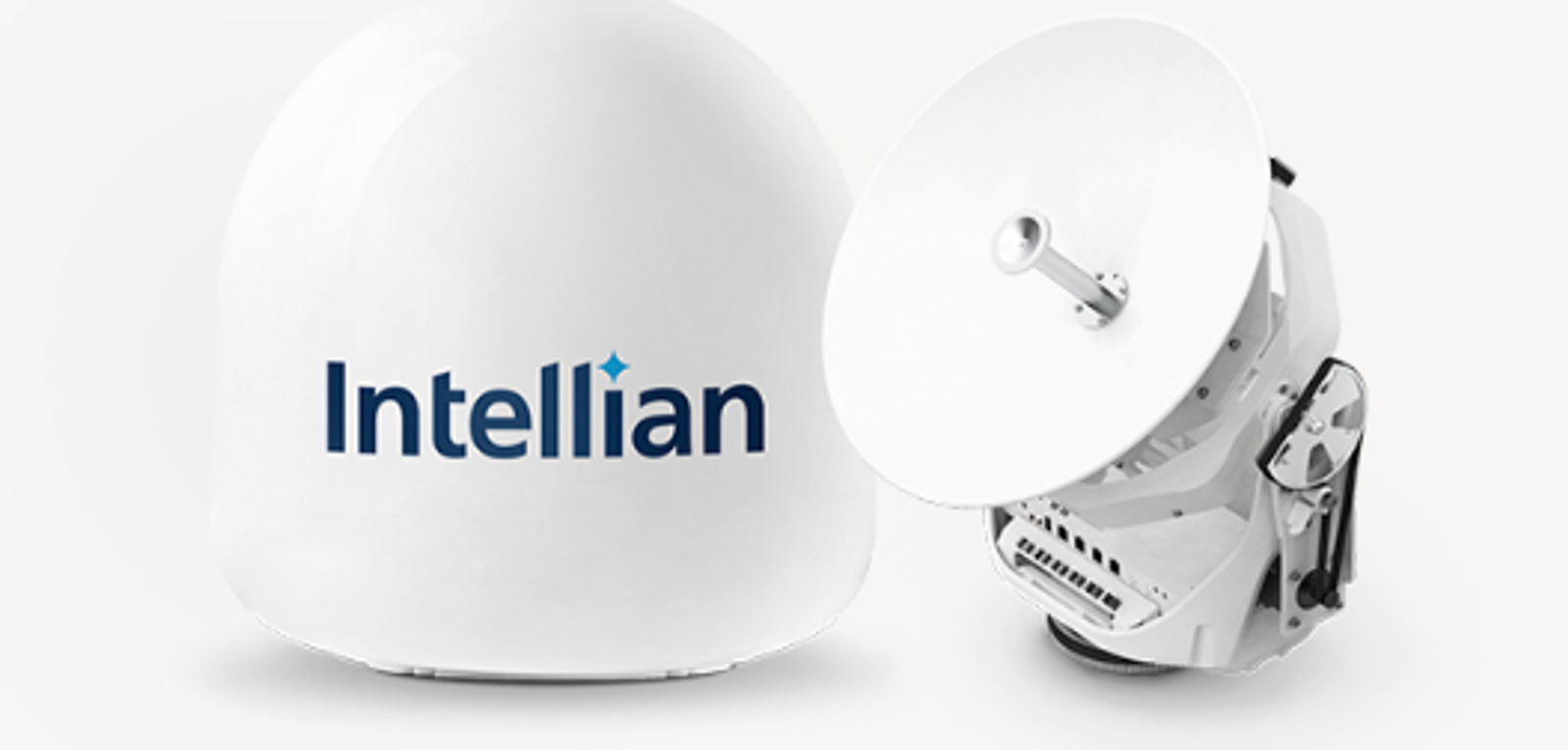
Intellian's flagship products are satellite antenna systems installed on mobile platforms such as vessels and aircraft. The company built its reputation in the maritime market, particularly in VSAT (Very Small Aperture Terminal) technology, and has benefited structurally from the proliferation of LEO satellite services. More recently, however, market attention has begun to shift towards the company's gateway business. Gateways are the critical infrastructure equipment that connects satellite signals to terrestrial networks; analysts regard the segment as offering considerably greater profitability and addressable market size than antennas alone. By early 2026, a growing view within the industry held that calling Intellian simply "an antenna company" was no longer adequate, with some analysts arguing that the gateway division could prove to be the true driver of future earnings growth.
*Annual Financial Performance: From Losses to Profitability*
Intellian endured several years of weak results, the product of shifting dynamics in the global satellite communications market, supply chain disruptions, and delays in orders from key customers. The period from 2022 to 2024 was particularly difficult, characterised by order uncertainty compounded by rising cost pressures. The company finally returned to operating profit in 2025.
Year | Operating Profit (Consolidated) | Key Characteristics
2022 | Loss | Supply chain disruptions; order delays
2023 | Loss | LEO antenna demand anticipated but not yet reflected in results
2024 | Loss | Incomplete buyback execution; investor discontent deepens
2025 | Approx. KRW 11.9bn (return to profit) | Gateway demand reflected; revenue diversification
The consolidated operating profit for 2025, disclosed in February 2026, came in at approximately KRW 11.9 billion (roughly $9 million), ending a multi-year run of losses. Some observers have nonetheless noted that the absolute size of this profit remains modest relative to the company's market capitalisation and investor expectations.
Key Milestones in the Value-Up Story
*February 2024 — The Communications Vacuum: "We Trusted the Chairman"*
In February 2024, investor frustration with Intellian's management reached a visible peak. Sung Sang-yeop, who serves simultaneously as chairman of the Korea Venture Business Association and as chief executive of Intellian, was attracting attention for his active promotion of the venture ecosystem in public forums — while his own shareholders felt overlooked. Media coverage began to reflect investor complaints that the chief executive was preaching innovation externally while leaving shareholders to wait in silence. Questions about corporate governance and the quality of management's communication with investors moved into the open.
*May 2024 — Buyback Completion Rate of 55%; No Cancellation Plan*
Reporting in May 2024 revealed that Intellian had completed only 55% of its announced share buyback programme and had no plans to cancel the shares it had repurchased. Share buybacks are a standard tool of shareholder returns, but their value is significantly diminished when the shares are simply held in treasury rather than cancelled. Critics pointed to a structural pattern common among KOSDAQ-listed companies, whereby treasury shares are retained for potential use in executive remuneration — a practice that deepens investor mistrust rather than alleviating it.
*February 2026 — First Steps Towards Shareholder Returns*
When Intellian disclosed its return to profit for the 2025 financial year in February 2026, it formally signalled its intention to pursue shareholder return measures for the first time in years. The company's position was that having exited the loss-making phase and now generating profits, the conditions were in place to revisit its dividend and shareholder return policy. However, specific figures for dividends or firm commitments on share cancellations were not publicly disclosed at this stage.
*April 2026 — Formal Publication of a Value-Improvement Plan*
In April 2026, Intellian published a formal corporate value-improvement plan — a move in line with South Korea's broader market "value-up" programme, a government-backed initiative designed to address the persistent discount at which Korean equities trade relative to their book value. The plan is understood to encompass a shift towards a more profitability-focused business structure, an expansion of shareholder return commitments, and growth strategies centred on the gateway segment and other new businesses. The announcement drew market attention partly because it aligned with the government's stated ambition of lifting the KOSDAQ index to the 1,100 level.
Challenges and Assessment
*Three Tests That Will Define the Next Chapter*
Three challenges stand out as the key tests of whether Intellian's value-up commitments translate into reality.
The first is whether share cancellations will actually happen. Given the company's track record of completing only half its stated buyback, the market will be watching closely to see whether future repurchases are followed by genuine cancellations. The structural risk — that treasury shares are ultimately deployed as a form of executive compensation rather than returned to shareholders — has not gone away.
The second is the sustainability of profitability. The return to profit in 2025 is a genuine achievement, but an operating profit of KRW 11.9 billion is considered modest against the company's market capitalisation and the expectations that have built up around it. The timing and scale of the gateway segment's contribution to earnings will be the critical variable in determining whether this improvement is durable.
The third is a meaningful improvement in shareholder communication. The controversy that surfaced in early 2024 continues to circulate among investors. Building a regular and transparent framework for reporting progress on the value-improvement plan — rather than leaving shareholders to piece together information — is widely regarded as a prerequisite for any genuine rebuilding of trust.
*Overall Assessment*
Intellian's value-up story can be summarised as a late start — but a start nonetheless. A company that accumulated years of investor grievances, fell short on buyback execution, and delivered persistent losses has, for the first time, formalised commitments to shareholder returns and corporate value improvement, using its return to profit as the launching pad. That is a meaningful shift. But the prevailing view in the market is that consistent delivery will matter far more than declarations of intent — particularly given the gap between Intellian's past promises and their execution.
Controversies and Limitations
*The Structural Problem with Treasury Shares*
Intellian's approach to its treasury shares is a concentrated illustration of a structural problem that afflicts KOSDAQ-listed companies more broadly. When a company buys back its shares but does not cancel them, the stock sitting in treasury can later be redeployed for executive incentive schemes or the exercise of stock options. Reports in early 2026 highlighted numerous mid-sized Korean companies that had used treasury shares for executive bonuses rather than returning value to ordinary shareholders. Intellian has not been immune to such suspicions.
*Leadership Credibility and the Communication Deficit*
The controversy that erupted in early 2024 raised questions that go beyond a simple earnings shortfall. The chief executive's high public profile as head of the Korea Venture Business Association — while his own investors felt ignored — prompted fundamental questions about governance priorities. Whether management's attention and energy tilts towards external advocacy or internal accountability to shareholders is a question that Intellian's value-up narrative must answer in deed, not in words.
*Treasury Shares, Commercial Law Reform, and the Risk of Disposal*
Early 2026 also saw reporting that some KOSDAQ companies were moving to liquidate their treasury holdings ahead of anticipated amendments to South Korea's Commercial Act — changes that could impose stricter restrictions on how such shares are used. Some investors have raised concerns that Intellian could follow suit. Were the company to dispose of treasury shares rather than cancel them, prior to any legislative change, this would be widely interpreted as a dilution of shareholder value and would set back the trust-rebuilding effort considerably.
*Uncertainty Around the Gateway Transition*
Expectations that the gateway segment will become the new engine of Intellian's earnings are running high, but the timing and profitability profile of that transition remain uncertain. Multiple variables are in play: the investment cycle of global satellite infrastructure, the trajectory of contracts with major satellite operators, and the company's ability to differentiate its technology from competitors. The consensus view is that some time will pass before the leap beyond the "antenna company" identity is convincingly demonstrated in the numbers.
Key Data Summary
Year | Operating Profit | Dividends | Share Buyback / Cancellation | PBR (Estimated)
2022 | Loss | None (est.) | Partial buyback | Low
2023 | Loss | None (est.) | Buyback execution lagging | Low
2024 | Loss | None | 55% completion rate; no cancellation plan | Low
2025 | Approx. KRW 11.9bn (profit restored) | Shareholder returns signalled | Cancellation plan not yet announced | Recovery phase
2026 | In progress | Value-improvement plan published | Execution to be monitored | Monitoring required