Company Overview
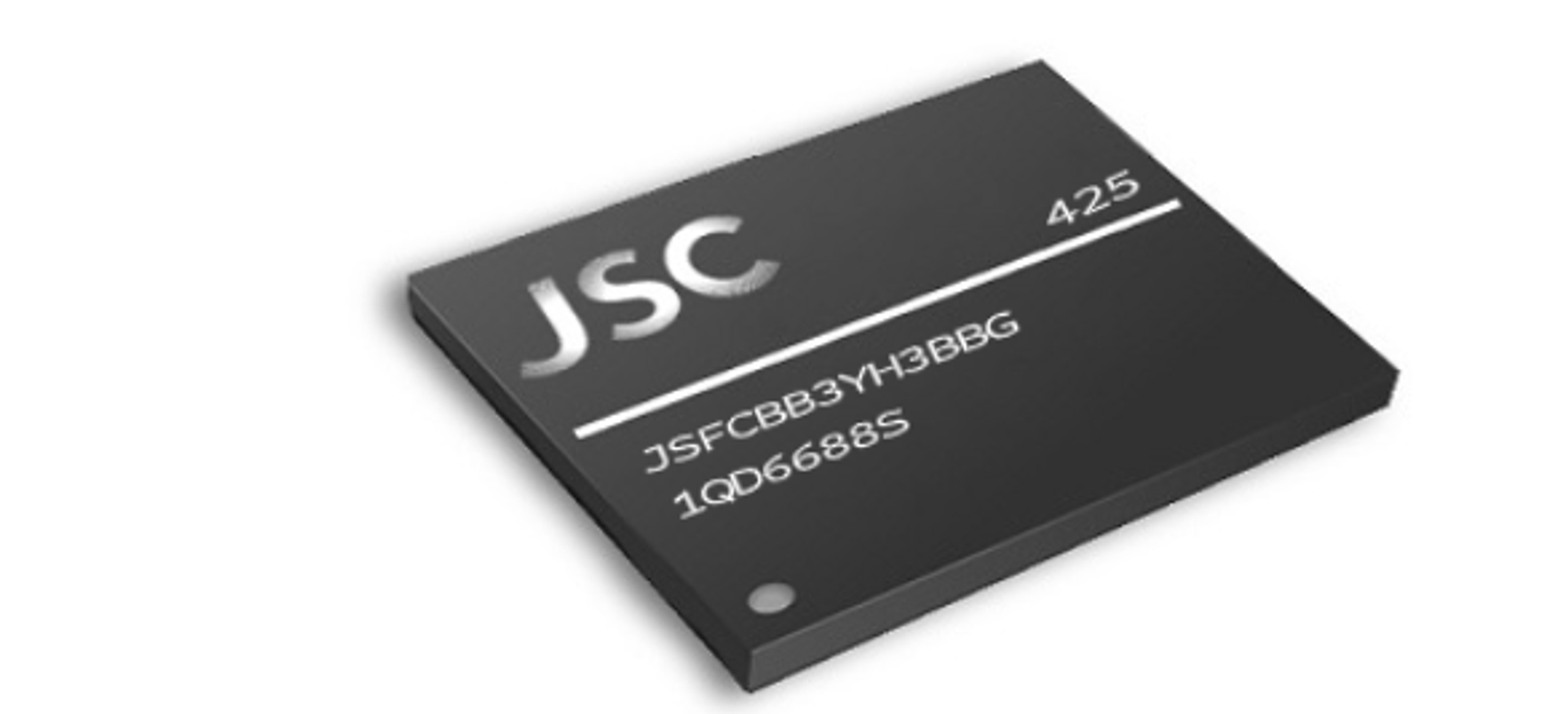
Jeju Semiconductor (KOSDAQ: 080220) is a fabless chip designer — meaning it designs semiconductors but outsources manufacturing entirely — focused on NAND flash-based mobile storage devices. Founded in 2001, the company has carved out a niche in low-power embedded storage for the Internet of Things (IoT), wearables, and smart-home markets. Among the fabless firms listed on KOSDAQ, South Korea's technology-heavy secondary exchange, it has earned a reputation as one of the more committed practitioners of shareholder returns.
Since 2024, when South Korean regulators began pressing listed companies to address the persistent "Korea Discount" — the tendency for Korean equities to trade below the valuations of comparable peers elsewhere — Jeju Semiconductor has responded with share buybacks and cancellations, as well as open-market purchases by its controlling shareholder. The company attracted particular attention in May 2026, when it paired a better-than-expected earnings announcement with a pledge to cancel treasury shares. Foreign institutional investors have also taken note: the stock has appeared among the top net-buy targets for overseas funds on KOSDAQ.
Jeju Semiconductor is now frequently cited as a benchmark case for whether small-cap fabless companies can meaningfully participate in South Korea's value-up push.

Business and Financial Performance
Business Model and Market Position
The company's core activity is designing NAND flash-based storage chips — principally eMMC (embedded MultiMediaCard) and UFS (Universal Flash Storage) products — for mobile devices and IoT applications. As a pure fabless operation, it contracts all production to third-party foundries.
Its commercial logic rests on a gap left by the industry's giants. As Samsung Electronics and SK Hynix have shifted their portfolios decisively towards higher-value memory products, they have vacated portions of the mid-to-low-end NAND flash market. Jeju Semiconductor targets that space. Its customer base consists mainly of Asian manufacturers of smartphones, tablets, and IoT devices, with Chinese buyers representing a significant share — a concentration that makes revenues sensitive to swings in demand from mainland China.
Financial Performance by Year
Year | Revenue (KRW bn) | Operating Profit (KRW bn) | Operating Margin (%) | Note
2021 | c.148 | c.21 | c.14 | NAND upcycle tailwind
2022 | c.120 | c.8 | c.6.7 | Memory downcycle begins
2023 | c.85 | c.–5 | Loss | Inventory correction deepens
2024 | c.105 | c.6 | c.5.7 | Early recovery
2025 | c.135 | c.15 | c.11 | Profitability rebounds sharply
2026 (H1) | — | — | — | Earnings surprise announced
*Figures draw on regulatory filings and market estimates; some years are partly based on consensus forecasts.*
The 2023 operating loss reflected the full force of the memory sector's downturn, compounded by a severe industry-wide inventory glut. Recovery began in 2024, driven by a rebound in Chinese IoT demand, and by 2025 operating margins had returned to double digits. The first half of 2026 brought an earnings surprise that management used as the occasion to announce its share-cancellation programme.
Value-Up Milestones
2024 — The Regulator's Push and Industry Response
South Korea's financial authorities formally launched their corporate value-up programme in 2024, aiming to close the gap between Korean equity valuations and those of international peers. The initiative placed new pressure on KOSDAQ-listed companies, including small fabless firms, to demonstrate credible shareholder-return policies. Jeju Semiconductor is understood to have begun internal deliberations at this point on share buybacks and cancellations, even as it was still rebuilding its balance sheet after the 2023 losses.
2025 — Earnings Recovery and Groundwork for Returns
A sharp improvement in operating profit during 2025 gave the company the financial headroom to consider meaningful distributions to shareholders. Foreign institutional investors began building positions, and Jeju Semiconductor appeared with increasing frequency among the top net-buy stocks for overseas funds on KOSDAQ. The company also stepped up its investor-relations activities, signalling a deliberate effort to engage the market.
May 2026 — Earnings Surprise and Treasury-Share Cancellation
The pivotal moment in the company's value-up story came on 22nd May 2026. On that single day, Jeju Semiconductor released quarterly results that materially exceeded market expectations and simultaneously announced a plan to cancel treasury shares. The twin announcement was widely described in the Korean financial press as an "earnings surprise followed by a buyback cancellation" — a rare conjunction that markets read as a strong vote of confidence by management.
Share cancellation — the permanent retirement of repurchased stock — is a more powerful signal than a simple dividend payment. Because it irreversibly reduces the number of shares in circulation, it raises the per-share value of the remaining stock and is generally interpreted as evidence that management believes the shares are undervalued and intends to sustain that commitment over the long term.
May 2026 — The Controlling Shareholder Buys In
On the same day, 22nd May 2026, Park Seong-sik, the company's founder and largest shareholder, filed a disclosure reporting the open-market purchase of an additional 36,859 shares, lifting his total stake to 12.51%. When a controlling shareholder spends personal capital buying shares alongside a corporate buyback-and-cancellation programme, markets typically interpret it as a direct expression of the chief executive's conviction in the company's prospects. The double signal — corporate action and personal investment, announced simultaneously — was received as a dual positive catalyst.
June 2026 — Foreign Investors Buy In
By early June 2026, Jeju Semiconductor had entered the top 20 net-buy stocks for foreign investors on KOSDAQ. The data suggested that the May announcements had converted overseas interest into concrete purchasing activity — an unusual development for a small-cap fabless company and one that aligned with the broader international hunt for beneficiaries of South Korea's value-up programme.
Challenges and Assessment
Challenges Ahead
Sustaining earnings is the paramount challenge. Jeju Semiconductor's profitability is tightly coupled to the NAND flash cycle and to Chinese demand for smart devices. The 2023 operating loss demonstrated how quickly a downturn can threaten shareholder-return commitments. Maintaining distributions through the inevitable next downcycle requires a more stable, diversified earnings base than the company currently possesses.
Quantifying the cancellation programme is a related priority. The May 2026 announcement sent a strong market signal, but investors need clarity on the total number of shares to be cancelled, the timeline, and any follow-on commitments. Predictability matters: a credible medium-term shareholder-return roadmap, spelled out in writing, would strengthen the market's confidence considerably.
Normalising the price-to-book ratio (PBR) remains unfinished business. The Korea Discount is most concisely expressed in PBR multiples below 1.0 times. Until foreign buying and share cancellations translate into a sustained re-rating, the value-up programme's practical success cannot be claimed.
Governance transparency requires attention. With the controlling shareholder holding only 12.51% of the company, the balance between management stability and an increasingly diverse shareholder base demands careful design. Minority and foreign shareholders will expect commensurate influence over capital-allocation decisions.
Assessment
Jeju Semiconductor's value-up strategy has been widely praised as a near-textbook example of what a small-cap KOSDAQ fabless company can do: timing a share cancellation to coincide with a strong earnings print, while the founder visibly commits personal funds to the same thesis. The strategic choreography is well executed.
Yet it would be premature to declare the structural challenge resolved on the basis of a single announcement. Regulators and investors alike expect sustained follow-through: formal value-up disclosures as required by the authorities, medium-term return-on-equity targets, and a written dividend policy that shareholders can hold management to. One cancellation event, however well received, does not constitute a durable programme.
Controversies and Limitations
The cyclicality dilemma. The fundamental tension in Jeju Semiconductor's shareholder-return story is structural: fabless chip companies live and die by the semiconductor cycle. Expanding buybacks and cancellations during an upcycle is straightforward; explaining how those commitments will be maintained through the next trough is harder. Critics note that the company has not yet provided a satisfactory answer.
Opacity over cancellation size. While the May 2026 cancellation announcement was welcomed by the market, critics point out that the company has not published sufficient detail on the number of shares to be retired relative to the total float, nor a precise execution schedule. Investors cannot assess the true economic impact without this information.
Thin controlling-shareholder stake. A 12.51% stake for the largest shareholder is low by Korean corporate standards and represents a structural vulnerability in terms of management control. As foreign ownership rises, outside pressure on corporate decision-making will intensify. This can be a constructive force — spurring more disciplined capital allocation — but it also creates potential instability.
Small-cap constraints. Jeju Semiconductor's market capitalisation limits the absolute sums it can deploy on buybacks and cancellations. The per-share impact of shareholder returns at this scale is inherently smaller than that achievable by the large-cap companies driving Korea's value-up narrative. For small fabless firms, quantitative improvements in shareholder returns must be complemented by qualitative changes in governance and strategic clarity if the discount is to be meaningfully closed.
Key Data Summary
Year | Operating Profit (KRW bn) | Buyback/Cancellation Action | PBR | Note
2021 | c.21 | — | — | Upcycle
2022 | c.8 | — | — | Downcycle begins
2023 | c.–5 (loss) | — | — | Inventory shock
2024 | c.6 | Internal review begins | — | Early recovery
2025 | c.15 | Buyback preparations | — | Margins recover
2026 (May) | Earnings surprise | Cancellation announced | — | Controlling shareholder at 12.51%
Metric | Figure | Date
Controlling shareholder stake | 12.51% | 22 May 2026
Shares acquired by controlling shareholder | 36,859 | 22 May 2026
Entry into KOSDAQ foreign net-buy top 20 | Confirmed | Early June 2026
Treasury-share cancellation announcement | Confirmed | 22 May 2026