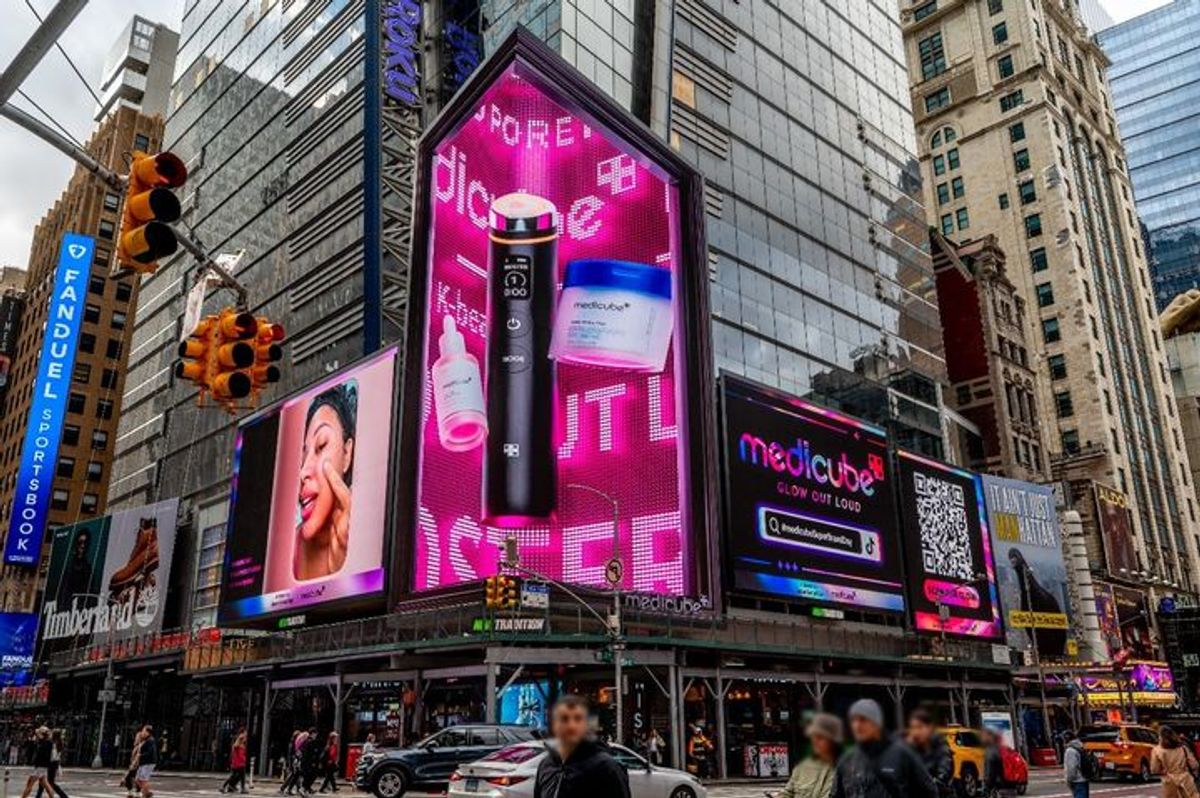
APR posted revenues of 767.5bn won (approximately $560m) in the second quarter of 2025, sustaining a sharp growth trajectory. With overseas sales accounting for 92% of that total, the company can now be classified, without much exaggeration, as an export business that happens to have originated in the Korean beauty market. Behind this extreme dependence on international revenues lies a combination of strategic branding, platform diversification, and the global wave of enthusiasm for K-beauty products.
Anatomy of a Korean beauty success story
APR is a multi-brand house operating several beauty labels, including Medicube, April Skin, Foment, and Glasskin. Founded in 2014, the company built its commercial model around direct-to-consumer (D2C) sales, prioritising its own online storefronts over third-party retailers—and then successfully replicated that model abroad. The second-quarter revenue figure represents substantial year-on-year growth, and the numbers leave little doubt about where the momentum is coming from.
A 92% overseas revenue share is exceptional even by the standards of Korea's leading beauty companies. Amorepacific, the country's largest cosmetics group, derived roughly 45% of its revenues from abroad in 2024; LG H&H is still wrestling with how to expand its international footprint. That APR should so dramatically outpace its larger, more established peers reflects a deliberate founding choice: rather than first cementing dominance in the domestic market, the company set out from the beginning to build a global direct-sales operation.
The three pillars: America, Japan, South-East Asia
APR's international revenues rest on three core markets. In the United States, the company has built meaningful brand recognition for its Medicube AGE-R line of beauty devices through Amazon and its own e-commerce site. The American beauty-device market was worth approximately $6.8bn in 2023 and is expanding at around 8% a year—a favourable backdrop for APR's flagship product category.
In Japan, K-beauty imports overtook those from France in 2023 for the first time, a structural shift that analysts regard as more than a passing trend. APR has benefited directly: devices such as the Slim Glass and Booster Pro have spread rapidly among younger female consumers, propelled by Korean pop-culture content and social media.
In South-East Asia, APR has improved its accessibility by partnering with regional e-commerce platforms Shopee and Lazada. Demand for K-beauty in Indonesia, Thailand, and Vietnam has, if anything, accelerated since the Covid-19 pandemic. APR's positioning in the affordable-to-mid-market segment fits well with the price sensitivity that characterises many South-East Asian consumers.
Devices and direct sales: the twin engines of differentiation
One of the most important factors distinguishing APR in a fiercely competitive global market is its early move into beauty devices. By selling skin-care hardware alongside conventional cosmetics, the company raises both average transaction values and customer lifetime value. The mechanism is familiar from other industries: once a consumer buys the device, she tends to repurchase the proprietary serums and creams designed to accompany it—a lock-in dynamic that analysts within the beauty industry liken to Apple's hardware-software ecosystem or Nespresso's machine-and-capsule model. APR's repeat-purchase and return-visit rates are understood to be well above those of its competitors, lending the revenue base a degree of stability.
The D2C strategy is equally significant for profitability. By reducing dependence on large offline retailers and duty-free channels—which were the traditional backbone of Korean beauty exports—and pushing sales through its own digital storefronts, APR captures more of the margin while gaining direct access to consumer data. That data feeds back into more precise marketing and faster product development, creating a self-reinforcing loop.
The paradox of 92%
A 92% overseas revenue share is simultaneously a badge of success and a source of structural fragility. It means APR is disproportionately exposed to currency movements, tightening local regulations, and shifts in platform policy. In the United States, the Federal Trade Commission has been toughening its oversight of advertising claims made by beauty and medical-device companies. Japan applies strict labelling rules to quasi-pharmaceutical cosmetics. The higher the concentration in any single market or platform, the more directly a policy change there will show up in group-level results.
The near-absence of a domestic business—just 8% of revenues—is a double-edged condition. When global demand softens, there is little domestic base to fall back on. The beauty industry in Korea still recalls how Amorepacific's results collapsed between 2016 and 2019 when China retaliated against South Korea's deployment of an American missile-defence system (THAAD) by cooling bilateral economic ties. Concentration in a single market, that episode showed, can turn a strength into a catastrophic vulnerability almost overnight.
The competitive environment is also shifting. Chinese beauty brands are pressing into South-East Asia, the Middle East, and Europe with aggressive pricing. Some analysts warn that the novelty of K-beauty may eventually reach saturation among American and European consumers.
A faster path than anyone managed before
APR's trajectory looks quite different from the internationalisation histories of the world's established beauty groups. L'Oréal spent decades building a solid European base before mounting a serious assault on the American market in the 1970s. Estée Lauder's digital transformation—from its roots in department-store counters—took the better part of a generation. APR has taken barely a decade to attack global digital markets simultaneously: a quantum leap made possible by the collapse of national borders in e-commerce and by the formidable cultural soft power that Korea has accumulated through music, television, and film. The global profile built by BTS, Squid Game, and Blackpink has demonstrably lowered the barriers to entry for Korean consumer brands—a point on which academics and industry practitioners tend to agree.
What comes next
Sustaining the current growth trajectory will require APR to resolve several strategic questions. First, geographic and channel diversification: a portfolio still heavily weighted towards the United States, Japan, and South-East Asia needs to extend into the Middle East, Europe, and Latin America. Second, premiumisation: surviving in a market where Chinese rivals compete on price demands a richer pipeline of high-value products that can command brand-led pricing. Third, domestic rebuilding: an 8% home-market share is too thin to serve as a meaningful buffer against external shocks.
APR's rise also carries a policy lesson. Industry observers argue that South Korea's government support for beauty exports—currently oriented towards large incumbent companies—needs to be reoriented towards digitally native small and mid-sized brands of the kind that APR represents. Practical assistance with overseas product certification, the sharing of local market intelligence, and stronger negotiating leverage on global platforms would, the argument runs, be the most effective way to produce the next generation of APR-like success stories.
Second-quarter revenues of 767.5bn won; 92% from abroad. Those two numbers are both APR's report card and a map of the Korean beauty industry's future—marking the direction of travel and the traps that lie along the way.