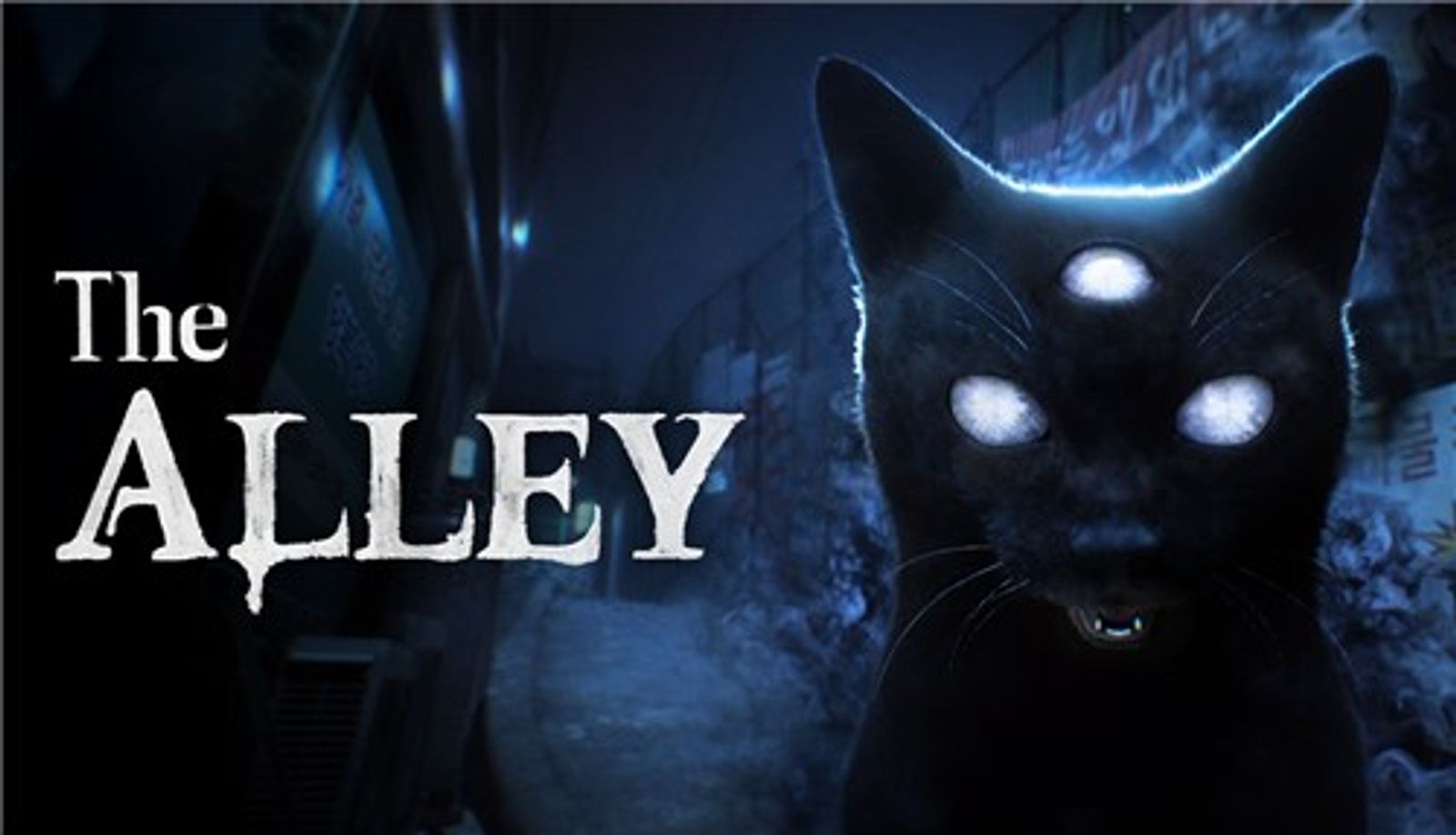
Smilegate, one of South Korea's most internationally ambitious games developers, is launching *Alleyway: Spirits of Resentment* on global markets, hoping to establish Korean-style horror as a credible force in interactive entertainment. The release comes on the back of a remarkable run for Korean horror content abroad: Netflix's *Squid Game* became a worldwide phenomenon, while the film *Exhuma* (2024) earned critical acclaim at international festivals. The question now is whether the gaming industry can replicate that crossover success.
*Alleyway: Spirits of Resentment* is rooted in distinctly Korean settings and traditions. Its world is built around the narrow back-alleys (*golmok*) of old Korean neighbourhoods, and its horror draws on indigenous mythology—vengeful spirits, restless ghosts, and the concept of *han*, an untranslatable Korean term for a deep, collective grief born of injustice and historical suffering. Smilegate positions the game as a successor to the Japanese "Asian horror" tradition exemplified by Konami's *Siren* and Tecmo's *Fatal Frame* series, while asserting that Korean horror has a distinct grammar of its own.
The market case for K-Horror games
The global market for horror games is expanding steadily. According to Newzoo, a games research firm, worldwide revenues from survival horror and psychological horror titles reached approximately $4.2 billion in 2023 and are forecast to grow at more than 8% annually through 2027. Crucially, Western players on PC and console platforms have become increasingly receptive to horror games of Asian origin—a trend that works in Smilegate's favour.
The company has steadily built its international publishing capabilities through titles such as *Blue Archive* and *Lost Ark*. For *Alleyway*, it has reportedly invested heavily in localisation, offering support for English, Japanese and Chinese, and weaving cultural annotations directly into the game to help foreign players understand the Korean folklore underpinning the horror.
Japan's template and Korea's difference
Japan has long dominated Asian horror gaming. Capcom's *Resident Evil* franchise has sold more than 140 million copies worldwide; Konami's *Silent Hill* series commands a devoted cult following in the West. Both succeeded by translating their native horror aesthetics into a universal gaming language.
Korean horror games have made tentative but encouraging inroads. A remastered version of the indie title *White Day: A Labyrinth Named School*, released on Steam in 2023, earned a "Very Positive" rating, with many Western reviewers describing it as "a new horror experience, distinct from anything Japanese." Industry analysts who specialise in gaming point to a meaningful difference in the underlying aesthetic. Japanese horror tends to unsettle through the alienness of its creatures and phenomena—the uncanny made flesh. Korean horror, by contrast, derives its dread from social rupture and historical wounds: communities destroyed, deaths unavenged, grievances unacknowledged. This narrative density, analysts argue, could give Korean horror games a distinctive edge in a crowded market.
Smilegate's global strategy—and its risks
Smilegate has a credible track record in international markets. Its online shooter *CrossFire* peaked at eight million concurrent players in China, demonstrating that a Korean-made game could achieve extraordinary scale abroad. The company is expected to deploy region-specific marketing for *Alleyway*, adapting its approach to each major market.
Yet the risks are real. Horror is one of the most tightly regulated genres in gaming: age-rating requirements and content restrictions vary sharply across territories. China, where horror content faces particularly stringent censorship, may prove a near-impenetrable market. Globally, *Alleyway* will compete against well-resourced AAA blockbusters—*Resident Evil Village*, *Alan Wake 2*—whose production values set a formidable benchmark. How Smilegate differentiates itself against games backed by far larger budgets will determine whether it can carve out a sustainable position.
A broader K-Horror ecosystem
*Alleyway: Spirits of Resentment* should be understood not merely as a single new title but as part of a wider cultural moment. The films *The Wailing* (2016) and *Exhuma* (2024) drew on Korean shamanism and folk mythology to win international audiences. Netflix series such as *Hellbound* and *Strange* established K-Horror as a recurring presence at the top of global streaming charts. A Korean horror game is a natural extension of this ecosystem. A generation of international audiences has already been primed by film and television to appreciate Korean horror aesthetics; a video game offers them a way to inhabit that world interactively. On that basis, Smilegate's timing looks astute.
Three tests to pass
The game's commercial fate will be determined by three factors. First, whether the Korean horror narrative translates intuitively across cultural boundaries—or whether the folklore proves too opaque without substantial contextual scaffolding. Second, whether the game generates viral momentum through content creators: streamers and YouTubers have become the primary discovery mechanism for horror games, and titles such as *Five Nights at Freddy's* have demonstrated how dramatically that channel can amplify a launch. Third, whether Smilegate can sustain player engagement through responsive post-launch updates, quickly incorporating early feedback.
Horror is uniquely well-suited to streaming-driven marketing. Reaction videos and "horror game challenge" formats routinely attract millions of viewers on global platforms, providing a proven route to organic virality. How strategically Smilegate exploits that channel may prove decisive.
The broader context is significant. South Korea's games industry is at an inflection point, seeking to diversify beyond the mobile titles that have long dominated its output into higher-production-value console and PC games. *Alleyway: Spirits of Resentment* could yet become a landmark in that transition—or a cautionary reminder of how difficult it is to transplant a national horror tradition into an unforgiving global market. The verdict lies with players worldwide.