Company Overview
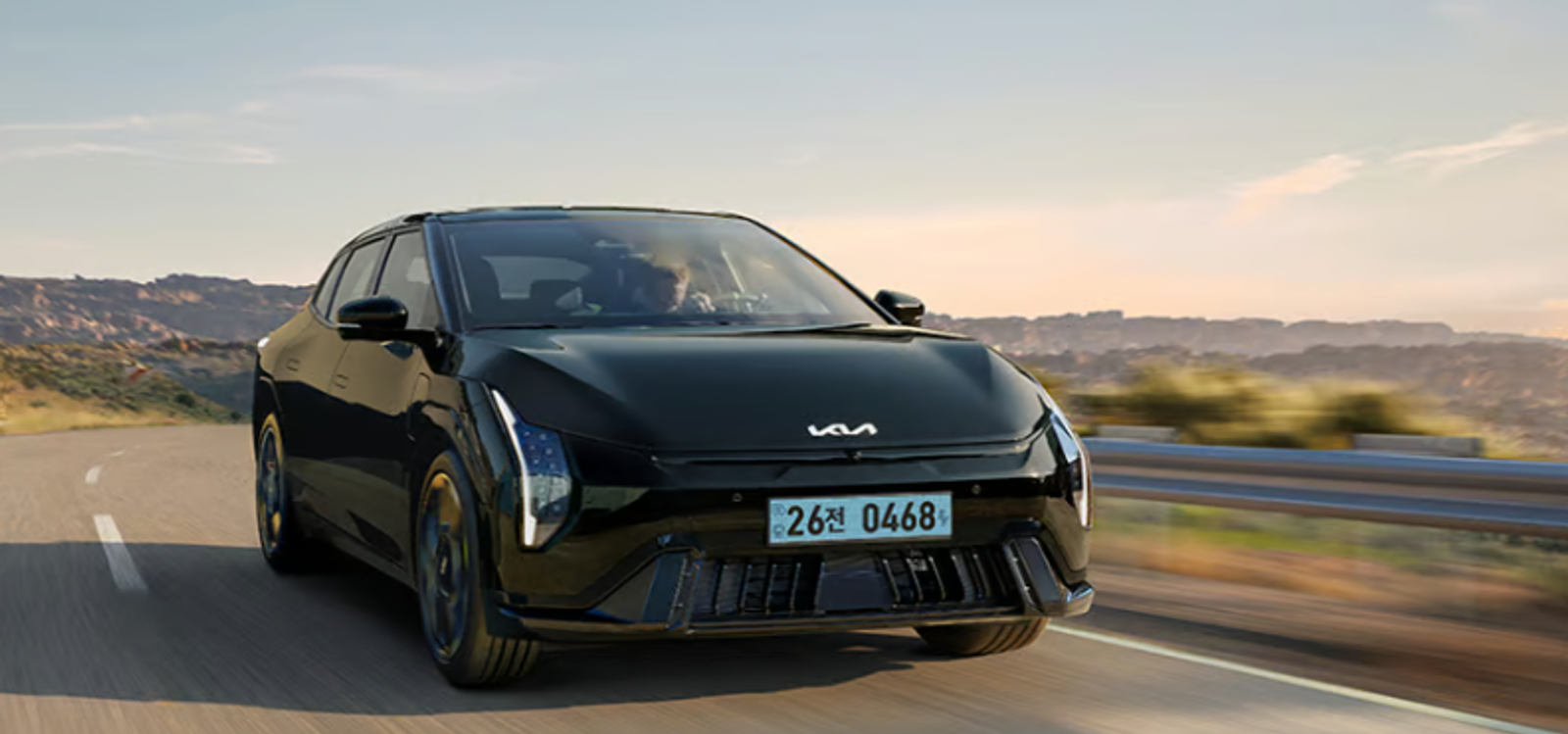
Kia (ticker: 000270) is the passenger-car arm of Hyundai Motor Group, South Korea's dominant automotive conglomerate. It ranks second in the domestic passenger-car market and, together with its parent Hyundai, forms part of a group that sits among the world's three or four largest carmakers by global sales volume. In 2021 the company dropped "Motors" from its name — rebranding from Kia Motors to simply Kia — to signal a strategic pivot towards broader mobility services. It has since expanded its electric-vehicle line-up with models such as the EV6 and EV9, and is promoting a new category of specialised commercial vehicles, known as purpose-built vehicles (PBVs), as a fresh engine of growth.
For years Kia has been synonymous in Korean equity markets with the concept of the undervalued blue chip. Despite consistently strong operating margins and solid global sales, its price-to-book ratio (PBR) has languished below one — a textbook illustration of the so-called "Korea discount", the persistent tendency of South Korean stocks to trade at a markdown relative to global peers. When South Korea's Financial Services Commission formalised its Corporate Value-Up Programme in 2024, Kia — alongside Hyundai — found itself at the centre of the debate about how Korean industrial companies could close that valuation gap. The company's formidable cash-generation capacity and net-cash holdings approaching 20 trillion won (roughly $15 billion) gave investors grounds to hope that meaningful shareholder returns were within reach.
Business Foundations and Financial Performance
Global Sales and Profitability
Kia has been through what analysts widely describe as a renaissance since the early 2020s. A wholesale repositioning of its line-up around SUVs — notably the Sportage and Sorento — resonated strongly in North America and Europe. A richer mix, skewed towards higher-margin models, pushed operating margins sharply upward. In 2023, annual operating profit exceeded 10 trillion won for the first time. The following year the company maintained that momentum.
Yet the operating environment grew more treacherous in 2025 and 2026. Because Kia exports a large share of its output, a weak Korean won typically flatters its translated earnings. However, rising global tariff barriers and deepening uncertainty over American trade policy have exposed the vulnerability of a profit structure so heavily dependent on exports. By the first half of 2026 the phrase "the high exchange-rate paradox" had entered market commentary: the won's depreciation, which would ordinarily boost Kia's earnings, was being largely offset by tariff headwinds and volume pressure, leaving the company unable to benefit as fully as the exchange rate alone would imply.
Financial Results by Year
Year | Operating Profit | Operating Margin | Net Profit | Net Cash
2021 | ~₩5.1tn | ~7% | ~₩4.2tn | —
2022 | ~₩7.2tn | ~9% | ~₩5.6tn | —
2023 | ~₩11.6tn | ~12% | ~₩9.0tn | —
2024 | ~₩12tn | ~11% | ~₩9.5tn | ~₩20tn
2025 | Consensus estimates revised down | — | — | >₩20tn
The Significance of 20 Trillion Won in Net Cash
When it became widely known in early 2026 that Kia was sitting on net cash of roughly 20 trillion won, pressure for more aggressive shareholder returns intensified considerably. In the context of South Korea's Value-Up Programme — which is designed precisely to tackle capital inefficiency at listed companies — a cash pile of that magnitude relative to market capitalisation became difficult to defend. Kia's management is understood to have acknowledged as much and to have begun drawing up a medium-to-long-term capital-allocation plan.
Value-Up: A Timeline of Key Developments
2024 — The Value-Up Programme Launches; Carmakers Step into the Spotlight
When the financial regulator formally introduced the Corporate Value-Up Programme, automotive stocks — Hyundai and Kia foremost among them — were immediately identified as prime beneficiaries. As a stock trading below one times book value, Kia was a natural candidate for formal disclosure under the programme's guidelines, and it attracted increased interest from both domestic institutional investors and foreign funds.
October 2025 — ₩323 Billion Share Cancellation Announced
On 31 October 2025, Kia's board resolved to cancel treasury shares worth 323 billion won. Share cancellations reduce the number of shares in issue, thereby lifting the per-share value of those that remain — one of the clearest and most unambiguous mechanisms for returning value to shareholders. The market read the decision as a firm signal that Kia intended to engage seriously with the Value-Up Programme.
November 2025 — "Year One" of the Long-Term Value-Up Plan Declared on Track
In November 2025, as analysts assessed progress across Hyundai Motor Group's value-enhancement commitments, Kia's own medium-term plan — for which 2025 had been designated the inaugural year — was judged to be broadly on course. The combination of earnings-driven shareholder returns and a strategic shift towards PBVs and electric vehicles drew a broadly positive response from investors.
February 2026 — Net Cash Surpasses ₩20 Trillion; Calls for Action Intensify
By February 2026, Kia's net cash had crossed the 20 trillion won threshold, reigniting demands for a more decisive redistribution of capital. Some market participants went so far as to argue that accumulating cash on that scale constituted, in itself, a destruction of shareholder value. Calls grew louder for Kia to publish a detailed and concrete capital-allocation roadmap.
March 2026 — Annual General Meeting Season Confirms Share-Cancellation Momentum
South Korea's annual general meeting season in March 2026 saw a wave of large companies accelerating their treasury-share cancellation programmes. Kia was seen as part of this broader trend. Whether and how quickly such moves would translate into measurable improvements in corporate valuations became one of the market's dominant preoccupations.
April 2026 — Shareholder Returns Meet Succession Politics
In April 2026 analysts began drawing explicit connections between Hyundai and Kia's expanded shareholder-return policies and the succession plans of Chung Euisun, the group chairman. With a possible transition to a holding-company structure and inter-affiliate shareholding reshuffles on the horizon, observers questioned whether the shareholder-return agenda was being shaped partly by the controlling shareholder's interests. These concerns fed into a broader debate about whether the Value-Up Programme was serving all shareholders equally, or whether it was being co-opted as an instrument of ownership consolidation.
May 2026 — PBVs and the "Atlas" Model Presented as Value-Up Catalysts
In May 2026 Kia put its PBV business and a model called the "Atlas" at the centre of its pitch for a step-change in corporate value. PBVs — electric vans and light commercial vehicles designed for logistics and shared mobility — are positioned as high-value-added products that could materially improve Kia's profitability and support a re-rating of its shares. Analysts suggested that if the PBV business gained genuine commercial traction, a revision upward of Kia's price-to-book multiple was conceivable.
June 2026 — Shareholder-Return Roadmap Published
On 2 June 2026, Kia formally released a shareholder-return roadmap built around the principle of "returning what we earn". The policy links dividends, share buy-backs and cancellations explicitly to annual profit, with the aim of making the overall programme more consistent and predictable. The precise payout ratios and timing are to be calibrated each year against actual earnings, preserving some operational flexibility for management.
Challenges and Assessment
Challenges Ahead
For Kia to translate its Value-Up commitments into lasting improvements in shareholder value, it must address several structural challenges.
Sustaining profit-linked returns through a cycle. The principle of "returning what we earn" cuts both ways: when profits fall — whether because of an economic downturn or weaker-than-expected electric-vehicle demand — so too will the scale of shareholder distributions. Maintaining consistency in down years will be the true test of the policy's robustness.
Monetising the PBV business sooner rather than later. Kia has staked considerable credibility on PBVs as a growth driver. The market for purpose-built commercial vehicles is still in its infancy, and translating that ambition into material revenues and profits will take time. The gap between narrative and numbers will need to narrow if the re-rating thesis is to hold.
Managing global trade and tariff risk. Kia's export-centric profit model is directly exposed to American protectionism and the broader fragmentation of global trade. Unless the company simultaneously expands local production capacity and diversifies its supply chain, the profits that are supposed to fund shareholder returns may themselves prove volatile.
Overall Assessment
Among South Korean industrial companies, Kia stands out as one of the most active participants in the Value-Up Programme. Its 323-billion-won share cancellation and the publication of a profit-linked return roadmap have been well received by the market, and its move to address a chronic below-book valuation through concrete action — rather than mere rhetoric — is a meaningful step forward. A balance sheet carrying 20 trillion won in net cash provides genuine firepower to back those commitments.
Nonetheless, the dual overhang of the chairman's succession and recurring labour disputes continues to cast doubt on whether the Value-Up agenda is being pursued purely in the interests of all shareholders. That question will require ongoing scrutiny.
Controversies and Limitations
The Treasury-Share Paradox: Cancellation or Distribution?
The sharpest controversy in Kia's Value-Up story concerns how it has used its treasury shares. In June 2026 it emerged that Kia had exploited an exemption clause — which permits companies to distribute treasury shares to employees — to award 327 treasury shares exclusively to senior executives. The company's trade union reacted sharply, accusing management of "monopolising the rewards of performance" and condemning the decision as fundamentally inequitable, given that ordinary workers were excluded. The union called out Chairman Chung Euisun directly over the exemption clause, arguing that the principle of cancelling treasury shares was being applied selectively and inconsistently.
The episode raises basic questions about the transparency and coherence of Kia's treasury-share policy. Cancellations benefit all shareholders equally by reducing the share count. Distributing shares to specific executives, by contrast, introduces potential conflicts of interest. The risk that buy-back and cancellation programmes might be partially redirected into executive compensation is one that investors in South Korean companies have long been wary of.
Shareholder Returns and the Ownership Agenda
The suspicion that Hyundai and Kia's shareholder-return policies are intertwined with Chairman Chung's plans to consolidate control and manage his succession has persisted. Share buy-backs followed by cancellations have the effect of mechanically increasing the controlling shareholder's percentage stake without any additional purchase. Whether this is an incidental by-product or a deliberate consideration is difficult to establish from the outside, and the ambiguity is unlikely to disappear quickly. Questions also linger over why Hyundai and Kia have adopted different emphases — Hyundai tilting towards share cancellations, Kia towards dividends — and whether the divergence reflects straightforward financial logic or a choreography dictated by the group's ownership structure.
The High-Exchange-Rate Paradox and Earnings Volatility
The assumption that a weak won is straightforwardly good for Kia has been complicated by the trade environment of 2026. The combination of American tariff levies and pressure to manufacture locally means that currency depreciation no longer translates as reliably into improved profitability as it once did. This raises the underlying volatility of the earnings base from which shareholder returns are funded, adding a layer of uncertainty to the medium-term capital-allocation plan.
Structural Limits to PBR Improvement
Kia's price-to-book ratio continues to hover around one — still well below comparable global peers. Some analysts argue that share cancellations and higher dividends alone are unlikely to engineer a durable structural re-rating. Until the PBV business generates visible revenues, the near-term impact on the valuation multiple may remain limited.
Key Metrics at a Glance
Year | Operating Profit | Dividend (approx.) | Share Cancellation | PBR
2021 | ~₩5.1tn | ~₩2,000/share | Not disclosed | ~0.5×
2022 | ~₩7.2tn | ~₩3,000/share | Not disclosed | ~0.6×
2023 | ~₩11.6tn | ~₩5,000/share | Not disclosed | ~0.8×
2024 | ~₩12tn | ~₩5,000–6,000/share | — | ~0.9×
2025 | Consensus est. | — | ₩323bn cancellation resolved | ~1.0×
2026 | Downside risk flagged | Profit-linked roadmap published | Executive share-grant controversy | ~1.0×