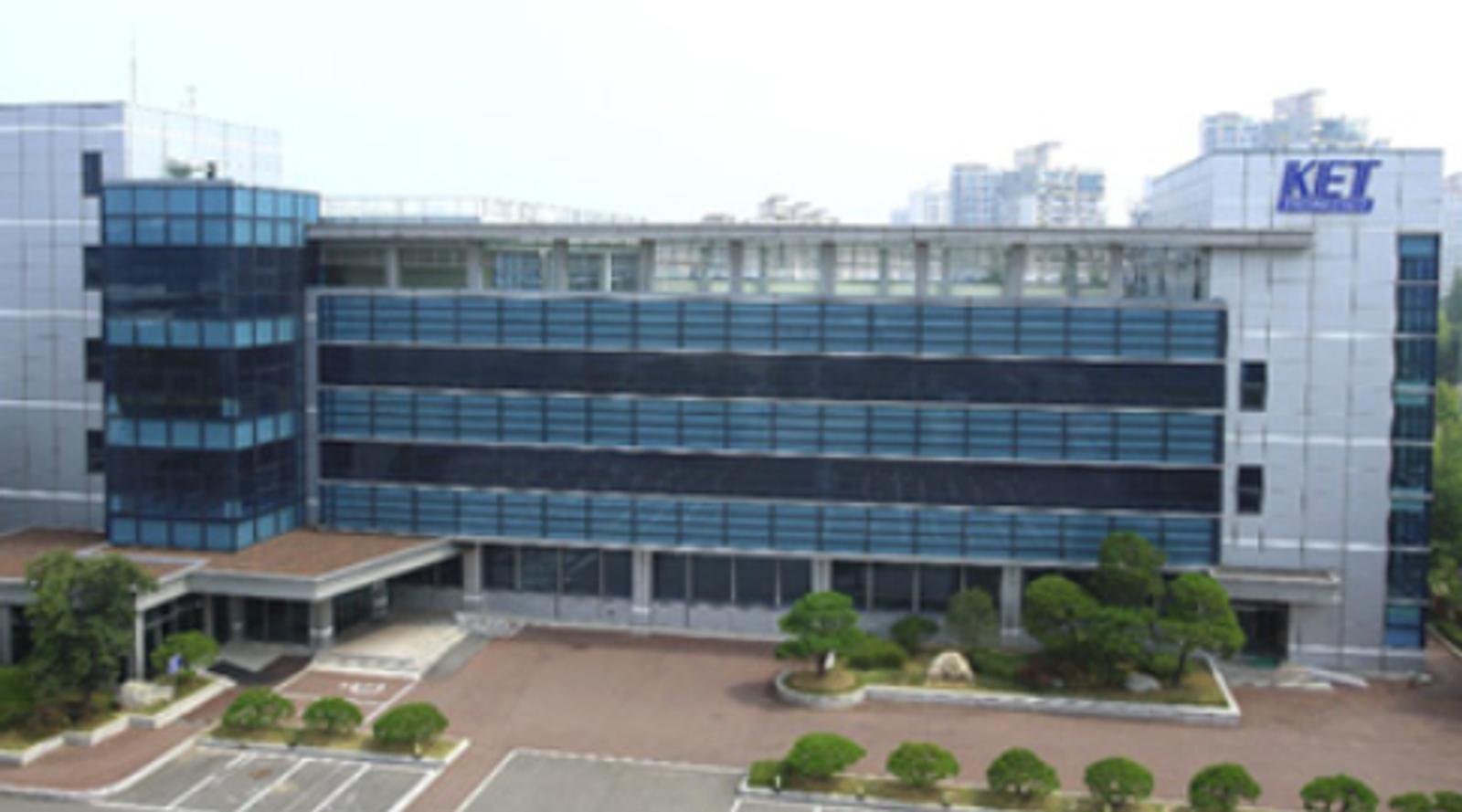
Korea Electric Terminal (KET; ticker 025540), a specialist manufacturer of electrical connectors, reported second-quarter operating profit that fell 47% short of market expectations, as soaring raw-material costs overwhelmed modest revenue growth.
In a research note published on 21st August, Hana Securities laid out the causes of the profit collapse.
KET's second-quarter revenue rose 4% year on year to 395.1bn won. Operating profit, however, plunged 52% over the same period to 17.8bn won. The operating margin fell to 4.5%, a decline of 5.2 percentage points year on year and 3.1 percentage points from the previous quarter.
The principal culprit was a sharp rise in the price of non-ferrous metals, above all copper. Hana Securities estimates that KET's non-ferrous raw-material costs climbed 36.7% year on year. On the London Metal Exchange, copper prices have risen roughly 50% over the past year, from approximately $9,500 per tonne in August 2025 to around $14,000 today. Given that raw materials account for 60% of KET's total costs — and non-ferrous metals for more than 70% of that — the commodity shock has hit margins with unusual force.
The headline revenue growth also flatters the underlying picture. Strip out the contribution from KT International, a subsidiary consolidated from May onwards, and like-for-like sales actually fell 1% year on year. Weaker electric-vehicle demand and ageing customer models weighed on output: revenue at KET's American and Polish subsidiaries dropped 27% and 18%, respectively. The American unit has been in a prolonged slump linked to an EV customer's faltering sales since 2025, and negotiations are under way for that customer to compensate KET for its losses. As of the second quarter, a combined 53.8bn won in contract liabilities (13.6bn won non-current, 40.2bn won current) sits on the balance sheet and is expected to be recognised as revenue once those negotiations conclude.
Further pressure came from KT Networks, a consolidated subsidiary that makes wiring harnesses. Although its second-quarter revenue grew 16% year on year, a partial relocation of production to Vietnam ran into labour-supply difficulties, triggering emergency manufacturing and logistics costs. KT Networks and the Vietnamese entity posted net losses of 3.8bn won and 2.9bn won, respectively, in the quarter.
Pre-tax and net profit told a different story, both rising year on year — by 51% and 43%, respectively. This reflected a 29.6bn won swing in foreign-exchange gains compared with a year earlier, as well as a one-off bargain-purchase gain of 4.9bn won arising from the KT International acquisition. Investors should note, however, that these are non-recurring items and say little about the health of KET's core operations.
The second-quarter results mark a notable deterioration in a longer trend. KET's full-year operating margin reached 11.3% in 2024, the highest in five years, before slipping to 9.7% in 2025 and falling further to around 6.1% in the first half of 2026. The current copper-price shock is the most severe since 2021, when prices rose 36.8% year on year, and analysts believe near-term margin pressure is unlikely to dissipate quickly.
Hana Securities expects a gradual recovery from the third quarter, driven by price increases passed on to customers and the stabilisation of production at the Vietnamese facility. KET has already begun implementing further price rises since July to recoup part of the copper cost increase. Average selling prices for automotive and electronic connectors both edged up in the second quarter — by 3% and 1% year on year, respectively — indicating that the product-mix improvement remains intact.
Risks remain, nonetheless. A slower-than-expected recovery in global EV demand could delay any revenue rebound at the American and Polish operations. The timeline for stabilising Vietnamese production is uncertain. Should copper prices rise further, or should compensation negotiations with the EV customer drag on, the margin recovery could take longer than hoped.
Despite these concerns, Hana Securities sees the current share price as an attractive entry point. At 55,800 won as of 20th August, the stock trades at just 0.47 times book value, and the expected dividend yield — based on a per-share dividend of 3,200 won — is approaching 6%. The broker describes the stock as a "buy-on-weakness opportunity" for investors willing to look beyond near-term pain towards a profit recovery and KET's nascent exposure to connectors for robotics, semiconductors and energy storage systems. Hana Securities carries no formal investment rating on KET and has not set a price target.
KET's 52-week high stands at 91,400 won, roughly 39% above the current price. The company's market capitalisation is approximately 564.4bn won. Foreign investors hold a 28.72% stake. The founding Lee Chang-won family group (eleven shareholders in total) owns 34.28%, while Japan's Yazaki Corporation holds 7.23%.