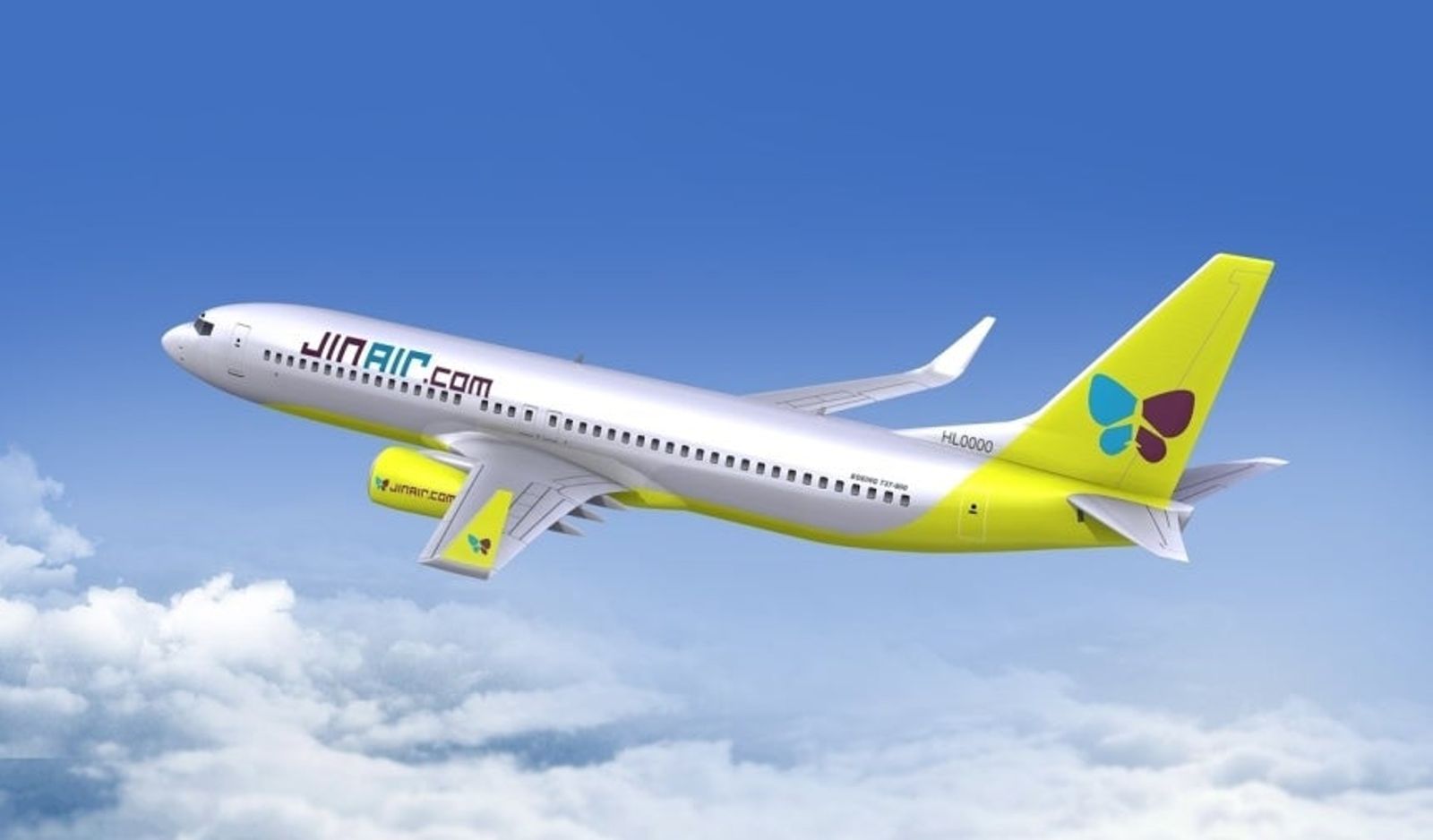
South Korea's low-cost carrier (LCC) market is on the cusp of its most sweeping structural overhaul in its history. Air Busan and Air Seoul, both affiliated with the Hanwha conglomerate, are to merge with Jin Air, which belongs to the Hanjin Group (parent of Korean Air), with the combined entity — to be branded "integrated Jin Air" — scheduled to launch in March 2027. Analysts describe this as more than a straightforward corporate tie-up: it is an event with the potential to reshape competitive dynamics across South Korea's entire aviation industry, with far-reaching implications for consumers and workers alike.
Background: An Oversupplied Market Under Pressure
South Korea's LCC sector has been in a state of effective oversupply since the mid-2010s, when carriers including Jeju Air, Jin Air, Air Busan, Air Seoul, T'way Air, and Eastar Jet raced to expand their route networks. According to data from the Ministry of Land, Infrastructure and Transport, LCCs collectively accounted for more than 50% of international seat capacity in 2024 — yet operating margins at most carriers remained stuck in the low single digits. Already weakened by the Covid-19 pandemic, smaller LCCs faced an additional squeeze from elevated fuel prices and a weaker won, raising serious doubts about their viability as standalone businesses.
Air Seoul's predicament was particularly acute. Originally a subsidiary of Asiana Airlines, it was left in limbo after Korean Air completed its acquisition of Asiana in 2024. Maintaining a separate Asiana-branded LCC subsidiary within the Korean Air group was deemed impractical — generating regulatory concerns over overlapping routes and creating brand confusion. Air Busan's ownership structure was similarly complicated by the unwinding of Asiana's shareholdings. Once Hanwha Group moved to acquire a stake in Air Busan, discussions about a three-way merger with Jin Air accelerated sharply.
The Scale Argument: What the Numbers Show
On a combined basis, the merged carrier would operate a fleet of roughly 70 to 80 aircraft and carry approximately 20 million passengers a year, instantly vaulting it past Jeju Air — currently South Korea's largest LCC — to become a dominant force in the market. Industry estimates suggest the merger could generate annual synergies worth hundreds of billions of won, derived from stronger negotiating leverage in aircraft procurement, consolidated maintenance and flight operations, and an expanded portfolio of airport slots — the prized take-off and landing rights that constrain capacity at busy hubs.
Global precedents offer some encouragement. The mergers of American Airlines with US Airways in 2013, and of United Airlines with Continental in 2010, both delivered long-term cost competitiveness despite painful early restructuring. In Asia, Indonesia's Garuda Indonesia group is frequently cited as a reference model for how integrating LCC subsidiaries under a single umbrella can consolidate market power.
Competitive Implications: A Direct Challenge to Jeju Air
The emergence of an integrated Jin Air poses the most immediate threat to Jeju Air, which has sought to grow through its own acquisition of Eastar Jet. Even with that deal, Jeju Air may find itself at a significant fleet disadvantage against the merged entity. The strategic logic is compelling: combining Air Busan's regional network anchored at Gimhae Airport in Busan, Jin Air's Incheon hub routes, and Air Seoul's niche international services would create a dense, nationwide network unlikely to be matched by any single rival.
For smaller carriers such as T'way Air and Eastar Jet, the pressure will be acute. Should the integrated Jin Air simultaneously sharpen its pricing and raise its brand profile, the room for mid-tier operators to compete may narrow considerably. Several industry analysts predict that the launch of the merged carrier will concentrate the LCC market into a "two giants, many minnows" structure.
Risks: The Perils of Integration
The optimistic case is far from guaranteed. The three carriers bring distinct corporate cultures and organisational structures that will be difficult to reconcile. Jin Air operates within the disciplined framework of the Hanjin Group, while Air Busan has cultivated a strong regional identity rooted in Busan — South Korea's second city. Reconciling these differences, particularly in the sensitive area of workforce rationalisation, carries a real risk of industrial conflict.
Pilots' and cabin crew unions at Air Busan have already begun pressing for guarantees of job security. The protracted difficulties encountered during the Korean Air–Asiana merger — where workforce integration remained contentious for years — serve as a cautionary tale. Labour specialists in the aviation industry argue that delivering on the promised synergies will require a credible, transparent roadmap for workforce integration from the outset, and that trust between management and employees must be built before the operational merger begins.
Regulatory scrutiny presents another source of uncertainty. South Korea's Fair Trade Commission must approve the deal, and if the merged carrier is found to hold an excessive share on specific routes, regulators could demand slot relinquishments or impose fare caps as conditions for clearance. The Korean Air–Asiana merger provides a precedent: both the FTC and overseas competition authorities required the surrender of slots on numerous routes and mandated measures to encourage new entrants.
Consumer Fares: Will Tickets Get More Expensive?
For travellers, the central concern is price. Reduced competition among LCCs could diminish the downward pressure on fares that has benefited consumers over the past decade. The Korea Consumer Agency and other consumer groups have warned that minimum fares on key routes may drift upward following the merger.
A counter-argument holds that cost savings from integration could ultimately be passed on to passengers. Southwest Airlines in the United States offers a long-running example of how operating a large, efficiently managed fleet and network can sustain a low-fare model over time. Whether the integrated Jin Air chooses to share the gains from economies of scale with its customers — or to harvest them as wider margins — will ultimately depend on the intensity of competition that remains in the market.
Looking Beyond 2027
If the timeline holds and the integrated Jin Air launches in March 2027, South Korea's aviation landscape will be reorganised around two poles: the Korean Air–Asiana alliance at the full-service end, and the merged Jin Air as the dominant force in the budget segment. This is not merely a reduction in the number of carriers; it represents a fundamental reset of the competitive, service, and employment dynamics of the entire industry.
Regulators bear a heavy responsibility to attach meaningful conditions to their approval — conditions capable of genuinely protecting consumers and preserving a degree of market competition, rather than merely rubber-stamping consolidation. The carriers themselves will face a social obligation to translate integration gains into service improvements and rational pricing, not simply into fatter profits. Whether this mega-merger proves to be a transformative leap for Korean aviation — or merely a case of bulk without brilliance — will be determined by the transparency and rigour with which the integration is executed.