Introduction
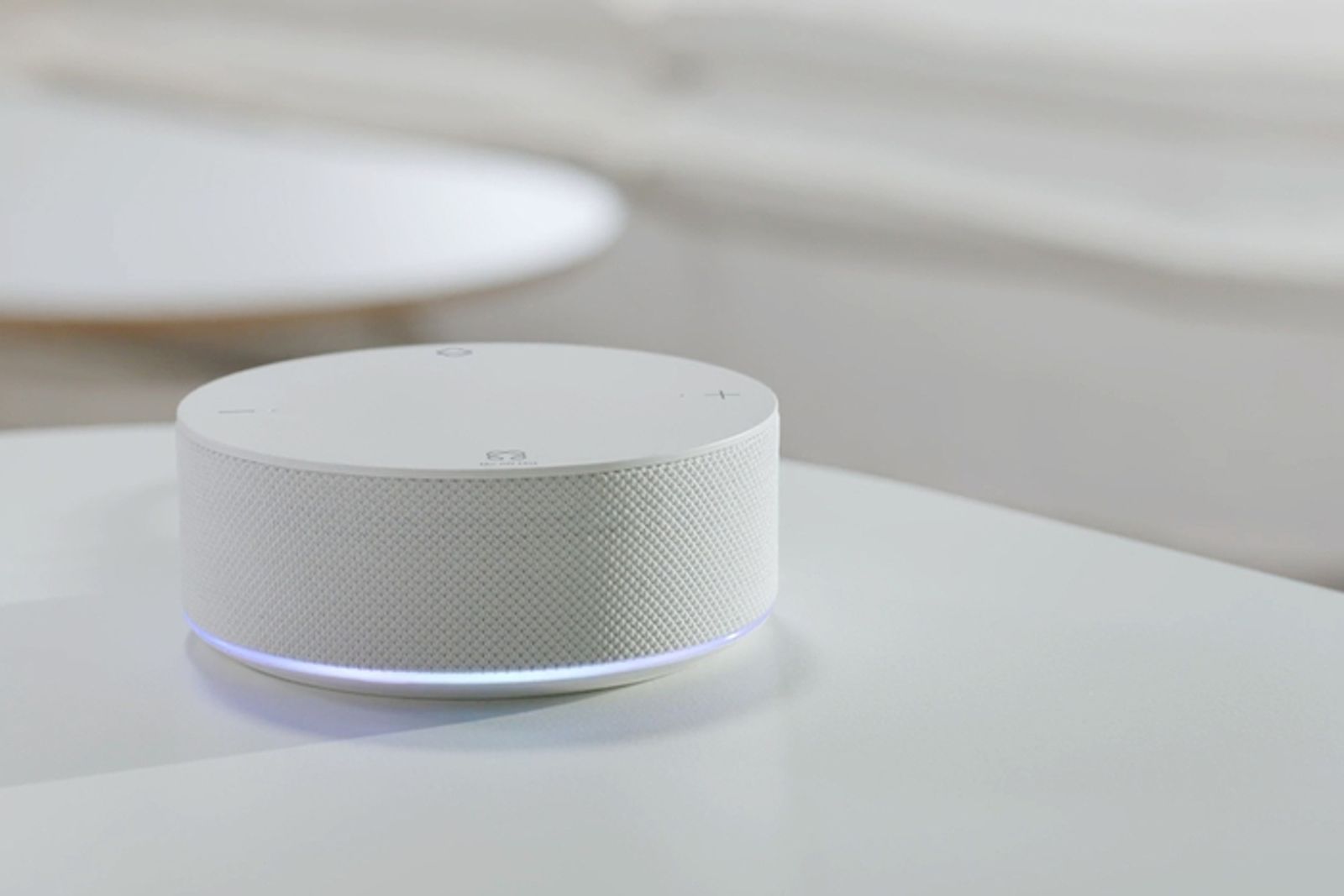
On 22nd October last year, LG Electronics formally launched the LG ThinQ ON, an AI home hub, in the South Korean market. Positioned as far more than a voice-activated speaker, the device is designed to hold natural conversations, interpret context and spatial awareness, and autonomously control home appliances and Internet-of-Things (IoT) devices. LG calls this vision the "AI Home." The ThinQ ON serves as the centrepiece of a concept the company first unveiled at IFA 2024 — the international consumer electronics fair held annually in Berlin — under the evocative tagline "Orchestra of Home Appliances."
Specifications
The ThinQ ON carries a retail price of 246,000 won (roughly $180). A range of companion LG IoT devices — including smart buttons, air-quality sensors, temperature-and-humidity sensors, door sensors, motion sensors, smart plugs, smart light switches, and smart door locks — are sold separately, priced between 40,000 won and 513,000 won depending on the product.
The hub's headline feature is natural-language conversational control. Users speak in everyday terms; the AI interprets context and location to control connected appliances and IoT devices, and links to relevant services. Through ThinQ PLAY, an integrated app store within the LG ThinQ application, users can access approximately 800 third-party services, including calendar management, taxi booking, music streaming, and weather. The hub also supports devices from other manufacturers, not merely LG's own product range. For customers unfamiliar with IoT set-up, LG offers a paid professional installation service, in which a trained engineer visits the home to configure a bespoke AI Home environment.
Strengths and Limitations
The ThinQ ON's principal strength is integration. Bringing both LG and third-party devices under a single hub, and extending functionality to around 800 linked services, pushes the product well beyond conventional appliance control into broader everyday convenience. The natural-language interface also lowers the barrier to entry compared with traditional smart-home devices that require users to memorise specific commands.
There are, however, meaningful limitations. Even before launch, the ThinQ ON's pricing was viewed as a potential vulnerability. Samsung Electronics has pursued what might be called a "zero-cost hub" strategy, embedding smart-home hub functionality directly into its standard appliances. Against that backdrop, a separate outlay of 246,000 won for the ThinQ ON represents a genuine deterrent for cost-conscious consumers. Factor in the additional expense of purchasing compatible IoT sensors and accessories to build a fully functioning AI Home, and the true total cost can climb considerably above the hub's sticker price.
Verdict
The LG ThinQ ON is the most concise expression yet of LG Electronics' ambition to treat the entire home — not individual appliances — as a single, unified AI system. The combination of natural-language control, 800 integrated services, and cross-brand device compatibility demonstrates a mature vision for a smart-home hub. Yet measured against Samsung's strategy of embedding hub functionality for free, the ThinQ ON falls short on price competitiveness. Ultimately, its success will hinge on how naturally it presents itself as an upgrade to consumers who already own multiple LG appliances.
★★★☆☆ (3.5/5.0)
In a sentence "It conducts the orchestra with real authority — but the baton is not free."