Company Overview
LIG Defence & Aerospace (LIG D&A) is the flagship defence subsidiary of LIG Group, led by chairman Koo Bon-sang, and one of South Korea's most strategically significant arms manufacturers. The company specialises in guided weapons, air-defence systems, and aerospace, and holds a dominant domestic position in the development and production of surface-to-air missile systems — most notably the Cheongung (天弓, "Heavenly Bow") series. As global defence spending has surged through the 2020s, LIG D&A has attracted growing investor attention, bolstered by an expanding export order book that includes the landmark sale of its Haegung ship-to-air missile system to Malaysia.
The debate over shareholder value — framed in South Korea under the government's "Value-up" programme, which encourages listed companies to improve capital efficiency and returns — is rooted in the company's unusual financial architecture. A swelling backlog and buoyant growth expectations have propelled the share price to "emperor stock" territory, a colloquial Korean market term for shares so expensive they are effectively inaccessible to retail investors. Yet this has occurred alongside deteriorating operating cash flows and a debt ratio that would alarm most creditors. How LIG D&A reconciles these tensions, and how its shareholder-return policy evolves alongside a broader industry commitment to higher dividends, has become one of the more closely watched questions in the Korean defence sector.
Business Foundation and Financial Performance
Air Defence and Guided Weapons: The Core Portfolio
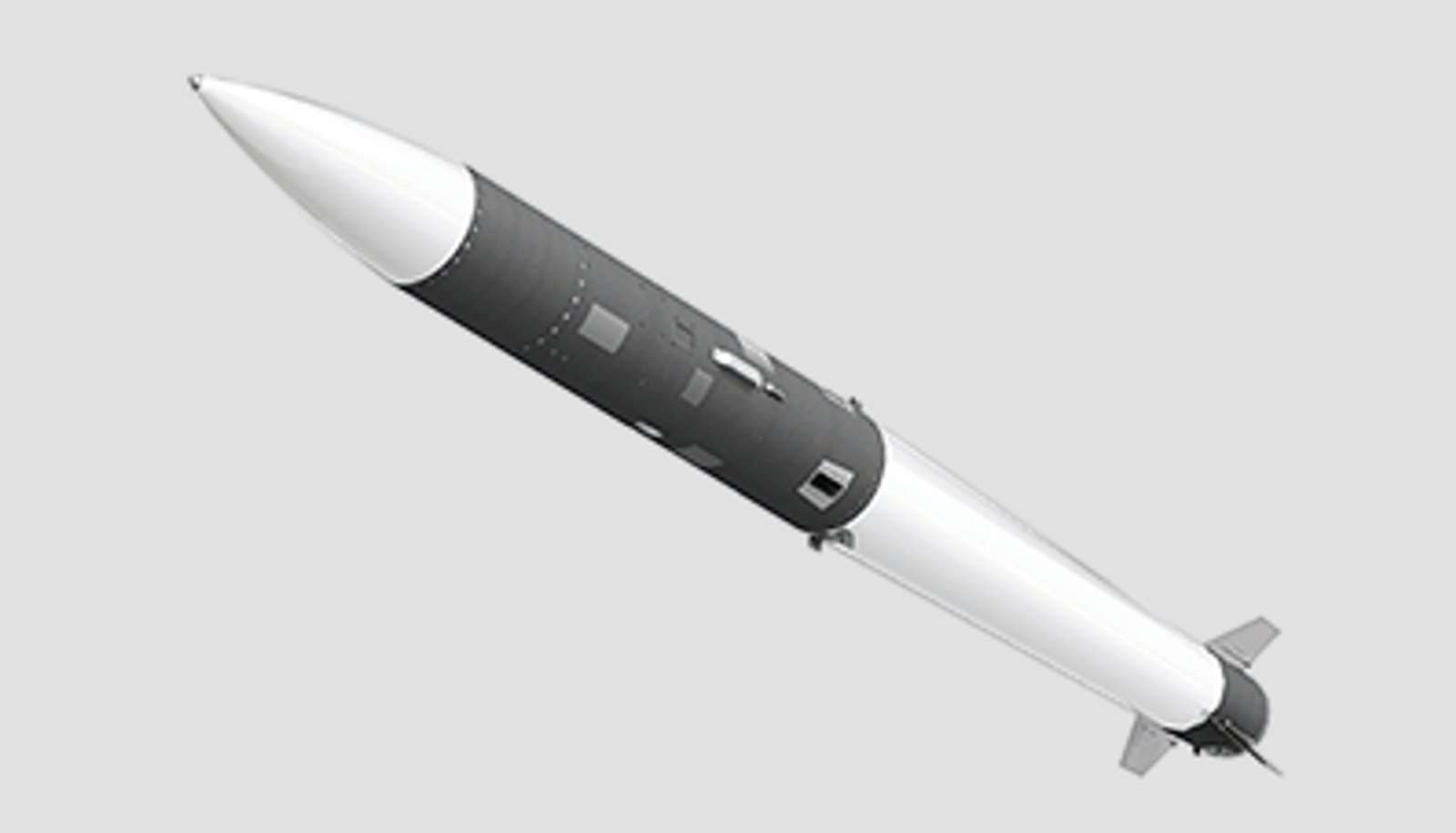
LIG D&A's principal business is the Cheongung family of medium-range surface-to-air missile systems. The export of the Cheongung-II to the United Arab Emirates established the company's credentials as an international supplier, and it is now a key prime contractor for the next-generation Cheongung-III programme. In June 2026, RF Systems reportedly joined the project as a sub-system supplier, signalling that the industrial ecosystem around the programme continues to broaden. The first export of the Haegung naval surface-to-air missile to Malaysia, announced in April 2026, marked a meaningful step in diversifying the company's export markets beyond its traditional Gulf clientele.
Financial Trends
Period | Revenue | Operating Profit | Operating Cash Flow | Debt Ratio
2023 | Per filings | — | — | —
2024 | Growing | Increasing | Turning negative | Rising
2025 | Order-driven growth | Increasing | — | —
H1 2026 | Export deliveries reflected | — | –₩588.4bn | 440%
*Note: The H1 2026 operating cash flow of –₩588.4bn (approximately –$430m) and debt ratio of 440% are based on press reports. Detailed annual figures should be verified against official regulatory filings.*
Order Backlog and Medium-Term Growth
In the defence industry, the order backlog is the primary leading indicator of future revenue. LIG D&A's backlog is accumulating rapidly, driven by rising South Korean defence procurement budgets and growing export success. In June 2026, a media exclusive reported that the company is pursuing the development of a global R&D campus in Pangyo, a technology hub south of Seoul, signalling its intention to invest in the capabilities underpinning long-term competitiveness.
Value-Up Milestones
2024 — The Debate Begins
As the South Korean government's Value-up programme gathered momentum, pressure on listed defence companies to improve price-to-book ratios and shareholder returns intensified. LIG D&A, as a publicly traded arms manufacturer, entered a new phase in which market demands for a more sophisticated dividend policy could no longer be deferred.
April 2026 — Malaysia Export Breakthrough and Share Price Surge
On 24th April 2026, news of the first Haegung missile export to Malaysia sent a jolt of excitement through the market. Two days earlier, on 22nd April, the share price had already surged +17.16% in a single session, triggering South Korea's circuit-breaker mechanism known as a Volatility Interruption (VI). The episode cemented export diversification as the central engine of the company's value-creation narrative.
May 2026 — "Emperor Stock" Status and the Stock-Split Question
On 5th May 2026, LIG D&A was reported alongside SK Square and Samsung Electro-Mechanics as one of South Korea's "emperor stocks" — shares priced so high that retail investors are effectively locked out. The discussion turned to whether a stock split might improve liquidity and broaden the shareholder base, reframing the Value-up debate around accessibility as much as financial returns.
June 2026 — Pangyo Global R&D Campus Announced
On 26th June 2026, a media exclusive revealed plans for a dedicated global defence R&D campus in Pangyo. The project was interpreted as a long-term value-creation strategy that goes beyond near-term shareholder distributions — a "defence Silicon Valley" designed to entrench the company's technological edge and align with the broader ambitions of the Value-up programme.
June 2026 — Chairman's Paper Gains Fuel Governance Discussion
On 22nd June 2026, a widely read profile of LIG highlighted that chairman Koo Bon-sang had accumulated unrealised gains of approximately ₩30bn (roughly $22m) on his personal stake as the share price soared. While some interpreted this as a positive alignment of interests between the controlling shareholder and the broader market, it simultaneously sharpened calls for more tangible cash returns — dividends and share buybacks — for minority investors.
July 2026 — South Korea's "Big Four" Defence Firms Pledge Higher Dividends
On 4th July 2026, South Korea's four leading listed defence companies — buoyed by record export revenues — announced plans to expand both charitable giving and dividend payouts. LIG D&A was reported to be among the group, marking a visible shift towards distributing the fruits of export growth to shareholders and society alike.
Challenges and Assessment
The Immediate Challenge: Restoring Financial Health
The most pressing item on LIG D&A's Value-up agenda is repairing its balance sheet. Operating cash flow of –₩588.4bn and a debt ratio of 440% in the first half of 2026 lay bare the gap between headline revenue growth and underlying financial resilience. The structural characteristics of the defence industry — long-cycle contracts, heavy upfront investment before revenue is recognised, and government-dictated delivery schedules — explain part of this divergence. But for sustained shareholder returns to be credible, the company must demonstrate an improving capacity to generate cash.
Share price accessibility is a secondary but meaningful challenge. A stock price that prices out retail investors runs counter to the stated goal of broadening the shareholder base. Market expectations for a stock split have built steadily, yet no formal plans have been confirmed.
Finally, the allocation of capital between R&D and dividends will require careful management. With a large-scale campus development in Pangyo under consideration, substantial capital expenditure could compete directly with the funds available for shareholder distributions.
Assessment
On the positive side, LIG D&A is building genuine structural foundations for value creation: the Haegung export to Malaysia, involvement in the Cheongung-III programme, and the Pangyo R&D initiative all enhance the company's medium- and long-term competitive position. Participation in the defence sector's collective dividend-expansion commitment signals a growing willingness to share financial success with shareholders.
However, improving the price-to-book ratio — the key metric of the Value-up programme — ultimately requires both profitability and cash flow to improve together. Given the inherent time lag between order wins and revenue recognition in defence contracting, most analysts expect measurable Value-up progress to take time to materialise.
Controversies and Limitations
"Calculated Cash Starvation" — A Structural Cash Flow Problem
A column published on 11th June 2026 in a Korean business outlet under the headline "[Park Kyu-bin's Management Scope]" mounted a direct challenge to LIG D&A's financial narrative. Using the figures of –₩588.4bn in operating cash flow and a 440% debt ratio, the piece argued that the company's cash deterioration is structural rather than temporary. The phrase "calculated cash starvation" in the headline captured a genuine market debate: is the cash burn a deliberate strategic choice to fund future growth, or does it reflect a failure of financial discipline? The defence industry's front-loaded cost structure offers a partial defence, but critics note that a debt load of this magnitude becomes a genuine vulnerability when interest rates rise or market conditions deteriorate.
The Asymmetry Between Controlling Shareholder and Minority Returns
Reports of chairman Koo's ₩30bn paper gain highlighted an uncomfortable asymmetry: the controlling shareholder has benefited handsomely from share price appreciation, while cash distributions to minority investors remain limited. The Value-up programme is explicitly designed to promote sustainable shareholder value rather than share price inflation alone. Without a clear public commitment on dividend payout ratios and buyback policy, scepticism about whether minority shareholders are genuinely sharing in the company's success will persist.
The Emperor Stock Problem and Market Volatility
A share price high enough to earn the "emperor stock" label attracts momentum traders in the short term but risks concentrating the shareholder register among institutional and high-net-worth investors over time. Thinner retail participation reduces liquidity, which in turn amplifies price volatility. The 17%-plus single-day surge in April 2026 — dramatic enough to trigger a market circuit-breaker — suggests this dynamic is already in play. Without concrete measures such as a stock split, the structural liquidity problem is likely to persist.
Key Statistics at a Glance
Period | Dividend | Buyback | Operating Profit | Operating Cash Flow | Debt Ratio | P/B Ratio
2023 | — | — | — | — | — | —
2024 | Growing | Unconfirmed | Rising | Turning negative | Rising | —
2025 | — | — | — | — | — | —
H1 2026 | Expansion announced | Unconfirmed | — | –₩588.4bn | 440% | Elevated (est.)
Key indicators: Single-session share price gain of +17.16% (April 2026, VI triggered); chairman's unrealised gain on personal stake of approximately ₩30bn; first Haegung naval missile export to Malaysia (April 2026); Pangyo global R&D campus plans announced (June 2026). All detailed financial figures should be verified against official regulatory disclosures.