Moderna has reported positive results from a Phase 3 trial of mresevec (formerly known as mRNA-4157/V940, branded Intismeran or autogene cevumeran), its personalised mRNA cancer vaccine co-developed with MSD, in post-operative melanoma patients. In response, IBK Investment & Securities published an industry analysis on 20th August examining which South Korean companies stand to benefit.
Intismeran is administered in combination with MSD's immunotherapy Keytruda (pembrolizumab). The Phase 3 trial, targeting melanoma patients following surgery, met both its primary endpoint of recurrence-free survival (RFS) and the key secondary endpoint of distant metastasis-free survival (DMFS). This marks the first time an mRNA-based personalised neoantigen therapy has demonstrated efficacy at Phase 3 level.
On the day of the announcement — 20th August, local time — Moderna's share price surged 177%. Detailed clinical data are expected to be presented at a future medical conference.
IBK Investment & Securities characterised the result as a potential inflection point for Moderna's business model. The company remains heavily dependent on revenue from its Covid-19 vaccine, and its financial performance is markedly seasonal. Second-quarter 2026 revenue came to just $145m, with first-half cumulative sales of roughly $500m — and the bulk of annual revenue concentrated in the second half of the year, when vaccination campaigns are at their peak.
The adjuvant therapy market — treatments designed to prevent cancer recurrence after surgery — has an entirely different demand profile. It carries no seasonal pattern, requires long-duration administration, and can be applied broadly to patients at high risk of relapse. Intismeran is already in Phase 2 or Phase 3 trials for several tumour types beyond melanoma, including non-small-cell lung cancer (NSCLC), bladder cancer, head-and-neck cancer, and renal cell carcinoma.
That said, the announcement amounts to a top-line readout rather than a full data release. Key details — the actual magnitude of RFS improvement, the side-effect profile, and subgroup analyses — await conference presentation. A formal regulatory submission and approval will require further review, and the bespoke nature of personalised vaccines means that manufacturing scalability and cost structure remain critical variables on the path to commercialisation. The 177% share-price jump reflects considerable market enthusiasm, but also heightens the risk of volatility once granular data are disclosed.
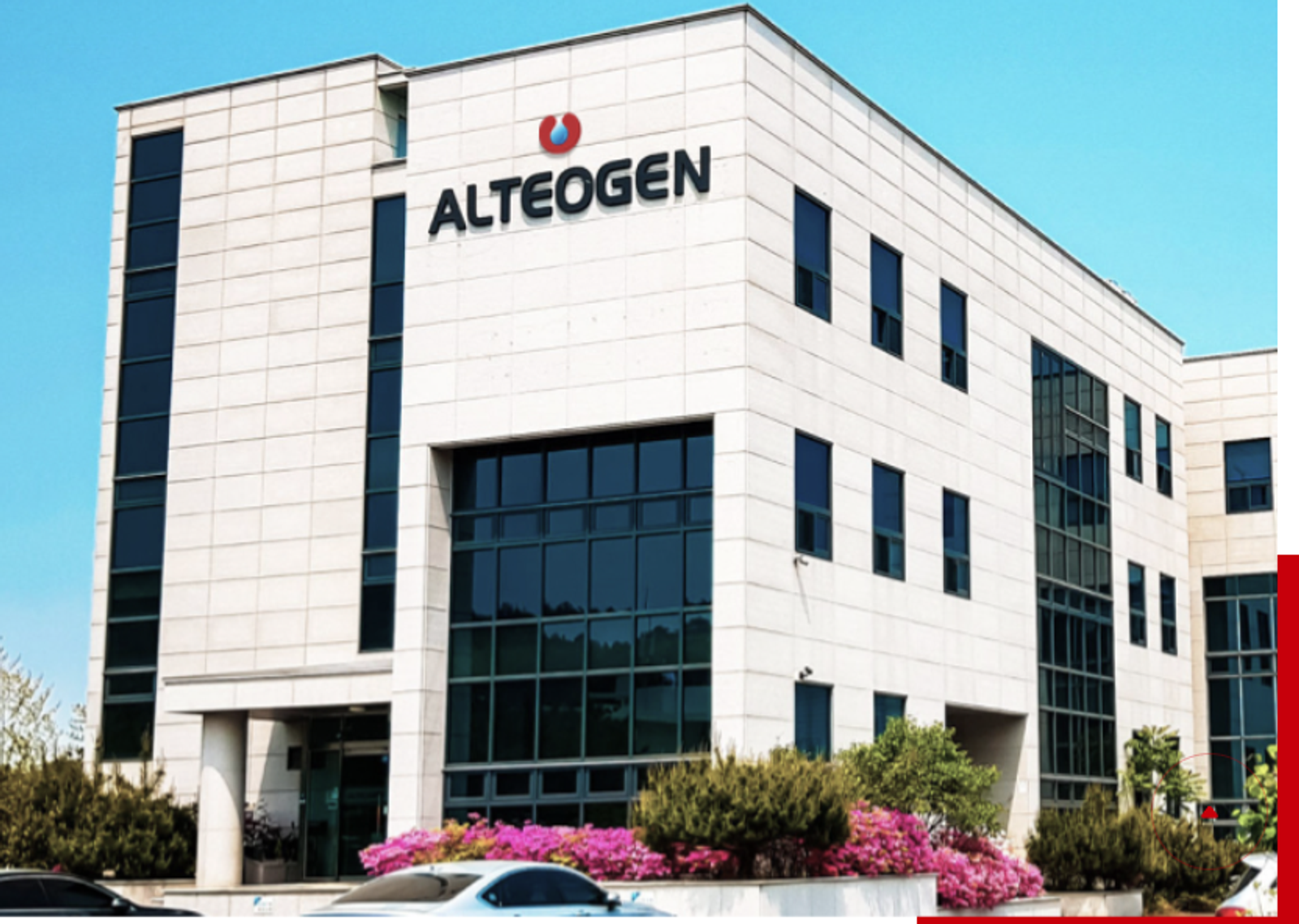
Among South Korean companies, IBK Investment & Securities identified Alteogen as the most direct beneficiary. Because Intismeran is used in combination with Keytruda, an expansion of the adjuvant-therapy market is likely to drive increased prescriptions of Keytruda SC (subcutaneous), a formulation developed using Alteogen's proprietary drug-delivery platform technology. That thesis is reinforced by the fact that MSD has already initiated a Phase 3 trial combining Keytruda SC with Intismeran in high-risk Stage 1 NSCLC patients.
ST Pharm was also cited as a potential beneficiary. As competing developers accelerate their own mRNA cancer vaccine programmes, demand for contract development and manufacturing (CDMO) services to supply early-stage clinical trial material is expected to rise. The report also noted that South Korean firms with mRNA delivery and platform technologies — including Samyang Biopharmaceuticals and Hanmi Pharmaceutical — are likely to attract growing market interest.
Investors should nonetheless be mindful of several risks. For Alteogen, the benefit thesis rests on Intismeran ultimately receiving regulatory approval and being adopted as a standard-of-care combination regimen. For CDMO players such as ST Pharm, there is an inevitable lag between the broader emergence of a competitive mRNA oncology market and any tangible uplift in orders. The clinical result carries significant industry-wide implications, but the contribution to South Korean companies' earnings is best viewed through a medium-to-long-term lens.
Intismeran's Phase 3 success is the first positive outcome for an mRNA therapy in oncology at this stage of clinical development — roughly 15 years after the technology was first applied in human trials. If the Covid-19 pandemic demonstrated that the mRNA platform could work, this result is the first large-scale confirmation that it can also function in the far more complex domain of cancer treatment. Its implications for the direction of research and development across the industry as a whole are likely to be considerable.