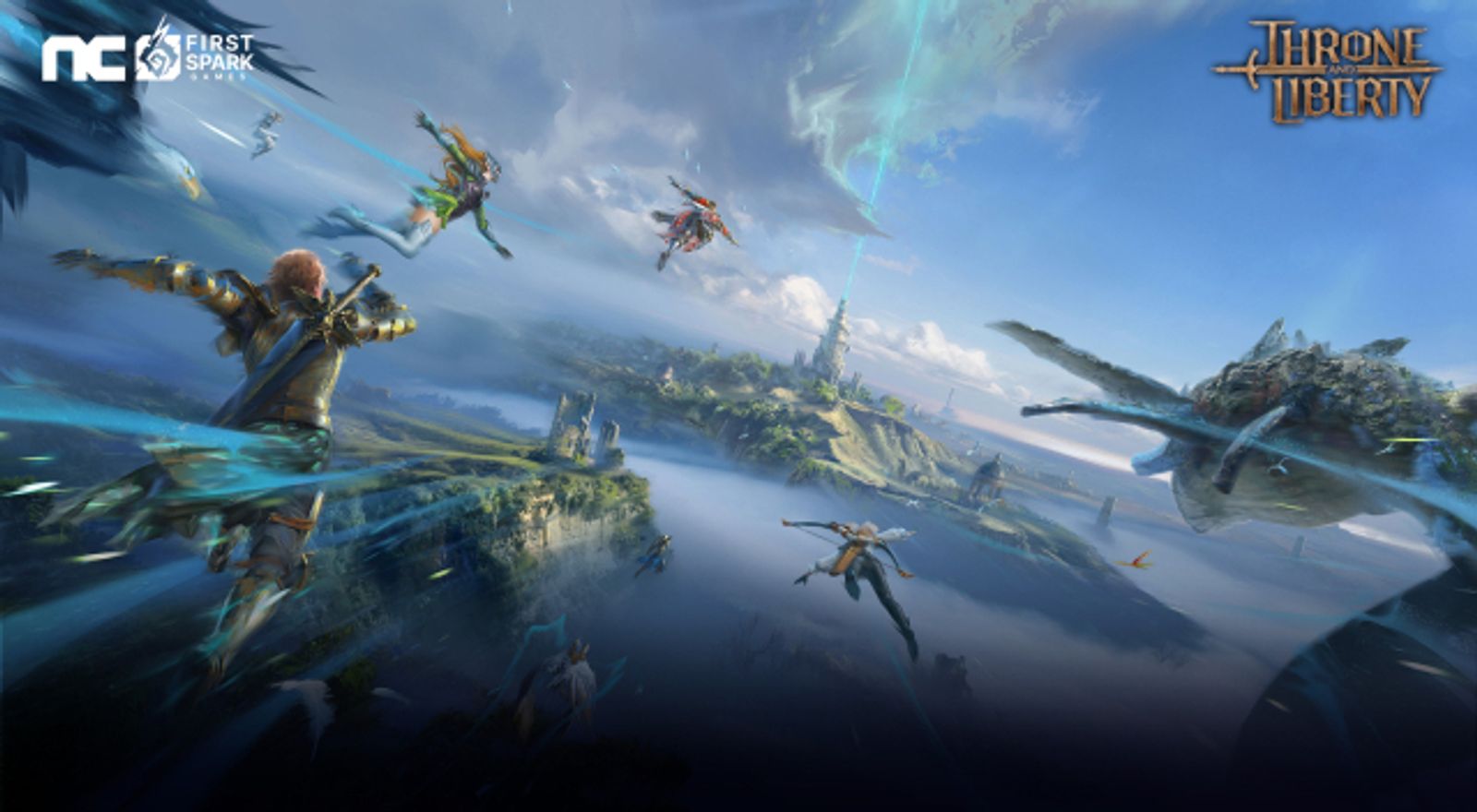
NCSoft has decided to take direct control of global operations for its massively multiplayer online role-playing game Throne and Liberty (TL), reconfiguring its arrangement with existing publisher Amazon Games and consolidating PC and console services under a single, self-managed structure. The move is more than a change in distribution: it amounts to a declaration that NCSoft intends to reinvent how it competes in international markets.
The failure of the publisher-dependency model
TL launched in global markets — North America and Europe among them — through Amazon Games in 2024. Early signs were promising: concurrent players on Steam briefly exceeded 200,000. But the audience drained away quickly, and the commercial momentum could not be sustained. Despite expectations that a major publisher would deliver localisation expertise and marketing firepower, analysts have pointed to structural weaknesses in content update frequency and community management.
Within the industry, there is speculation that Amazon Games, having shifted its attention to nurturing its own intellectual property following New World, deprioritised its investment in TL. The problem is well-documented: the more layers of decision-making that exist between developer and publisher, the slower the response to market signals. Comparable episodes include the dispute between Activision and Bungie over control of the Destiny franchise, and Square Enix's pivot to self-publishing in Europe after divesting its regional publishing subsidiary.
The case for going direct: speed and data sovereignty
The two principal reasons NCSoft has chosen self-operation are decision-making speed and control over user data. Under a publisher arrangement, every significant action — content patch schedules, event design, adjustments to monetisation — requires a round of negotiations. Operating directly, NCSoft can deploy global updates at the same pace as its domestic service, closing the experience gap between Korean and international players.
Equally important, the company will be able to collect and analyse player-behaviour data in real time, feeding insights directly into game-balance and monetisation decisions. For live-service games, this capability is existential. The most frequently cited success model is Nexon's direct operation of Dungeon & Fighter in China, which has sustained consistent revenues over many years.
The technical challenge of unifying PC and console platforms
A further complexity is the ambition to run PC and console platforms as an integrated whole. TL supports Steam on PC alongside PlayStation 5 and Xbox Series X|S. Binding together platforms with different certification cycles and technical specifications under a single operating regime is a considerable logistical and technical undertaking.
Console patches must pass through review processes run by Sony and Microsoft, which typically adds days or weeks compared with PC updates. To manage this independently, NCSoft will need to expand its global technical support infrastructure and headcount. Industry observers flag this as the most immediate operational risk the company will face after the transition.
A company in crisis
This decision must be read against a broader backdrop of financial distress. NCSoft suffered sharp declines in operating profit in both 2023 and 2024, and revenue from its flagship Lineage franchise — long the engine of the business — has continued to fall. If TL fails to establish itself as a reliable international revenue stream, the medium- to long-term financial outlook will come under severe pressure.
The company appears to have concluded that TL should serve not merely as a single title, but as a proving ground for building in-house global service capability. The economics also shift in NCSoft's favour: eliminating publisher fees means that, at sufficient player volumes, direct operation could meaningfully improve profitability.
Outlook: the first six months will decide everything
Precedents from the global live-service market suggest that the six months immediately following a publisher change or a shift to direct operation are decisive for rebuilding player trust. Final Fantasy XIV's triumphant recovery, driven by a sweeping overhaul and a sustained flow of high-quality content updates, represents one extreme. Battleborn, which could not arrest player exodus despite changes in operational stewardship and was eventually shut down, represents the other.
Whether TL can stage a revival will depend on how quickly NCSoft delivers compelling content and rebuilds credible channels of communication with its global community. Whether this decision marks a genuine strategic inflection point for the company, or is recorded merely as a belated restructuring that came too late, will be determined entirely by how well NCSoft executes over the months ahead.