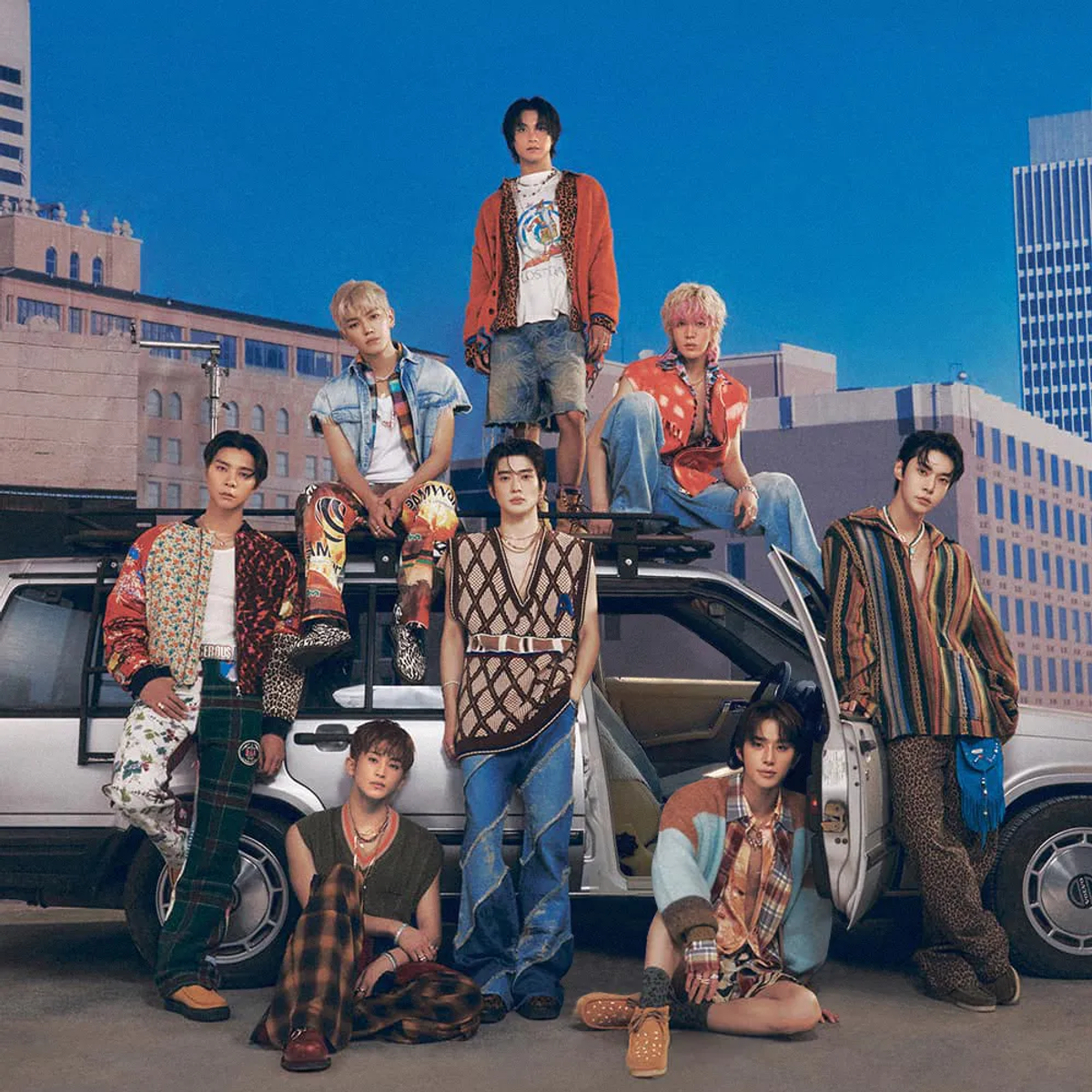
About the Group
NCT 127 is a boy group under SM Entertainment that debuted in July 2016. The name "NCT" stands for Neo Culture Technology, a concept rooted in the experimental idea of infinite expansion across multiple sub-units with no fixed membership. Within that structure, "127" refers to the longitude of Seoul, and the unit has functioned as the franchise's de facto flagship act. Its fanbase goes by the name NCTzen.
A Decade of Proving the Model
NCT was SM's attempt to break with the conventions of the South Korean idol industry — fixed rosters, fixed concepts — and build something closer to an expandable intellectual property. The unfamiliar multi-unit architecture drew scepticism early on, but NCT 127 has spent a decade validating the experiment through results: steadily rising album sales and successive global tours of growing scale. The group has become the clearest evidence that SM's rotating-unit strategy can sustain itself commercially over the long term.
This Year's Turbulence
That narrative hit a rough patch in 2025. On 8th April — one day before the group's tenth debut anniversary — member Mark departed after his contract with SM expired. On the same day, fellow member Ten also saw his SM contract conclude, though he was confirmed to remain affiliated with NCT. The timing rekindled discussions among K-pop fans about what is colloquially called the "curse of the seven," a superstition attached to groups reduced to that number, and the fallout was considerable.
Two months later, on 15th July, SM officially announced that all seven remaining members — Johnny, Taeyong, Yuta, Doyoung, Jaehyun, Jungwoo, and Haechan — had re-signed with the company. The announcement stood out against a broader industry backdrop in which boy groups have generally been renewing contracts while girl groups have faced more departures and disbandments. A clean sweep of re-signings from a group in its tenth year was, by any measure, notable.
What Comes Next
The significance of this outcome lies not in the group being "complete" — it isn't — but in the fact that every member who remained chose to stay. A team that could easily have fragmented further after Mark's exit instead demonstrated cohesion through a simultaneous, collective renewal. For SM, the result represents a successful defence of a ten-year-old franchise: talent attrition contained, brand equity preserved.
The question now is whether that stability translates into commercial performance. NCT functions as something of a barometer for SM's entire multi-unit strategy, and the metrics worth watching will be the group's comeback sales figures and global tour revenues in the post-renewal period — and how they feed through to SM Entertainment's share price.