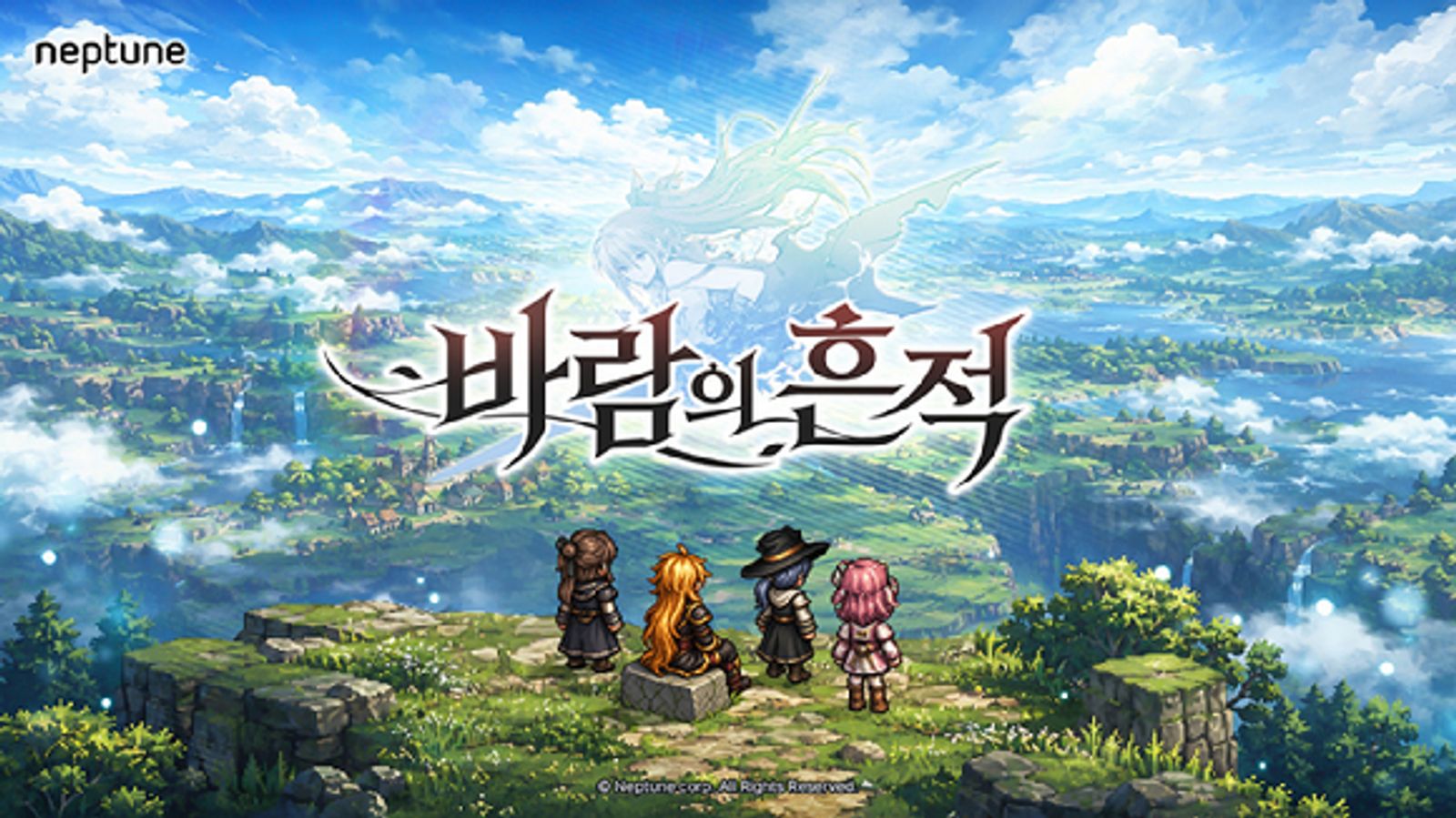
Neptune, a South Korean gaming and entertainment company, has signed a global publishing agreement with Sextant, a specialist publishing firm, for its new title *Traces of the Wind*. Announced on 16th July 2026, the deal is being watched closely by the industry as something more than a routine distribution arrangement — many see it as a signal that mid-tier Korean developers are getting serious about expanding their intellectual property overseas.
Neptune has built a diversified portfolio spanning social casino games, casual mobile titles, and virtual YouTuber (VTuber) ventures. As South Korea's domestic gaming market has consolidated around a handful of dominant franchises and mobile massively multiplayer online role-playing games (MMORPGs), Neptune has sustained its growth by targeting niche segments and pursuing international opportunities. Sextant, its new global publishing partner, brings overseas distribution networks and marketing expertise to the table; the two companies are understood to be jointly developing launch strategies for North America, Europe, and South-East Asia.
*Traces of the Wind* blends natural-world imagery with an emotionally driven aesthetic universe, positioning itself between the shallow engagement of hyper-casual games and the demanding complexity of large-scale RPGs. That middle ground aligns squarely with what the industry calls "mid-core" gaming — a segment that, according to market research firm data.ai, grew its share of global mobile game revenues by roughly 12% year-on-year in 2025, more than offsetting a stagnation in the hyper-casual category.
Industry analysts offer two readings of the deal. On the optimistic side, Neptune is seen as hedging its bets intelligently, combining in-house development capabilities with an external publishing network in a "dual-track" strategy that spreads risk. The more cautious view holds that launching an unproven new IP in global markets requires heavy marketing expenditure, and that reaching break-even could take considerably longer than the companies might hope.
There are instructive precedents abroad. Japan's Good Smile Company, working with game publisher Aniplex, successfully established niche IPs in global markets. China's Paper Games demonstrated with *Shining Nikki* that art-driven, emotionally resonant titles could travel beyond Asia and find audiences in Western markets as well. How precisely Neptune and Sextant can learn from these examples may prove decisive.
The deal also reflects a broader structural shift in South Korea's gaming industry. While the largest players — Nexon, Netmarble, and Krafton — concentrate on global mergers and acquisitions and AAA-scale development, mid-sized and smaller studios are increasingly forging their own international paths through strategic alliances with publishers. According to the Korea Creative Content Agency's 2025 Games Industry White Paper, mid-tier companies' share of South Korea's total game export revenues rose by approximately eight percentage points compared with 2023.
The critical choices now lie in localisation strategy and platform selection. Whether to target the PC indie market through Steam, whether to launch simultaneously on iOS and Android, and whether to prioritise North America or South-East Asia as the lead market are all variables that will shape early performance. There are also growing calls for the government to improve the practical effectiveness of its matching funds and overseas marketing support programmes aimed at helping mid-sized developers publish globally.
Whether *Traces of the Wind* can become a new template for South Korean mid-tier studios seeking international audiences remains to be seen — but the industry is watching closely.