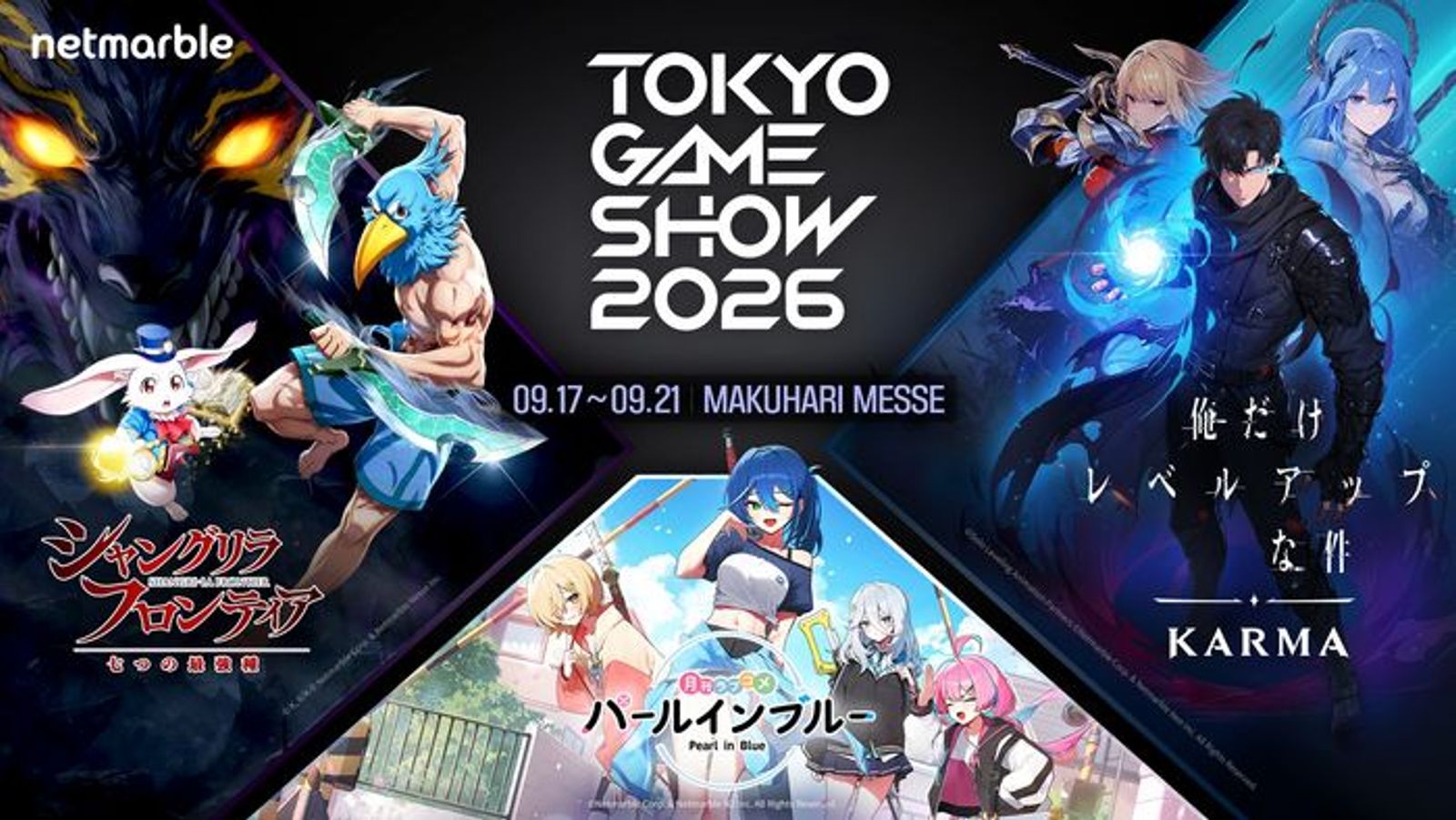
Netmarble, one of South Korea's largest mobile game developers, has announced it will participate in the Tokyo Game Show (TGS) in 2026, where it plans to exhibit three new titles, including an adaptation of the hit manga *Shangri-La Frontier*. The move is widely interpreted as more than routine product promotion: it marks a deliberate strategic push to re-enter Japan after previous attempts fell short.
Tokyo Game Show, held each September at the Makuhari Messe convention centre in Chiba Prefecture, is Asia's largest gaming exhibition. In 2024, it drew 985 companies from 44 countries and attracted roughly 240,000 visitors over three public days, making it a premier marketing stage for global games firms. For Asian developers in particular, TGS serves as a critical contact point with Japanese publishers and distributors — a gateway that is difficult to replicate through other channels.
The flagship title, *Shangri-La Frontier*, is based on a popular Japanese manga of the same name by author Kataribe Rifure, which originated as a web comic before being compiled into print volumes that have sold more than ten million copies in total. A television anime adaptation in 2023 further raised its mainstream profile in Japan. By leading with this intellectual property (IP), Netmarble is signalling a clear intent to court Japan's existing fanbase directly. This approach — licensing a well-known local IP to lower the barrier to entry — has already proven effective elsewhere. Krafton secured a publishing deal for *Blue Protocol*, while Nexon achieved rare success exporting *Blue Archive* back into Japan, the market where its cultural roots lie.
Japan, however, has humbled many foreign game companies before. Netmarble itself has struggled there in the past, having launched titles such as *The Seven Deadly Sins: Grand Cross* and *A3: Still Alive* in the Japanese market without meeting expectations. Japan's mobile gaming market is the second or third largest in the world by revenue, yet it remains unusually resistant to foreign entrants. Domestic players have a strong preference for home-grown games, and tastes run distinctly towards character-collection mechanics and turn-based role-playing games. According to data from market research firm Sensor Tower, the top revenue charts on Google Play and the App Store in Japan have long been dominated by titles such as *Monster Strike*, *Fate/Grand Order*, and *Dragon Quest Walk* — a structural dominance that has proved remarkably durable.
Industry analysts greet Netmarble's renewed attempt with cautious interest, but also point to the structural hurdles ahead. "Converting manga fans into paying game users is a genuine advantage in terms of brand awareness," said one games analyst, "but Japanese gamers set extremely high standards for control responsiveness, monetisation design, and the quality of localisation." The analyst added that the immediate reaction from local media and online influencers at the TGS venue would be "a decisive variable" in shaping pre-launch sentiment.
The financial backdrop sharpens the stakes. Netmarble has spent several years managing a heavy debt load accumulated through an aggressive acquisition spree, while simultaneously facing intensifying competition in its home market. The company undertook voluntary redundancy programmes and organisational restructuring in 2023 and 2024, and identifying new sources of international revenue has become central to its recovery plan. Japan is attractive not merely for its size, but because success there tends to generate momentum across Southeast Asia, Taiwan and the broader Asian region — making it what the industry calls a "reference market" whose results carry outsized influence.
The precedent most often cited by those who believe Japan can be cracked is *Genshin Impact*, developed by China's miHoYo. The game succeeded in Japan by investing heavily in Japanese voice acting, culturally attuned character design, and meticulous text localisation — demonstrating that depth of localisation translates directly into market acceptance. Western publishers, by contrast, have repeatedly stumbled by underestimating Japan's distinctive consumer culture, reinforcing the view that local partnerships and cultural fluency are the decisive factors.
The decision to present three titles simultaneously at TGS, rather than staking everything on a single game, also suggests a portfolio approach to risk management. The precise execution — how playable demos are designed, whether press briefings land well, how influencer events are structured — will determine the scale of pre-release expectation that Netmarble can generate before any of the games reach market.
Two scenarios dominate industry discussion about what comes next. In the optimistic case, the built-in fanbase for *Shangri-La Frontier* drives a strong initial launch that begins to rebuild Netmarble's brand credibility in Japan. In the pessimistic case, shortcomings in localisation or monetisation structure once again fail to meet Japanese players' expectations, triggering the kind of rapid user drop-off that has dogged the company's previous Japanese ventures. Either way, the reaction at TGS will function as a litmus test for the entire launch strategy — and a signal of whether Netmarble's latest Japan push marks a genuine turning point or merely repeats history.