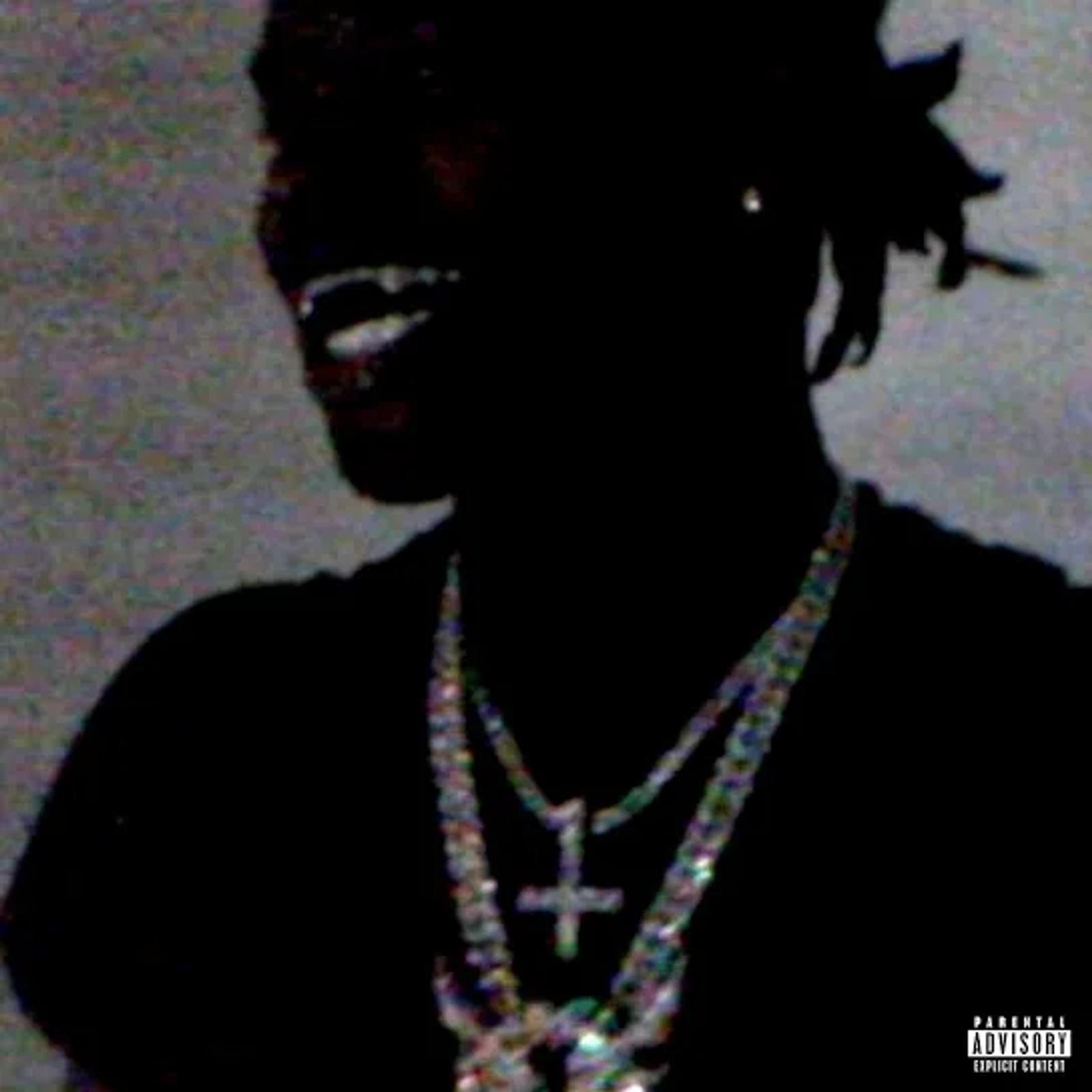
***A Great Chaos* — Ken Carson**
When Playboi Carti codified a new sound with *Whole Lotta Red*, a generation of younger artists lined up to copy his sentences word for word — all crushed synths and tearing 808s. The early 2020s marked the moment after ATL trap, as defined by Metro Boomin, Migos and Future, gave way to something rawer. Rage hardened into a recognised sub-genre, and artists happily declared themselves Carti disciples. Promising newcomers like SoFaygo emerged; established names like Trippie Redd absorbed the idiom as their own. At the centre of it all, Carti's Opium collective functioned as a kind of hallmark of authenticity. Within that circle, Ken Carson has competed on equal terms with Destroy Lonely and Homixide Gang; outside it, with every other artist chasing the same sound. The label — Carti's sound, Carti's imitator — was accurate, and therefore cruel. *Project X* was his opening statement, but not the album that made him.
*A Great Chaos* dismantles that label head-on. It does not reinvent Rage. It has no intention of doing so. Instead, it takes an already-complete textbook and performs it more precisely, and more violently, than anyone before it. It is, in the fullest sense, a perfect variation on a theme.
The production — built by F1lthy, Lil 88, Star Boy and Outtatown — pushes Rage's conventions to their absolute limit. It manufactures something new by pushing the clichés harder still: digitally pulverised synths, ear-splitting distortion, a maximalism that treats excess as a virtue rather than a vice. From the moment "Green Room" kicks the door open, this is an album sprinting in the opposite direction from restraint.
Yet in the midst of all this noise, Ken Carson keeps confessing things. His rapping is not ornate. It is instinctive — a single word expelled at a time. He follows the grammatical rules that *Whole Lotta Red* established for Rage rap without deviation, but onto those rules he layers a persona that is entirely his own: more menacing, more desperate. He craves pleasure and sensation, drugs and sex, the most primitive appetites — seizes them, and then screams for more. This is less hedonism than it is a young generation's ambition pushing back against the nihilism that consumer capitalism produces, armed with nothing but fiercer desire. The received wisdom that money and beauty are not everything finds no sympathetic ear here whatsoever.
The album's genuine strength lies in its self-awareness: it knows that this desire originates in lack. When "Fighting My Demons" returns to the line "I been fighting my demons," the glittering excess and the shadow of death become tangled in the same bar. These moments of sardonic self-reflection lift the record above a shallow catalogue of pleasures. "Jennifer's Body", "Succubus" and "Vampire Hour" borrow horror's vocabulary to conjure desire; by the closing "i need u", only the longing itself remains. The arc — from pleasure to emptiness — proves a paradox: the louder the noise, the more distinctly one can hear the loneliness inside it. Even the features from Destroy Lonely and Lil Uzi Vert on "Like This" do nothing to calm the chaos. They accelerate it.
What is remarkable is the composure with which Ken Carson conducts this emotional vortex. He constructs the very space in which the crowd loses its mind — then navigates that moshpit with the unhurried authority of a conductor. The cycle of desire, lack, nihilism, greater desire, greater lack and greater nihilism: he cradles all of it without flinching, and the more tightly he holds it, the more ferociously he sings.
There are weaknesses. Across 18 tracks, the tone points in a single direction, and the boundaries between songs frequently dissolve into one another. For ears seeking variety, this is a tiring record. But that monotony is the strategy. Rage is not, at its core, a narrative form — it is a state of being. The point is to drive a single emotion to the wall and hold it there. *A Great Chaos* sustains that state without relaxation for the entirety of its running time.
Anyone can start a chaos. Very few can manufacture one that is perfectly controlled. The record's ultimate message is that Carson is strong enough to conduct the disorder — which means the disorder, for him, is no longer really disorder at all. Having passed through the era of Emo Rap's grief and self-pity, Ken Carson has arrived at the age of Rage, carrying its wild appetites and its voids with him. His mastery is in the variation, not the invention. He proves that you can own a genre without having created it.
Rating: ★★★½☆ (3.5/5.0)
In short: *"The most perfect variation ever played on Rage's rulebook. Ken Carson demonstrates how to become a genre's master without ever having to invent it."*