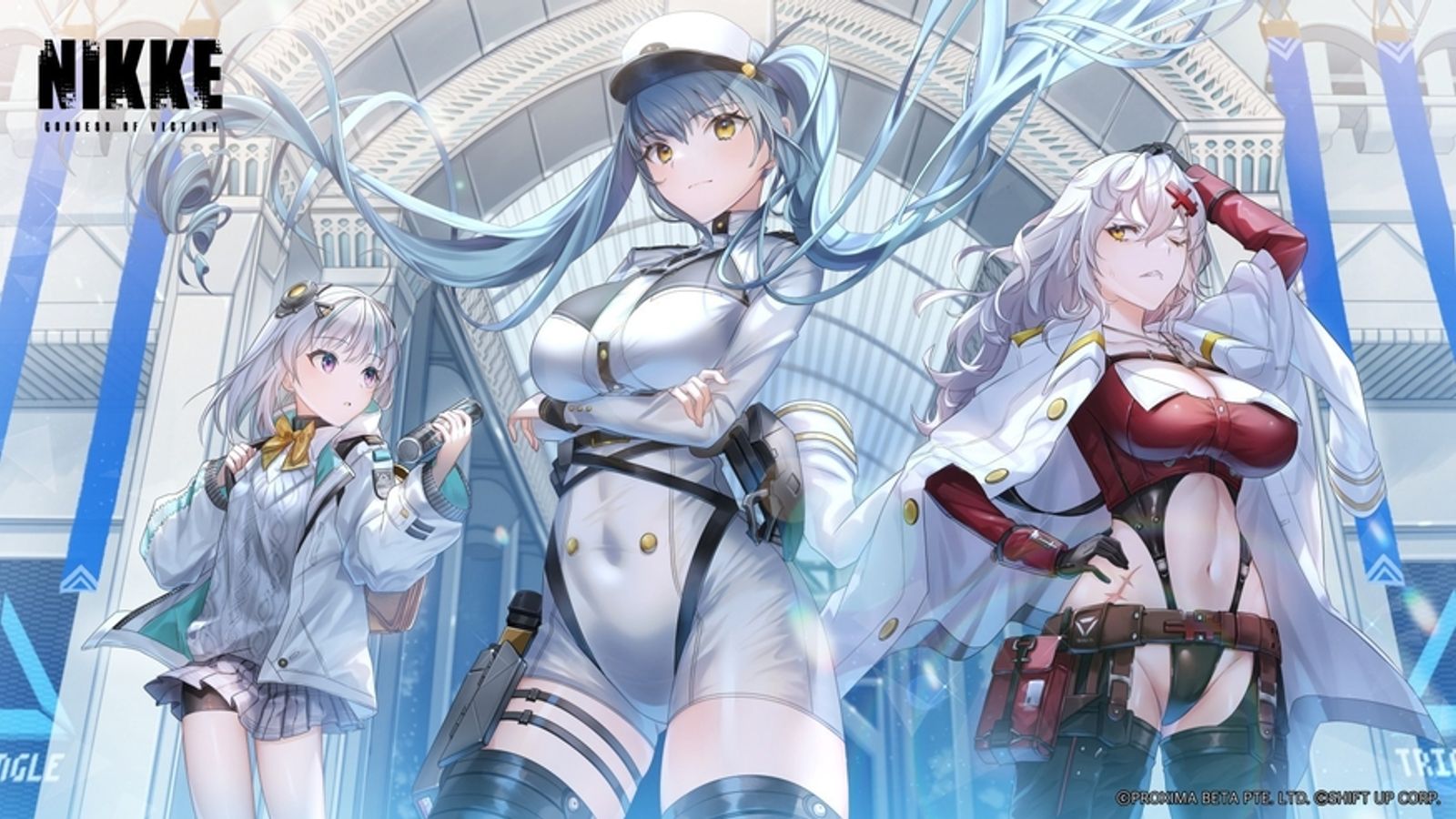
NIKKE: Goddess of Victory, a mobile shooting-and-collection role-playing game developed by Shift Up and published by Level Infinite, has staged a striking comeback in app-store revenue rankings across South Korea, Japan, and Taiwan, drawing considerable attention within the gaming industry following a major summer update in 2025.
Mobile games that have been running for two to three years typically find it difficult to escape the downward slope of the lifecycle curve — a gradual erosion of users and revenue that sets in after the initial excitement fades. NIKKE, which launched in November 2022, had been following precisely that trajectory after its explosive debut. Yet shortly after the release of a limited summer seasonal event and new character update in early July 2026, the game re-entered the top tier of Google Play's revenue rankings in South Korea, while simultaneous upswings were recorded on Japan's App Store and Taiwan's Google Play.
Why the summer event worked
Seasonal events have become a cornerstone marketing tool in mobile gaming, designed to lure back lapsed players and lower the barrier to entry for newcomers. In the collection RPG genre in particular, limited-time characters serve as a direct revenue catalyst. NIKKE has consistently distinguished itself through the quality of its character visuals and storytelling, and analysts believe that the summer season's limited-edition swimwear costumes and accompanying new story content created a powerful compound effect.
Research firms that track mobile gaming suggest that revenue during limited seasonal events in collection RPGs tends to spike to between two and four times the normal rate. NIKKE's rebound fits this pattern closely, though it also reflects something deeper: the concentrated spending of an accumulated, loyal fan base rather than a one-off event bump.
What a simultaneous rebound across three markets signals
Many observers are reluctant to dismiss the three-market rally as a simple, short-lived event effect. South Korea is the home market of developer Shift Up and hosts the game's most devoted core audience. Japan is the largest consumer market for the subcultural mobile gaming genre — a loosely defined category encompassing anime-influenced games with heavy emphasis on character collection — and NIKKE earned strong local reception there from launch. Taiwan, meanwhile, is a market characterised by high receptivity to Japanese subcultural intellectual property and robust mobile payment spending.
The fact that all three markets responded simultaneously suggests that NIKKE's global fan base carries consistent content demand, and that Shift Up's localisation strategy is working with unusual uniformity. Industry experts note that "in the subcultural genre, strong performance in Japan tends to generate a ripple effect across other Asian markets," adding that "NIKKE is one of the rare titles managing to ride that wave steadily."
Competition and differentiation
The collection RPG market in 2026 is intensely contested. HoYoverse's stable of titles — Genshin Impact, Honkai: Star Rail, and Zenless Zone Zero — competes alongside Kakao Games' Eversoul and a string of new releases from Nexon. The prevailing view among analysts is that NIKKE has maintained its relevance through a combination of distinctive shooting gameplay mechanics and unusually rich character narratives.
Story immersion has been Shift Up's declared competitive edge since launch. The company has continued to update both the main storyline and individual character arcs, which has helped minimise player churn. In the latest summer event, new story chapters were reported to be among the key factors drawing back returning players.
The strategic picture for Shift Up
Since listing on South Korea's KOSPI stock exchange in 2024, Shift Up has faced heightened market scrutiny over its earnings and corporate valuation. NIKKE's revenue resurgence is therefore not merely a gaming headline — it bears directly on the company's share price and investor confidence. As a listed company, Shift Up must continuously demonstrate revenue stability and growth potential; keeping an existing title performing well is also a core strategy for spreading the risk inherent in developing new games.
The strong showing also strengthens Shift Up's overall negotiating position as it pursues portfolio diversification, including the possible mobile expansion of Stellar Blade — a console action game the company developed — into new formats.
Lessons from comparable titles
Long-running collection RPGs that are frequently cited as precedents include Granblue Fantasy, developed by Japan's Cygames, and Wuthering Waves, from China's Kuro Games. Granblue Fantasy, now more than a decade old, continues to generate annual revenue of several tens of billions of yen, having firmly established a model of recurring seasonal event consumption. The common thread in these cases is the combination of a high-spending core user base with a reliable, regular content supply cycle.
How successfully NIKKE can sustain this structure will be the decisive variable in assessing its viability over the next three to five years, according to the broad consensus in the industry.
Outlook
The more pressing challenge now is maintaining the momentum after the summer event winds down. The industry is well acquainted with the "event cliff" phenomenon, in which revenues revert to baseline within two to four weeks of a seasonal event's conclusion. How densely Shift Up schedules its follow-on content will determine whether this resurgence has staying power.
The episode carries broader implications for the South Korean mobile gaming industry. Returning a title to the top of revenue charts across multiple Asian markets through content updates alone — without launching a new game — is a compelling demonstration that live-service operational capability is itself a form of competitive advantage. At a time when Korean game developers face growing calls to invest more in extending the lifespan of existing titles rather than concentrating resources solely on new launches, NIKKE's comeback may well become the textbook example they cite.