In a game developer's office in Mapo, central Seoul, the lights that once burned through the night now go dark by early evening. "I watched teammates leave one by one and kept thinking: am I next?" says a 34-year-old developer — call him Mr A — who used to work there. With nearly a decade in the industry behind him, he is now looking for a way out. "I honestly don't know whether to stay or go."
South Korea's gaming industry is in trouble. Once celebrated as the pride of the "K-content" wave, the sector is now confronting two phenomena it barely recognises: voluntary redundancy programmes and the sale of stakes to foreign buyers.
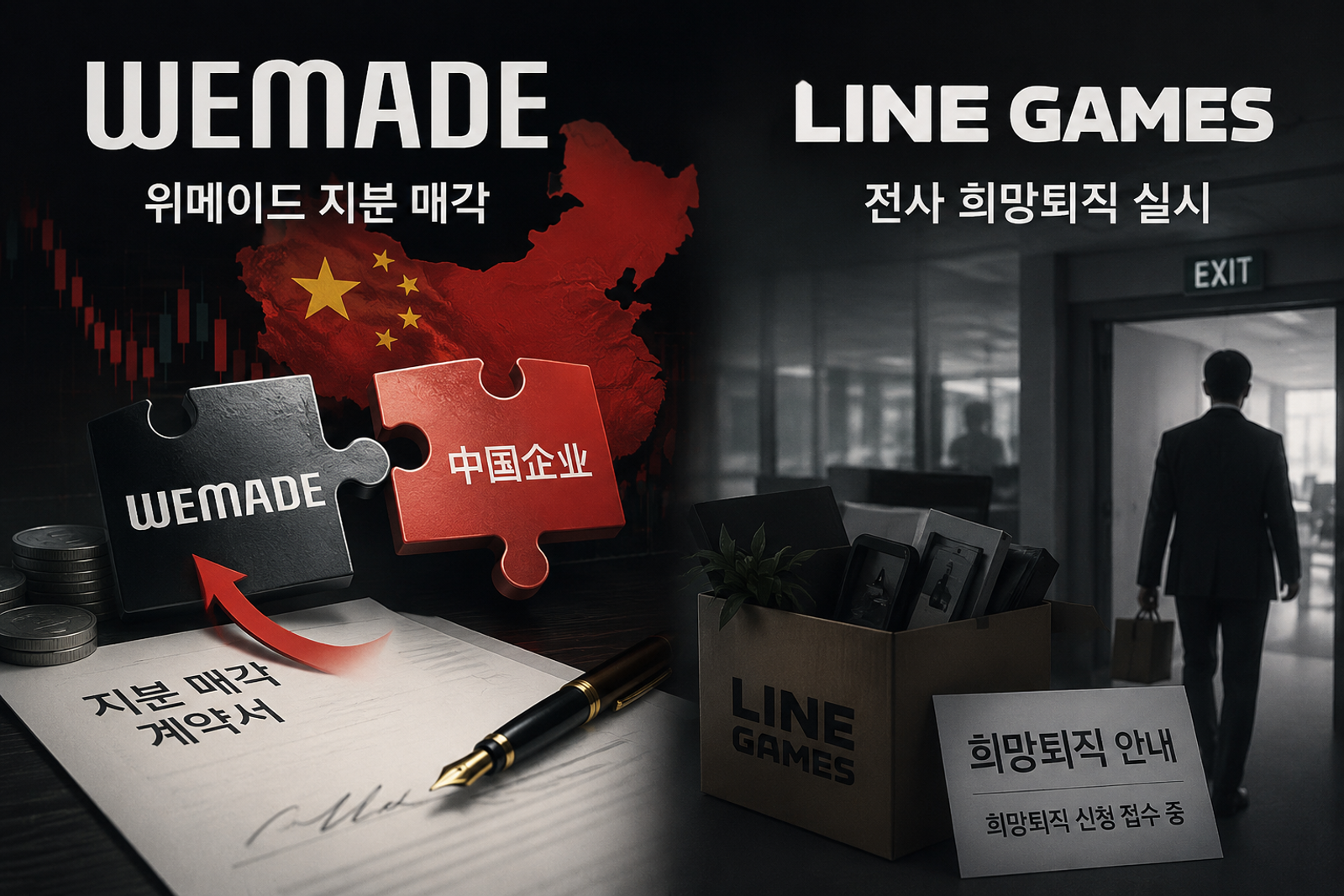
The most emblematic episode involves Wemade. One of the industry's flagship companies, Wemade recently sold a portion of its equity to a Chinese gaming firm. The irony is sharp: this is the company that once dominated the Chinese market with its *Legend of Mir* franchise, and it is now Chinese capital that is coming to its rescue. The deal has unsettled the industry. Many observers fear that Korean intellectual property and technical expertise are quietly passing into Chinese hands. "Once capital comes in, control over management decisions can follow," warned one industry insider.
At roughly the same time, Line Games — a subsidiary of the internet giant Naver that had once assembled an ambitious portfolio of titles aimed at global audiences — announced a company-wide voluntary redundancy programme. Employees who lived through it were sombre. "There's no hope left, so of course it's called a hope retirement," said one departing worker, using a bitter play on the Korean term for voluntary redundancy (*huimang toejik*, literally "hope retirement"). Years of accumulated development talent dispersed almost overnight.
Though they happened at different companies, these two events point to the same structural crisis. The mobile gaming market is saturated. Players no longer open their wallets readily for new titles. In global markets, large Chinese and American studios are muscling in with capital that Korean firms simply cannot match. Companies that made bold bets on blockchain gaming or the metaverse have been punished by a market that moved on without them.
The largest players are not immune. The so-called "3N" — Nexon, Netmarble and Krafton — are delaying new releases and shelving development projects under mounting pressure on earnings. For smaller and mid-sized studios, conditions are harsher still. Funding has dried up, and a game that fails to gain traction at launch is typically shut down within months. "In the old days, if one game flopped you survived on the next one," said one industry veteran. "Now there is no next one."
The talent drain compounds the problem. Developers are leaving for artificial-intelligence start-ups and large technology firms in growing numbers. "Frankly, I think game developers are probably the least valued they've ever been," said one of them. People who once endured long nights for the love of making games are now setting that dream aside.
None of this means the industry is finished. South Korean studios have accumulated decades of development expertise, and their intellectual-property franchises retain genuine global appeal. Some companies are pivoting towards PC and console games in search of new opportunities. Krafton's *PUBG: Battlegrounds* demonstrated that a Korean title can shake global markets — that possibility has not vanished.
Yet the voices coming from within the industry right now sound less like optimism and more like quiet desperation. Stakes are being sold, people are leaving, and servers are going dark. How long this winter lasts — and whether spring comes at all — is a question nobody can yet answer.