North American demand for battery-based energy storage systems (ESS) is accelerating faster than the industry anticipated. In a research note published on 13 August 2026, iM Securities reported that ESS battery shipments to North America jumped 83% year on year in the first half of 2026, reaching 76GWh, according to data from SNE Research. Global ESS battery shipments over the same period rose 71% to 461GWh, up from 270GWh a year earlier.
The momentum was broad-based. First-quarter North American shipments totalled 35GWh, up 91% year on year, while second-quarter volumes of 41GWh represented a 76% increase—already matching the 41GWh recorded in the fourth quarter of 2025, traditionally the year's seasonal peak. Given that shipments typically skew heavily towards the second half of the year, iM Securities expects full-year North American ESS battery volumes to comfortably exceed 150GWh, more than 35% above the roughly 110GWh shipped in 2025.
South Korea's two leading battery manufacturers are gaining ground. Combined North American ESS shipments from LG Energy Solution and Samsung SDI surged 159% in the first half of 2026, rising from approximately 6GWh to 15GWh. Their combined market share climbed six percentage points, from 14% to 20%.
Safe-harbour effect clouds the picture
Analysts caution that a portion of this surge reflects deferred demand rather than a clean acceleration in underlying consumption. Under the One Big Beautiful Bill Act (OBBBA), signed into law by the US government in July 2025, projects starting construction from 2026 onwards must meet a minimum threshold—known as the MACR—of 55% non-prohibited foreign entity (PFE) direct costs in order to qualify for the Section 48E Investment Tax Credit. Projects that secured a "beginning of construction" status before 31 December 2025 are exempt from this requirement.
As a result, many American developers rushed to lock in safe-harbour status in the second half of last year, then deferred their actual battery orders and installations into 2026. According to Wood Mackenzie, US ESS projects that secured safe-harbour protection in 2025 exceeded 13GW in capacity, implying associated battery volumes of between 60GWh and 80GWh. iM Securities estimates that this deferred demand will feed through gradually: roughly 40GWh in 2026, 20GWh in 2027, and 10GWh in 2028.
Stripping out the estimated 40GWh of safe-harbour pull-forward, underlying North American ESS battery demand for 2026 is estimated at 130–140GWh—still 15–25% above 2025 levels. "Even excluding the safe-harbour effect, underlying demand is solid," iM Securities concluded. Notably, this adjusted figure substantially exceeds the roughly 100GWh that South Korean battery manufacturers themselves had forecast for North American demand this year.
AI data centres emerge as the next growth driver
Beyond the safe-harbour dynamics, artificial intelligence data centres are emerging as a powerful new source of ESS demand. According to projections from GGII, a battery industry research firm, global ESS battery shipments destined for AI data centres are expected to grow more than twentyfold—from approximately 12GWh in 2025 to around 272GWh by 2030. AI data centres' share of total global ESS demand is forecast to rise from roughly 4% in 2025 to approximately 22% by 2030. Given that roughly half of global AI data-centre investment is concentrated in North America, Korean battery makers are well-positioned to capture a disproportionate share of this growth.
LG Energy Solution and Samsung SDI accelerate the pivot to storage
Both companies are moving swiftly to retool their North American manufacturing for ESS production. LG Energy Solution plans to convert existing electric-vehicle battery lines at five North American facilities, targeting ESS production capacity of more than 50GWh by end-2026 and more than 70GWh by end-2027. The company's extensive EV manufacturing footprint gives it considerable flexibility to expand ESS capacity further as demand dictates.
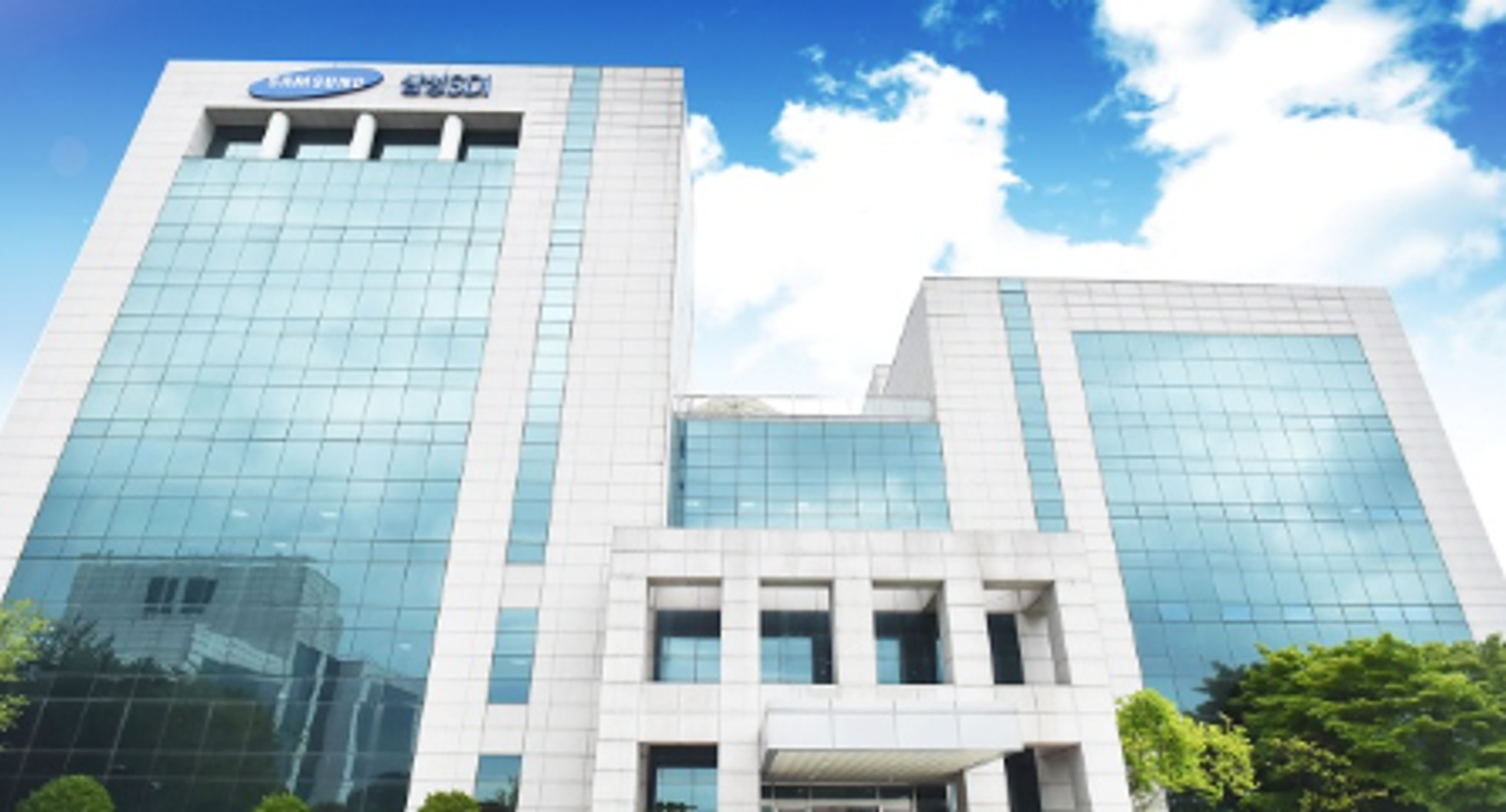
Samsung SDI's strategic shift is more dramatic. On 11 August 2026, the company disclosed that it would dissolve its battery joint venture with General Motors and take full ownership of the enterprise. Samsung SDI will acquire GM's 49.99% stake in SDI-GM Synergy Cells Holdings, raising its ownership from 50.01% to 100%. The Synergy Cells factory under construction in Indiana had originally been planned with a total investment of approximately $3.5bn and annual production capacity of 27GWh. Samsung SDI intends to repurpose the facility as an ESS production hub.
At its second-quarter earnings presentation, Samsung SDI indicated that existing US ESS orders alone were sufficient to fill a substantial portion of its planned production capacity through 2029, and that when projects under negotiation are included, demand is expected to outstrip capacity from 2028 onwards.
The unwinding of the GM joint venture reflects both the cooling of electric-vehicle demand and a calculated bet on North America's fast-growing ESS market. With the Synergy Cells plant now earmarked for storage production, Samsung SDI expects to secure more than 30GWh of ESS capacity by end-2027, going a long way towards alleviating concerns about capacity shortfalls from 2028.
Investment case: compelling growth, but not without risk
iM Securities projects that operating profit at LG Energy Solution and Samsung SDI will rise 378% and 344% respectively in 2027—though these figures are heavily flattered by a low base following weak 2026 earnings. The more telling measure is 2028, when the base-effect distortion fades: iM Securities still expects operating profit growth of 74% at LG Energy Solution and 58% at Samsung SDI. On 2028 earnings estimates, the shares trade at forward price-to-earnings multiples of 21.3 times and 17.1 times respectively—not obviously cheap in absolute terms, but attractive relative to most other major sectors, where profit growth is expected to slow to single digits or low double digits.
Risks remain, however. Chinese battery manufacturers have maintained a substantial share of North American ESS shipments in the first half of 2026, despite the PFE restrictions, because supply of compliant battery cells from US-based facilities cannot be scaled up overnight. Whether underlying demand growth will prove sufficient to justify current market expectations once safe-harbour deferred volumes are exhausted is another open question. With US mid-term elections approaching in November, optimism over favourable energy-storage policy could already be priced into the shares, leaving room for volatility until policy uncertainty clears.
Among stocks to watch, iM Securities highlights LG Energy Solution and Samsung SDI among large-caps, and Seo-Jin System, HanJoong NCES, Sebang Battery, and L&F among smaller companies. An additional potential tailwind: the expected enactment of the EU's Industrial Acceleration Act (IAA) around year-end, which would restrict direct exports of Chinese-made batteries to Europe and further strengthen the competitive position of Korean manufacturers.