Company Overview
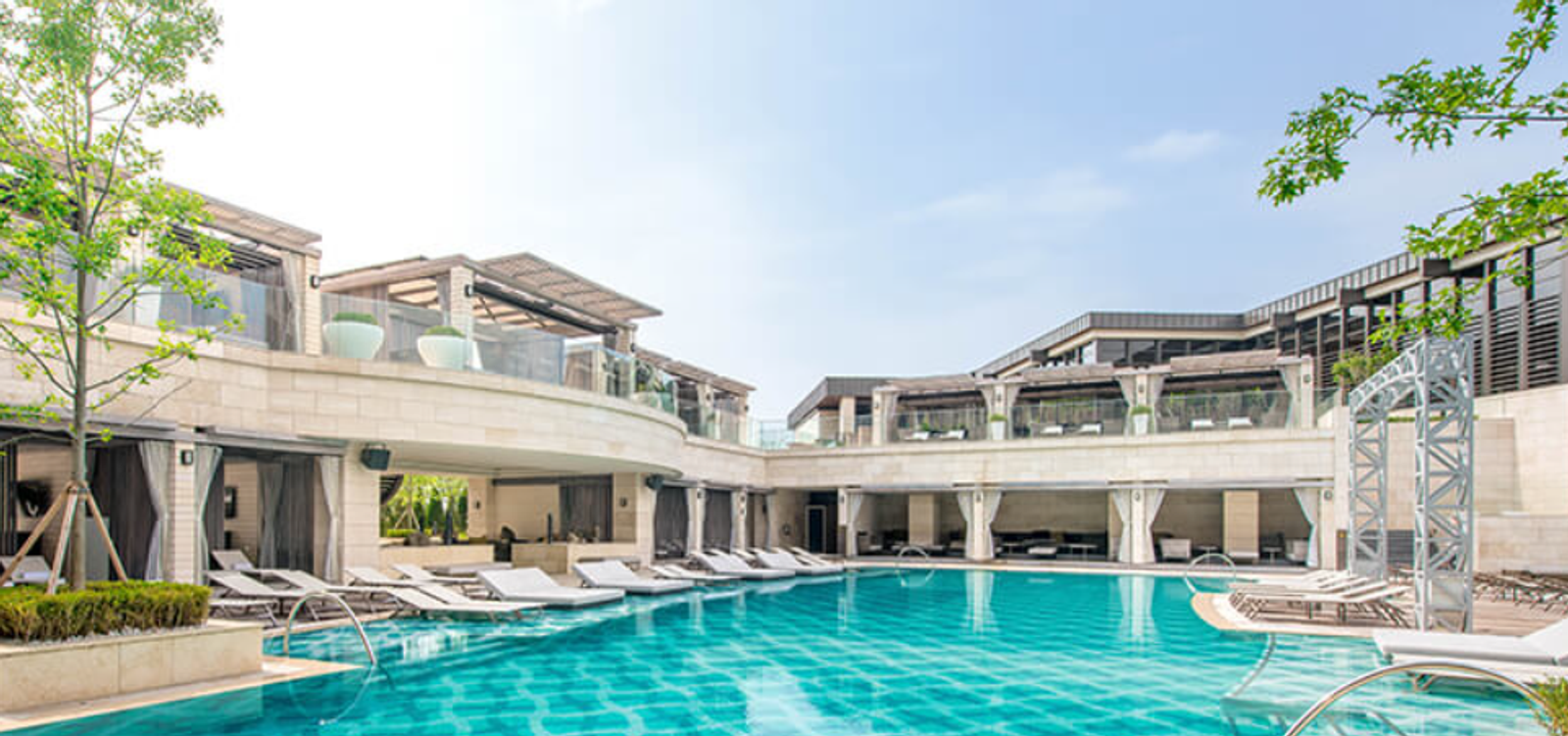
Paradise (KOSDAQ: 036170) is South Korea's largest operator of casinos restricted to foreign nationals, running integrated casino-hotel complexes at key locations including Incheon, Busan, and Jeju. Its flagship asset is Paradise City, a landmark integrated resort on Incheon's Yeongjong Island opened in 2017 in a joint venture with Japan's Sega Sammy Holdings. The complex combines a casino with a five-star hotel, a spa, and entertainment facilities—the first of its kind in Korea—and embodies the company's long-term strategic ambitions.
For many years, Paradise generated steady profits within the tightly regulated structure of Korea's foreign-only casino market. The Covid-19 pandemic, however, delivered a near-fatal blow: international visitors vanished almost overnight, forcing the company to rethink its business model. Around 2024, as debate about Korea's broader market "Value-Up Programme"—a government-backed initiative to improve corporate valuations across the country's stock exchanges—gathered momentum, Paradise publicly committed to a series of measures designed to lift its valuation: a transfer from the KOSDAQ to the main KOSPI exchange, construction of a new luxury hotel, and the cancellation of treasury shares. Yet the share price has moved in a direction that offers little comfort to shareholders, leaving the market's verdict decidedly mixed.
Business Foundation and Financial Performance
*From Casino to Integrated Resort*
Paradise's revenue is broadly split between its casino operations and its hotels and resorts. Casino revenues depend heavily on VIP "drop" (the total amount wagered), and the ability to attract high-spending Chinese visitors has historically been the single most important driver of earnings. Before the pandemic, the company reported operating profits running into the hundreds of billions of won. The closure of Korean borders to foreigners between 2020 and 2022 caused casino revenues to collapse, leaving the company nursing substantial operating losses.
Recovery began in 2023, as international tourism rebounded and casino operations normalised. Brokerage analysts have since been falling over themselves to forecast record profits in 2025 and 2026. Hana Securities has designated Paradise as a top pick in the casino sector, predicting the industry will post all-time earnings highs in the second half of 2026.
*Annual Financial Trends*
Year | Revenue (Consolidated, est.) | Operating Profit | Key Developments
2019 | ~₩900bn+ | Profitable | Normal pre-pandemic operations
2020 | Sharp decline | Operating loss | International arrivals suspended
2021 | Minimal recovery | Losses continued | Only partial reopening
2022 | Partial recovery | Losses narrowing | Gradual return of foreign visitors
2023 | Meaningful rebound | Return to profit | Casino operations normalising rapidly
2024 | Continued growth | Profit expanding | Value-Up declared; KOSPI transfer mooted
2025 | Near-record levels (est.) | Profit expanding | Treasury share cancellation; luxury hotel push
2026 | All-time high expected | Peak forecast | Top pick for brokers; governance reform
Value-Up Milestones
*July 2024 — Company formally announces Value-Up strategy: KOSPI transfer and ₩550bn luxury hotel*
At an investor relations briefing for institutional investors and analysts in July 2024, Paradise set out its Value-Up strategy. The centrepiece was a plan to transfer its listing from KOSDAQ to the main KOSPI board, coupled with a ₩550bn (approximately $400m) investment in a new luxury hotel. Management declared its ambition to become a "top-tier" casino and hotel operator, framing the strategy as a structural upgrade of the business rather than a simple increase in dividend payouts.
The market's response was anything but warm. The share price fell after the announcement, prompting some observers to dub it a "value-down" moment. Investors appeared to interpret the heavy capital outlay as a near-term drag on cash flows rather than as a catalyst for future growth, while the proposed KOSPI transfer introduced uncertainty about changes to the shareholder register and index-related fund flows.
*February 2025 — Chief executive reaffirms commitment to diversification*
In a media interview in February 2025, chief executive Choi Jong-hwan declared that the company would go "all-in" on diversifying into luxury hotels alongside its casino business. The remarks were widely read as a public reaffirmation of the strategy outlined in 2024, giving concrete shape to management's vision of transforming Paradise from a casino-centric operator into a luxury hospitality platform.
*June 2025 — Company cancels approximately 540,000 treasury shares worth around ₩7bn*
In June 2025, Paradise cancelled roughly 540,000 treasury shares with a market value of approximately ₩7bn ($5m). Management said the cancellation was intended to enhance shareholder value and strengthen market confidence. Treasury share cancellations reduce the number of shares outstanding, thereby permanently increasing the value of each remaining share—a form of capital return generally regarded as more durable than a one-off dividend payment.
*February 2026 — Dividend frozen despite record profits; shareholders voice frustration*
When Paradise published its record annual results in February 2026, it simultaneously announced that the dividend would be held flat at the previous year's level. Investors who had anticipated that stronger profits would translate into more generous payouts were disappointed. Critics argued that the Value-Up programme was being driven primarily by capital expenditure rather than by direct returns to shareholders.
*March 2026 — Annual general meeting formalises governance reform and shareholder return commitments*
At the annual general meeting in March 2026, Paradise formally announced a "structural reform drive" encompassing improvements to corporate governance and an explicit commitment to expanding shareholder returns. Appearing to acknowledge the market's frustration over the frozen dividend, the company indicated it would diversify the composition of its board and set out a medium-to-long-term roadmap for shareholder distributions.
*July 2026 — Brokers forecast all-time record profits for second half; Paradise named top pick*
In a sector report published in July 2026, Hana Securities forecast that Paradise would achieve record earnings in the second half of the year, naming the company as a top pick alongside Lotte Tour Development. Analysts cited rising foreign visitor numbers, the competitive quality of Paradise City's facilities, and the gradual progress of the luxury hotel project as the principal positive factors.
Challenges and Assessment
*Key challenges*
The central tension in Paradise's Value-Up strategy is the trade-off between executing a large-scale investment programme and delivering meaningful shareholder returns. The ₩550bn luxury hotel project has merit as a long-term asset and a source of revenue diversification, but the heavy capital expenditure makes it financially difficult to increase dividends or cancel further treasury shares at the same time.
The transfer to the KOSPI exchange is also more complicated than it appears. Beyond the mechanics of the move itself, the key questions are whether index-tracking funds will include the stock and how the change in market affects the shareholder base. If the shares fail to re-rate materially after the transfer, the rationale for the listing change will come under scrutiny.
There is also a structural vulnerability that is harder to address: the company's casino revenues remain heavily dependent on attracting high-spending Chinese VIP gamblers. Earnings are therefore sensitive to external variables—shifts in Sino-American relations, regulatory changes within China, and movements in the renminbi—that management cannot control. This exposure acts as a persistent discount on the company's long-term valuation.
*Assessment*
In terms of strategic direction, Paradise's Value-Up efforts deserve qualified credit. Expanding the integrated resort platform through a new luxury hotel, rather than simply increasing dividends, represents a genuine attempt to reduce the structural discount applied to a casino-only business model by broadening non-gaming revenues.
The treasury share cancellation in June 2025 is a positive signal—it demonstrates that management is willing to act, not merely to talk. However, at roughly ₩7bn, the cancellation was modest relative to the company's overall market capitalisation, and some observers dismissed it as symbolic rather than substantive. Whether the governance reforms announced at the 2026 annual general meeting translate into concrete policy changes will be the most important test of the Value-Up narrative going forward.
Controversies and Limitations
*The paradox of a "Value-Up" that depressed the share price*
The most striking feature of Paradise's Value-Up journey is that the share price fell in the immediate aftermath of the July 2024 announcement. Investors appeared to focus on the near-term cash flow burden of the ₩550bn investment rather than on its long-term potential. The episode is a clear illustration of the gap between the story management wants to tell and the reality the market is pricing in.
*Record profits, frozen dividend*
The decision to hold the dividend flat in February 2026, despite record earnings, raised uncomfortable questions about whether the company's shareholder return commitments are genuine. If the premise of a Value-Up programme is that shareholders should share in the fruits of improved profitability, then reporting all-time profits while freezing the payout sends a contradictory message. Management's defenders argue that investment requirements leave little room for higher distributions; critics contend that the will to return capital to shareholders has yet to be convincingly demonstrated.
*Labour practices and ESG risk*
In June 2026, media reports emerged suggesting that, despite the company's public emphasis on work-life balance, employees on the ground were complaining that they were unable to take even their allocated annual leave. The gap between a company's external ESG commitments and its internal practices is a recognised risk factor for long-term valuations, and any sustained reputational damage on this front could undermine confidence in the broader Value-Up narrative.
*Uncertainty surrounding the KOSPI transfer*
A listing on the KOSPI—South Korea's main board, home to the country's largest companies including Samsung and Hyundai—offers potential benefits: access to a wider universe of institutional investors, possible inclusion in benchmark indices, and enhanced brand recognition. But the process is complex, and the timing is uncertain. There is also a risk that existing KOSDAQ investors may sell before the transfer is complete, creating near-term selling pressure. The gap between completing the transfer and seeing a genuine improvement in trading liquidity and institutional ownership may be longer and bumpier than management expects.
Key Metrics Summary
Year | Dividend | Treasury Share Cancellation | Operating Profit Trend | PBR | Key Value-Up Event
2019 | Normal | None | Profitable (normalised) | Average | —
2020 | Reduced/suspended | None | Large loss | Low | Pandemic impact
2021 | Minimal | None | Losses continued | Low | —
2022 | Partial recovery | None | Losses narrowing | Recovering | —
2023 | Recovery level | None | Return to profit | Recovering | Foreign visitor normalisation
2024 | Standard dividend | None | Profit expanding | N/A | KOSPI transfer and ₩550bn hotel announced
2025 | Standard dividend | ~540,000 shares (~₩7bn) | Near-record (est.) | N/A | Treasury share cancellation
2026 | Frozen | Under consideration | All-time high forecast | N/A | AGM governance reform; named top pick