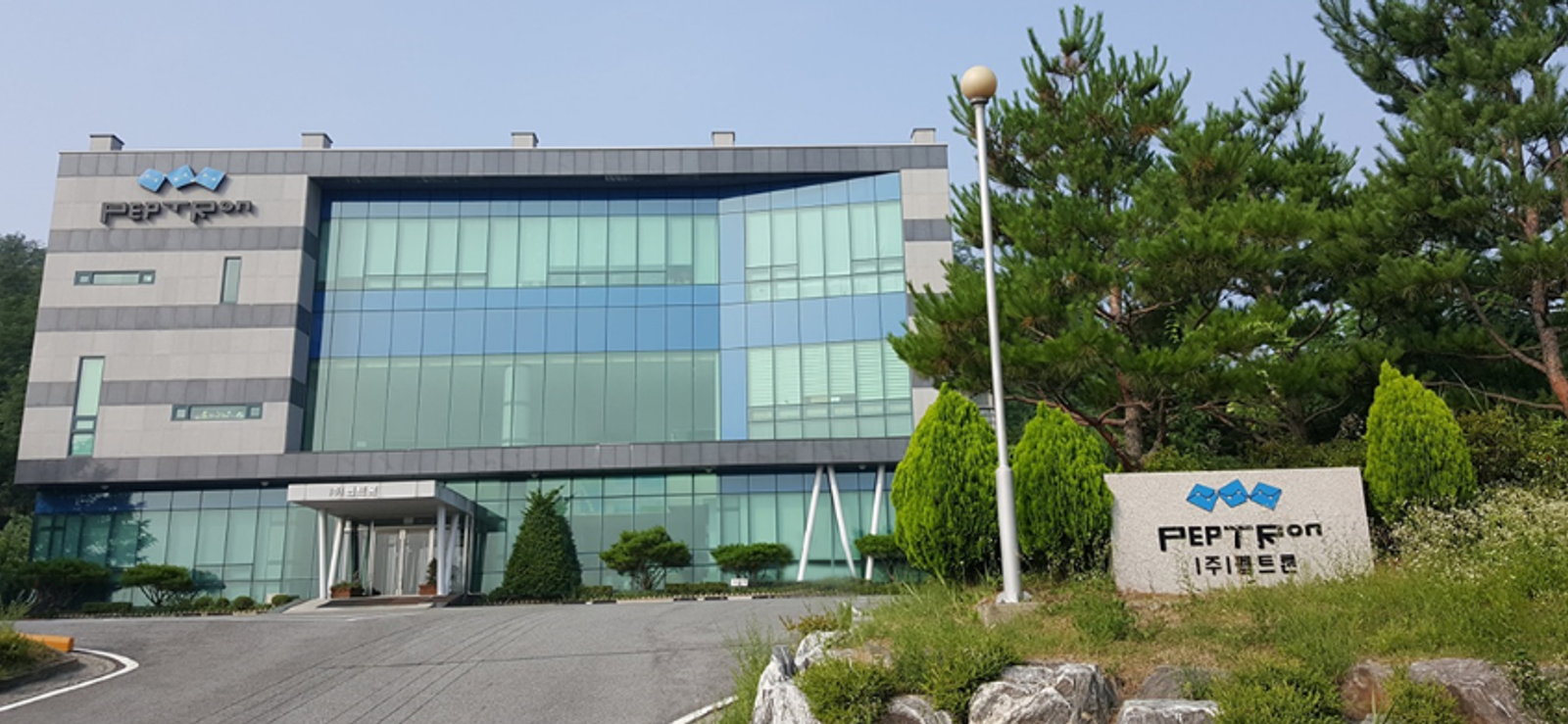
Company Overview
Peptron is a Daejeon-based pharmaceutical and biotechnology company listed on the KOSDAQ, South Korea's technology-focused stock exchange. Its core business is the research and development of long-acting drugs — medicines engineered to release their active compounds gradually over an extended period. The company has built its business model around a proprietary drug-delivery platform called SmartDepot, which it uses to develop sustained-release formulations of protein and peptide-based medicines for out-licensing to global pharmaceutical groups.
Peptron is regarded within the KOSDAQ biotech sector as a technically credible outfit. But as a company whose revenues depend primarily on the timing of licence deals and milestone payments from clinical partners, rather than on steady product sales, its financial results are inherently volatile from year to year. That volatility makes it structurally difficult to sustain traditional forms of shareholder return — dividend payments and share cancellations — and the industry has long noted this tension.
Since 2024, when the South Korean government formally launched its "Value-up" programme to improve corporate governance and boost stock market valuations, pressure has grown on KOSDAQ-listed biotechs to demonstrate more tangible shareholder value. Peptron was drawn into this debate in July 2025, when it disclosed that it had used treasury shares as the underlying asset in an exchangeable bond (EB) issuance — prompting a pointed discussion about whether such transactions constitute genuine shareholder returns.
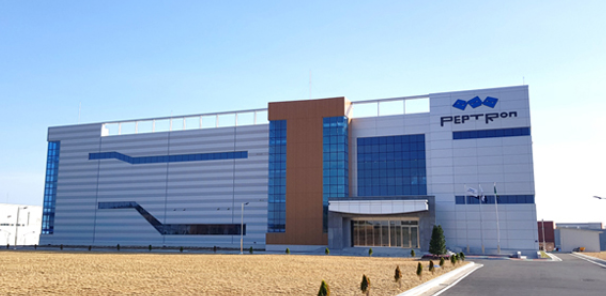
Business Foundations and Financial Performance
The SmartDepot Platform
Peptron's entire commercial rationale rests on SmartDepot, a biodegradable polymer microsphere technology it developed in-house. The platform controls the slow release of protein and peptide drugs over periods ranging from a few days to several months, effectively converting medicines that must be injected daily into formulations administered once a month or once every three months. The benefits for patients — greater convenience and improved adherence to treatment regimens — are straightforward. The company is understood to be pursuing applications in prostate cancer, acromegaly (a hormonal disorder caused by excess growth hormone), and, increasingly, GLP-1 class drugs used to treat obesity and diabetes.
Revenue Structure
Because Peptron is still primarily a research and development enterprise, its financial results hinge on when licence agreements are signed and when milestone payments are triggered by clinical progress. Operating profit swings between positive and negative territory depending on these events, whilst R&D expenditure consumes a substantial share of revenues every year.
Year | Revenue (KRW bn) | Operating profit (KRW bn) | Net profit (KRW bn) | Key development
2021 | c.13–15 | Loss | Loss | Increased R&D investment
2022 | c.10–13 | Loss | Loss | Rising clinical trial costs
2023 | Unconfirmed | Improving | Partial improvement | Licence negotiations under way
2024 | — | — | — | Value-up programme discussions
2025 | — | — | — | EB issuance; treasury share disposal disclosed
*Annual figures are based on regulatory filings. Results are subject to significant variation depending on the timing of technology-transfer milestone receipts.*
Valuation Context
As of May 2026, the average price-to-book ratio (PBR) across the pharmaceutical and biotech sector is reported to be more than seven times the broader market average — and roughly five times that of Samsung Electronics. This premium reflects the market's expectation of future pipeline value, but it also creates a structural vulnerability: companies with thin earnings visibility trade at valuations that can collapse swiftly if clinical programmes disappoint. Peptron is no exception to this pattern of high PBR combined with weak current profitability.
Value-up Timeline
2024 — KOSDAQ Caught Up in the Value-up Debate
When the government formalised the Korea Value-up Programme, the initial focus fell on large-cap stocks on the main KOSPI index. But the push gradually extended to KOSDAQ, as policymakers urged biotechnology and technology companies to participate. The government was simultaneously pursuing a target of pushing the KOSDAQ index above 1,100 — dubbed "Cheon-SDAQ" (the "1,000 KOSDAQ") — and encouraged smaller growth companies to engage with governance and shareholder-return reforms. As a KOSDAQ-listed biotech that had qualified for listing under special technology-based criteria, Peptron found itself within the indirect orbit of these discussions.
July 2025 — KRW 24.2bn Exchangeable Bond Issuance and Treasury Share Disposal
In July 2025, Peptron disclosed the issuance of exchangeable bonds worth KRW 24.2bn (approximately $18m), using approximately 74,000 treasury shares as the underlying exchange asset. An exchangeable bond allows investors to convert the debt instrument into shares once certain conditions are met; for the issuing company, the structure serves simultaneously as a means of raising capital and of deploying treasury shares.
The transaction was understood to have been driven by the need to fund the company's clinical pipeline. However, using treasury shares as collateral for a bond rather than cancelling them outright drew immediate scepticism: critics argued that such a transaction could hardly be characterised as a genuine act of shareholder return.
September 2025 — Market-Wide Reassessment of Treasury-Share EB Structures
In the second half of 2025, a wave of KOSDAQ and KOSPI companies turned to treasury-share exchangeable bonds as a financing tool, and hedge funds began actively deploying the structure in their own strategies. For issuers, the appeal is clear: unsecured financing at below-market interest rates. But the arrangement ultimately results in treasury shares flowing back into the market, raising the prospect of earnings dilution. Peptron's July transaction was re-examined in this broader context, with the company's deal cited as an early instance of a structure that subsequently became widespread.
March 2026 — Stock Momentum and Renewed Market Attention
In March 2026, Peptron featured in a securities market broadcast segment devoted to analysing high-momentum stocks. Analysts highlighted two catalysts: the explosive growth anticipated in the GLP-1-based obesity treatment market globally, and the potential for South Korean biotechs to capture opportunity created by patent expirations at major multinational pharmaceutical groups. Both themes rekindled interest in Peptron's long-acting drug platform as a potential beneficiary.
Challenges and Assessment
Outstanding Challenges
First, the company needs to establish a coherent, consistent shareholder-return framework. Peptron has paid no meaningful dividends and has no clear record of cancelling treasury shares. Even allowing for its stage of development, any company that seeks to be associated with the Value-up programme ought to be able to articulate a minimum road map for returning capital to shareholders.
Second, technology licences and visible milestones are essential. In the current business model, genuine value creation can only be demonstrated through clinical success and signed licence deals with major global pharmaceutical companies. Should SmartDepot's applications in obesity and diabetes become concrete, the company's financial profile could change materially.
Third, greater transparency in treasury share management is required. Using treasury shares as the underlying asset in an exchangeable bond is, at its core, a financing mechanism. It falls well short of the shareholder-value enhancement that investors have a right to expect. A clear, publicly stated commitment to buying back and cancelling shares would represent a meaningful step forward.
Fourth, governance disclosure standards must improve. Across the KOSDAQ biotech sector, the market is demanding higher-quality disclosure on board independence, audit committee effectiveness, and related-party transactions. Peptron is not exempt from this expectation.
Overall Assessment
Peptron occupies a distinctive position in the domestic long-acting drug platform market, and its technical credentials are not seriously disputed. But viewed through the lens of shareholder-value history, the picture is less impressive: returns to shareholders have been negligible, and treasury shares have been deployed primarily to facilitate capital-raising rather than to reduce the share count. Classifying Peptron as a genuine Value-up practitioner would be a stretch at this stage.
That said, the convergence of GLP-1 market growth, forthcoming Big Pharma patent cliffs, and a broader reassessment of the South Korean biotech sector creates a plausible path to transformation. If the company secures meaningful technology-transfer agreements, it would have both the resources and the rationale to construct a real shareholder-return framework. Clinical results and licence negotiations expected to progress in 2026 and beyond will be the decisive test.
Controversies and Structural Limitations
Treasury-Share EBs: Shareholder Return or Fundraising?
The July 2025 transaction split opinion. Management's case — that the capital was a necessary response to clinical funding needs — had an internal logic. But retail shareholders could reasonably object that treasury shares were, in effect, being redirected into the hands of external investors, creating a latent source of dilution rather than a reduction in share count. That is the antithesis of a shareholder return.
The problem was amplified when hedge funds began using the treasury-share EB structure systematically for delta-hedging strategies, exposing issuers to short-term share-price volatility. Peptron was not insulated from this risk.
Chronic Earnings Unpredictability
This is, in part, an unavoidable feature of research-stage biotechnology. But Peptron's dependence on sporadic, event-driven income makes it structurally incapable of sustaining a dividend. In a sector where valuations already carry a PBR premium of more than seven times the market average, any erosion of confidence in the pipeline could trigger a sharp and rapid de-rating.
The Value-up Programme's Poor Fit for High-Growth Biotechs
The government's Value-up programme was designed primarily with low-PBR, capital-heavy industrial companies in mind — the kind of firms where retained earnings are disproportionately large relative to market value. Applying the same template to high-PBR, cash-consuming biotechs creates an obvious mismatch. Encouraging KOSDAQ biotechs to participate in a programme whose headline metrics are dividends and share cancellations — tools ill-suited to companies that must plough capital back into R&D — risks penalising the very companies whose growth the government's Cheon-SDAQ target depends upon. This tension remains unresolved and is widely discussed within the industry.
Governance Disclosure Gaps
Like most small and mid-cap biotechs on KOSDAQ, Peptron falls short of the disclosure standards set by larger listed companies on matters such as board independence, the role of the audit committee, and intra-group transactions. This is a sector-wide weakness, but one that shareholders and regulators are increasingly reluctant to overlook.
Key Data Summary
Year | Dividend (KRW per share) | Treasury share cancellation | Treasury-share EB issuance | Operating profit (KRW bn) | PBR (estimated)
2022 | None | None | None | Loss | Elevated
2023 | None | None | None | Improving | Elevated
2024 | None | None | None | Unconfirmed | Elevated
2025 | None | None | KRW 24.2bn (c.74,000 shares disposed) | Unconfirmed | Above sector average
2026 (forecast) | Unconfirmed | Unconfirmed | Further issuance possible | Contingent on licence deals | Contingent on clinical results
*Figures are drawn from regulatory filings and published reports; items not yet disclosed are marked "unconfirmed". The sector-average PBR figure of more than seven times the broader market is an industry-wide estimate as of May 2026.*