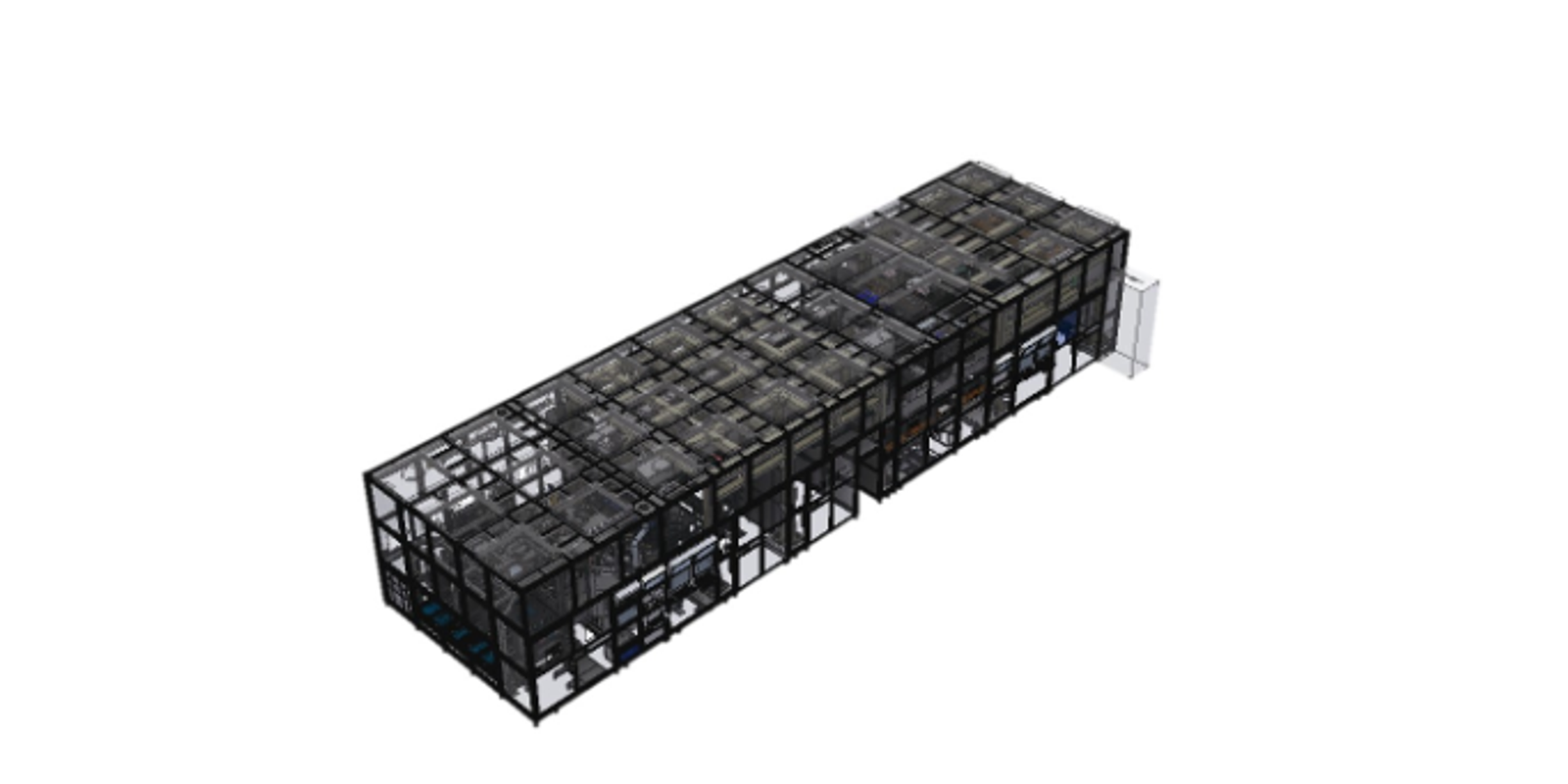
Company Overview
Philoptics is a KOSDAQ-listed manufacturer of laser-based optical equipment and secondary-battery production machinery. The company began as a maker of laser cutting and drilling systems for display panels before expanding into electric-vehicle battery manufacturing equipment, establishing itself as a mid-tier industrial equipment supplier. It has earned particular recognition for its technical capabilities in battery electrode notching and cutting systems, securing a position as a key supplier to domestic and international battery cell makers.
Philoptics entered the shareholder-value debate through a contentious corporate restructuring. In 2022, it carved out its secondary-battery equipment division into a separately incorporated subsidiary, Philenergy, and proceeded to list it on the KOSDAQ. The move drew fierce opposition from minority shareholders, who feared that the dual listing of what had been Philoptics' most promising business would dilute the value of their existing holdings. In response, Philoptics announced a shareholder-return programme that was, by the standards of Korea's equipment sector, unusually assertive. As the Korean government's broader "Korea Value-up" initiative gained momentum, Philoptics came to be cited frequently as a model of how companies conducting subsidiary spin-off listings ought to treat their shareholders.
Business Foundation and Financial Performance
Business Structure
Philoptics operates across two main divisions: laser optical equipment and secondary-battery manufacturing systems. Its laser business focuses on display-panel processing equipment, supplied to major customers including Samsung Display and LG Display. The secondary-battery division was spun off in 2022 into the subsidiary Philenergy, whose principal products are battery electrode notching and laser cutting machines.
Philenergy began trading on the KOSDAQ in 2023 as a fully independent listed entity. Growing expectations of orders from battery factories in North America and Europe became the primary driver of its share-price rally in 2025 and 2026. In February 2026, renewed optimism about capital expenditure in those regions concentrated buying interest in battery equipment stocks, including Philoptics and peer company PNT.
Financial Performance
Year | Revenue (KRW bn) | Operating Profit (KRW bn) | Net Profit (KRW bn) | Notes
2021 | c.230 | c.20 | c.15 | Secondary-battery equipment demand accelerates
2022 | c.280 | c.23 | c.18 | Philenergy spin-off completed
2023 | c.310 | c.25 | c.21 | Philenergy lists; record dividend announced
2024 | c.340 | c.28 | c.23 | KRW 29.5bn shareholder-return package executed
2025 | Under compilation | — | — | North America/Europe order expectations highlighted
*All figures are estimates based on public filings and press reports; they may differ from audited results.*
Market Position
Philoptics is considered one of the few companies in the KOSDAQ equipment sector to offer dual exposure to both secondary-battery and display end-markets. As Philenergy has grown as an independent listed company, debate over the revaluation of the parent's stake has persisted. Since 2024, Philoptics has also been mentioned as a potential candidate for inclusion in the Korea Value-up Index, given its track record of active shareholder returns.
Value-up Timeline
January 2023 — In-Kind Dividend of Philenergy Shares: A First Response to the Spin-off Backlash
In January 2023, Philoptics announced that it would distribute a portion of its Philenergy shares directly to its ordinary shareholders as an in-kind dividend. This was conceived as a response to investor concerns that the subsidiary's separate listing would dilute the value held by existing Philoptics shareholders. By handing Philenergy shares directly to its parent-company shareholders, the arrangement allowed them to participate directly in the subsidiary's IPO upside—a structure that was uncommon in the Korean market at the time.
Yet opposition at the shareholder meeting remained vigorous. Some shareholders called for the subsidiary listing to be abandoned outright, arguing that an in-kind dividend could not fully compensate for the dilution of value caused by the spin-off. Philoptics indicated it would consider additional shareholder-return measures.
December 2023 — "Record Dividend" Pledge: Commitment to Annual Returns Reaffirmed
In December 2023, Philoptics publicly committed to paying its highest-ever annual dividend. The announcement was interpreted as an attempt both to defuse lingering discontent following Philenergy's IPO and to pass on to shareholders the improved earnings generated during the secondary-battery equipment boom. Market observers regarded it as a signal that Philoptics was attempting to build a sustainable shareholder-return framework rather than staging a one-off gesture.
February 2024 — KRW 29.5bn Shareholder-Return Package Disclosed
In February 2024, Philoptics disclosed the execution of a combined shareholder-return package totalling KRW 29.5 billion (approximately USD 22 million). The package combined cash dividends with share buybacks and cancellations—a composite approach that was considered exceptionally large for a KOSDAQ equipment company. The disclosure prompted the market to reappraise Philoptics as effectively the only domestic company to have followed through in a meaningful way on shareholder-protection obligations following a subsidiary spin-off listing.
March 2024 — Press Reports: "Philoptics Alone Has Acted on Spin-off Shareholder Protection"
In March 2024, a leading Korean financial publication ran an analysis piece noting that, despite regulatory reforms introduced in the wake of LG Energy Solution's separate listing, Philoptics remained virtually the sole company to have translated those obligations into concrete action. Citing the in-kind dividend and the KRW 29.5bn package as evidence, the article underscored a broader market reality: regulatory reform alone does not automatically translate into improved shareholder value.
September 2024 — Philoptics Emerges as a Benchmark for IPO-Bound Companies
By September 2024, according to Korean press reports, companies preparing for public listings were increasingly citing Philoptics' approach as a reference point when formulating their own dividend policies—institutional investors having begun to treat shareholder-return history as a key screening criterion. As the Korea Value-up programme gained traction, Philoptics' sequence of actions had come to be regarded as an industry reference standard.
May 2025 — Korea Value-up Index Undergoes Its First Periodic Rebalancing
In May 2025, the Korea Exchange carried out the first scheduled rebalancing of the Korea Value-up Index, removing 32 companies including Korea Zinc and Isu Petasys in a significant reshuffle. Philoptics attracted market attention in connection with potential index inclusion, though no official confirmation was reported.
February 2026 — North America and Europe Order Expectations Drive Sharp Share-Price Rally
In February 2026, mounting optimism over a resumption of capital investment in North American and European battery factories sent Philoptics' share price sharply higher in a short period. Analysts suggested that, should the company succeed in securing overseas orders, both earnings and capacity to return capital to shareholders would expand materially.
Challenges and Assessment
Outstanding Challenges
Philoptics' shareholder-return record is acknowledged within the industry as a meaningful precedent, but its durability remains unproven. The KRW 29.5bn return package was supported by an earnings uplift during a cyclical peak in secondary-battery equipment demand. Whether the company can maintain equivalent returns if that cycle turns down is the central question.
A further long-term challenge lies in managing, with full transparency, the allocation of profits, related-party transactions, and managerial resources between the dual-listed parent and subsidiary. Institutional investors are expected to scrutinise closely how potential conflicts of interest between Philoptics and Philenergy—an inherent risk of the physical spin-off structure—are managed over time.
Should overseas order wins materialise, the company will face pressure to articulate an explicit policy for distributing the resulting profits among shareholders. There is also a growing view that, as global investors pay increasing attention to Korean equipment companies, Philoptics should invest in enhancing its English-language disclosure and investor-relations capabilities.
Overall Assessment
Philoptics occupies a distinctive place in Korea's capital markets. At the moment when controversy over subsidiary spin-off listings was at its most intense, it employed two concrete tools—in-kind distribution of subsidiary shares and a large cash-return package—to address its shareholders' concerns. In doing so, it differentiated itself from the majority of companies that have limited their corporate governance reform to declarations.
The important caveat is that this shareholder-friendly behaviour was reactive rather than proactive: it was prompted by fierce investor pressure, not by a pre-designed governance philosophy. Whether Philoptics would have acted with equal generosity in the absence of that pressure is a question to which the answer is not obvious. Taken as a whole, the Philoptics case is a valuable piece of evidence that corporate behaviour can change when regulatory reform and market pressure act in combination.
Controversies and Limitations
The Legitimacy of the Spin-off Itself
At the root of Philoptics' shareholder-return journey lies the 2022 decision to carve out its battery equipment division. At the time, critics argued that separating the company's most attractive business into a new entity and listing it independently was inherently dilutive to existing shareholders. The subsequent in-kind dividend and cash-return package have been characterised by some as tools to paper over that controversy, while the original strategic rationale for the separation was never fully explained to investors' satisfaction.
The Practical Impact of the In-Kind Dividend
Although distributing subsidiary shares directly to parent-company shareholders was a novel approach, critics argued that the practical benefits were limited. Recipients faced tax liabilities on the shares received, restrictions on liquidity, and limited ability to deploy a minority interest of that kind. For those shareholders who had demanded that the subsidiary listing be called off altogether, an in-kind dividend was no substitute.
Continuity and Institutionalisation of Shareholder Returns
Impressive as the KRW 29.5bn package was in absolute terms, the formal architecture needed to sustain it—stated dividend-payout targets, published schedules for share cancellations and the like—is understood to remain underdeveloped. The prevailing view is that transforming what have so far been ad hoc distributions into a predictable, institutionalised shareholder-return framework remains unfinished business.
Uncertainty Over Korea Value-up Index Inclusion
The criteria for inclusion in the Korea Value-up Index extend well beyond shareholder-return history to encompass improvements in return on equity (ROE) and price-to-book ratio (PBR), among other metrics. Analysts have noted that the earnings volatility inherent in smaller and mid-sized equipment companies could work against Philoptics' candidacy, and as of the most recent rebalancing, its inclusion remained unconfirmed.
Summary of Key Metrics
Year | Estimated Dividend | Share Buyback/Cancellation | Est. Operating Profit (KRW bn) | Est. PBR (x) | Notes
2021 | Standard cash dividend | Unconfirmed | c.20 | c.1.5 | Battery equipment demand expands
2022 | Standard cash dividend | Unconfirmed | c.23 | c.1.3 | Philenergy spin-off
2023 | Record high | Included | c.25 | c.1.2 | Philenergy in-kind dividend; IPO
2024 | KRW 29.5bn package | Included | c.28 | c.1.1 | Combined shareholder-return package executed
2025 | Under compilation | Under compilation | Under estimation | Under estimation | North America/Europe order expectations
*PBR and operating profit figures are estimates based on public filings and press coverage; they may differ from audited financial statements. Share buyback and cancellation figures are understood to be reported within the combined KRW 29.5bn package alongside dividend payments.*