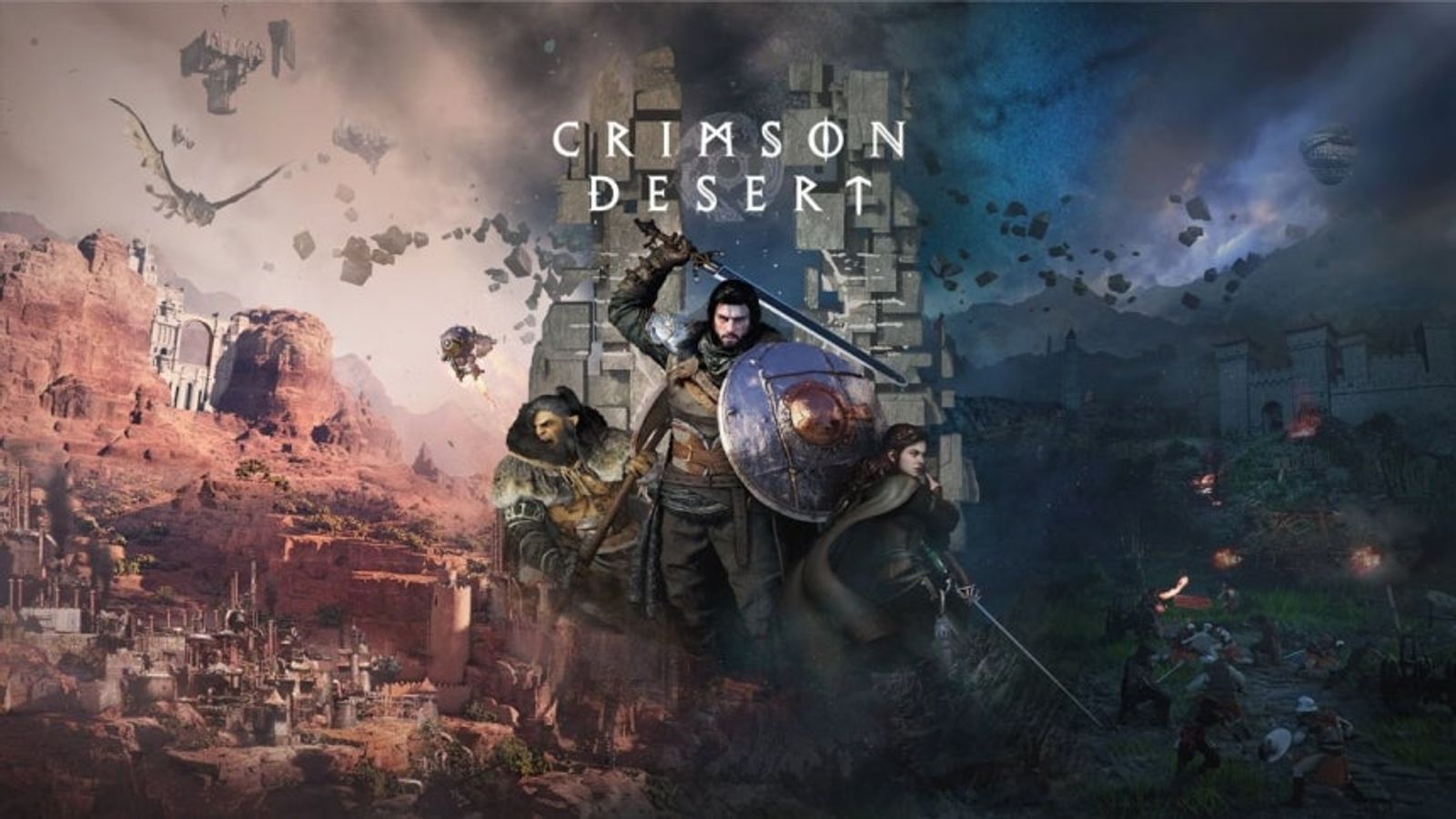
The South Korean games industry has been waiting a long time for a number like this. Pearl Abyss's new action open-world RPG, *Red Desert*, generated ₩277.4bn (roughly $200m) in revenue almost immediately after its launch on Steam, topping the platform's sales charts among new intellectual properties. Beyond a simple box-office figure, that number is being read as a measure of how far a Korean game developer can go in the global AAA market under its own banner.
Stepping out of Black Desert's shadow
*Red Desert* inherits the fictional universe of *Black Desert*, Pearl Abyss's long-running MMORPG released in 2014, but departs radically from its predecessor in genre and design. Where *Black Desert* built a loyal global following as a buy-to-play MMORPG, *Red Desert* was conceived as a single-player-focused, open-world action RPG. The shift represents a deliberate break from the monetisation-heavy MMORPG formula that most South Korean studios have relied upon almost by reflex.
That strategic bet attracted considerable attention within the industry. While the majority of major Korean studios have concentrated on porting existing IPs to mobile or churning out successive MMORPG titles, Pearl Abyss committed years of development capital and personnel to a direct assault on the global console and PC market. Development reportedly took around six to seven years—an unusually long investment cycle for a single title in Korea.
What "number one new IP on Steam" actually means
The label "top-grossing new IP on Steam" is more than a marketing boast. Steam is the world's largest PC games storefront, with more than 130m monthly active users. For a wholly original IP—one with no established series or franchise recognition—to generate hundreds of billions of won on that platform is structurally very difficult.
Broadening the comparison internationally sharpens the picture further. Even well-established Western studios frequently struggle to hit this level of revenue with the debut entry in a new IP. The disappointing launches of *Starfield* (Bethesda) and *Forspoken* (Square Enix) in 2023 serve as cautionary examples, making Pearl Abyss's achievement all the more striking.
South Korea has produced one notable Steam breakout in recent memory—Nexon's *Dave the Diver*—but that was a small-scale title closer in spirit to an indie game. At ₩277.4bn, *Red Desert* is effectively without precedent as a full AAA Korean original IP.
The sceptics' case: sustainability is everything
Not all observers are unequivocally bullish. Steam launches are structurally front-loaded: revenues pour in during the opening weeks, and early sales figures say little about long-term performance. Parts of the gaming community have pointed to the saturation of the open-world RPG genre, arguing that post-launch user retention and the quality of ongoing content updates will be the real test.
A further variable is how effectively Pearl Abyss transplants its live-service expertise from *Black Desert* to the new title. *Black Desert*, more than a decade after its original release, still retains a global player base through consistent content updates. If that operational capability carries over, *Red Desert* could build a durable long-term revenue stream beyond its launch spike. The catch is that the lifecycle of a single-player game is fundamentally different from that of an MMORPG, which means console expansion and a downloadable-content strategy will become critical priorities.
A signal of structural change in Korean games
The industry is paying attention to what *Red Desert*'s performance implies for the broader Korean games ecosystem. The domestic sector has long attracted criticism for its overdependence on mobile revenues, its reliance on loot-box mechanics, and a perceived lack of creative ambition. The fact that an attempt to break that mould has translated into genuine commercial success could unsettle some deeply held assumptions about where investment and development effort should be directed.
A single title cannot immediately transform an entire industry's paradigm, of course. But at a moment when major players such as NCSoft, Netmarble, and Kakao Games are struggling to find a path forward from their mobile and MMORPG-centric strategies, *Red Desert*'s Steam performance points clearly in a new direction.
In the longer run, the title's final scorecard will be determined by the timing of its console release, the scope of its global marketing push, and whether it gains access to China—still the world's largest games market. ₩277.4bn is a beginning, not a conclusion.