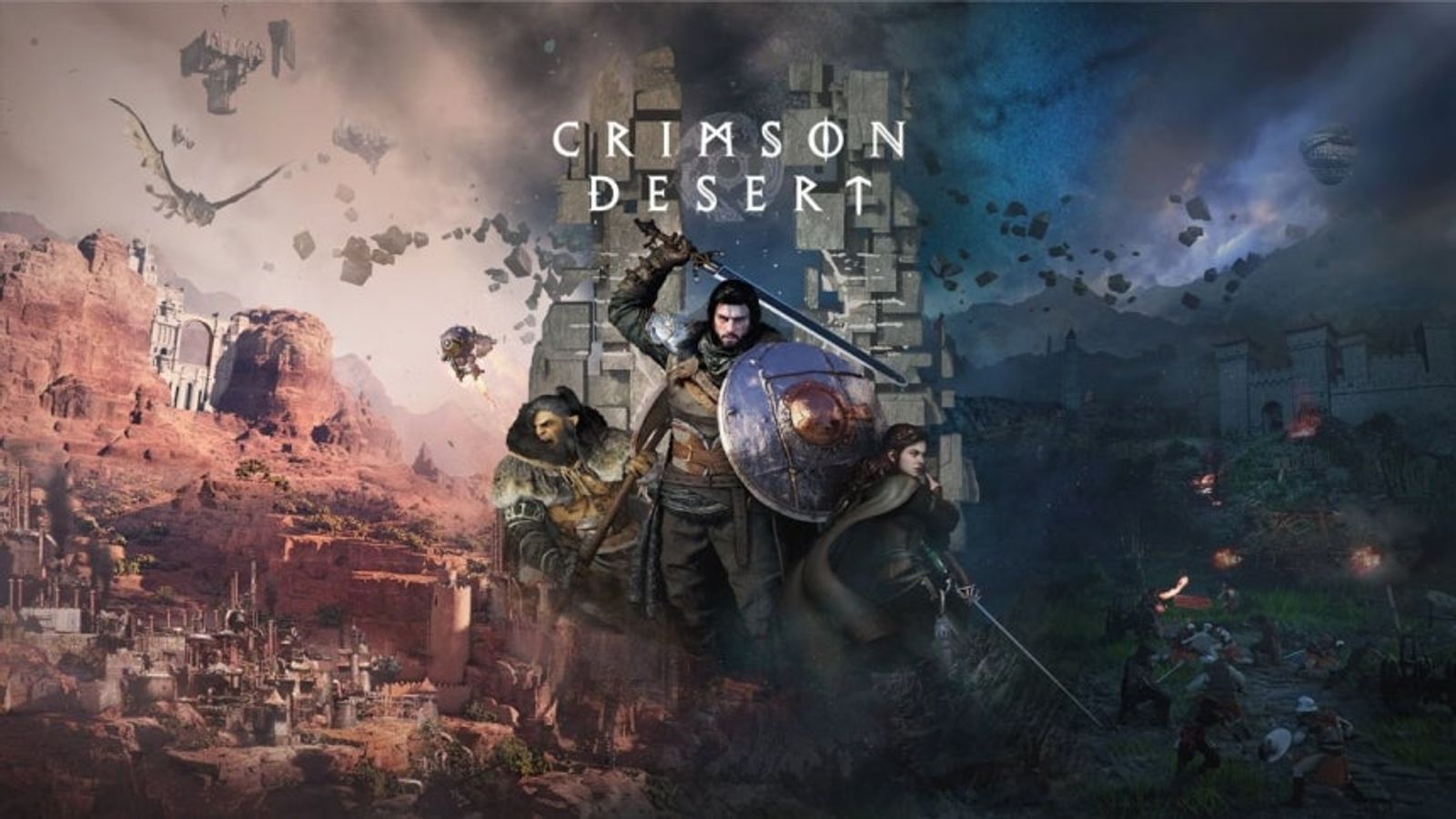
Pearl Abyss has released an infographic chronicling the 17 updates it has pushed out since launching *Red Desert*, its most ambitious title to date. More than a marketing exercise, the move offers a window into how central the "live service" model has become to game publishers' strategic thinking. Given that the game faced scepticism about its launch-day polish, the disclosure reads as a deliberate act of confidence-building — a pledge, in visual form, that the developer is committed for the long haul.
A title launched under pressure
*Red Desert* is an open-world action role-playing game that Pearl Abyss spent years developing, building on the global reputation it earned with *Black Desert Online*. Before release, its expansive lore and high-fidelity graphics generated considerable excitement among gaming communities at home and abroad. Yet after launch, a vocal minority of players and critics pointed to gaps between expectation and reality: concerns centred on the volume of content, technical optimisation, and repetitive gameplay loops.
Those early reviews fed through into market sentiment. Korean game publishers are no strangers to the pattern in which share prices peak on pre-launch excitement and trough around release — a dynamic observed repeatedly with companies such as Nexon and Krafton. Pearl Abyss was acutely aware that it, too, was subject to this structural vulnerability.
What 17 updates signal
Seventeen updates since launch is a substantive number, though quantity alone does not tell the full story; scale and quality must accompany frequency before meaningful conclusions can be drawn. Nevertheless, a rapid, consistent cadence of patches and content additions is a meaningful indicator of how seriously a developer is treating its post-launch obligations.
Market research firm Newzoo has identified consistent, meaningful updates — at least once a month — as one of the defining characteristics of live-service games that minimise player attrition in their first six months. Measured against that benchmark, *Red Desert*'s 17 updates suggest Pearl Abyss is at least meeting the baseline conditions for service stabilisation.
The strategic logic behind the infographic
Publishing an update history as an infographic is a communications strategy, not merely an information release. It is a way of quantifying a developer's commitment to its players and conveying, visually and unambiguously, the message: we have not abandoned this game.
The approach has precedents abroad. After Arrowhead Game Studios, the developer behind *Helldivers 2*, faced server overload problems and content controversies at launch, it rebuilt goodwill by publishing transparent roadmaps and patch notes directly to the community. Hello Games, the studio behind *No Man's Sky*, endured savage reviews at launch but transformed its reputation over several years through a succession of free, large-scale updates — now widely cited as the industry's definitive example of a successful rehabilitation. What these cases share is a preference for communication over silence, and execution over defensiveness.
A fiercely competitive landscape
The external environment in which *Red Desert* must compete is unforgiving. The global open-world RPG market is crowded with formidable rivals: the *Elden Ring* expansion, a new entry in *The Witcher* series, and a growing roster of Chinese AAA titles. The rapid improvement in technical capability and capital firepower among Chinese studios has, by some analyses, eroded the graphical quality edge that Korean games once held more comfortably.
Domestically, NCsoft, Nexon, and Kakao Games are each pursuing their own live-service optimisation strategies, and competition for players' time has rarely been more intense. To build a loyal base and attract new users in this environment, *Red Desert* needs not only frequent updates but content with genuine surprise value — the kind that pulls lapsed players back.
What investors are watching
*Red Desert* is not simply important to Pearl Abyss; it is, to a significant degree, the company's future. *Black Desert Online* continues to provide a reliable revenue base, but the company's medium- and long-term growth trajectory depends almost entirely on *Red Desert*'s performance. Some analysts believe that changes in user-retention rates, as shaped by the update programme, will serve as a leading indicator for second-half earnings. The more pressing question, however, is whether those updates are translating into monetisation — in-game purchases, subscriptions, and similar revenue streams — and the market has identified the disclosure of concrete data on that point as the next test of corporate credibility.
The proof is ongoing
*Red Desert*'s 17 updates, and the decision to publicise them, signal that Pearl Abyss has steeled itself for a prolonged campaign. The live-service games that have succeeded have demonstrated a consistent truth: a title's longevity is determined not at launch, but by everything that follows it.
Yet transparency and execution will only translate into tangible results if supported by hard numbers — concurrent player counts, Steam review trends, and global download figures. Industry observers broadly agree that the decisive variable will be how effectively Pearl Abyss uses its next two or three major content updates to win back players who drifted away early on.
Seventeen updates are a beginning. Pearl Abyss's real contest starts now.