Company overview
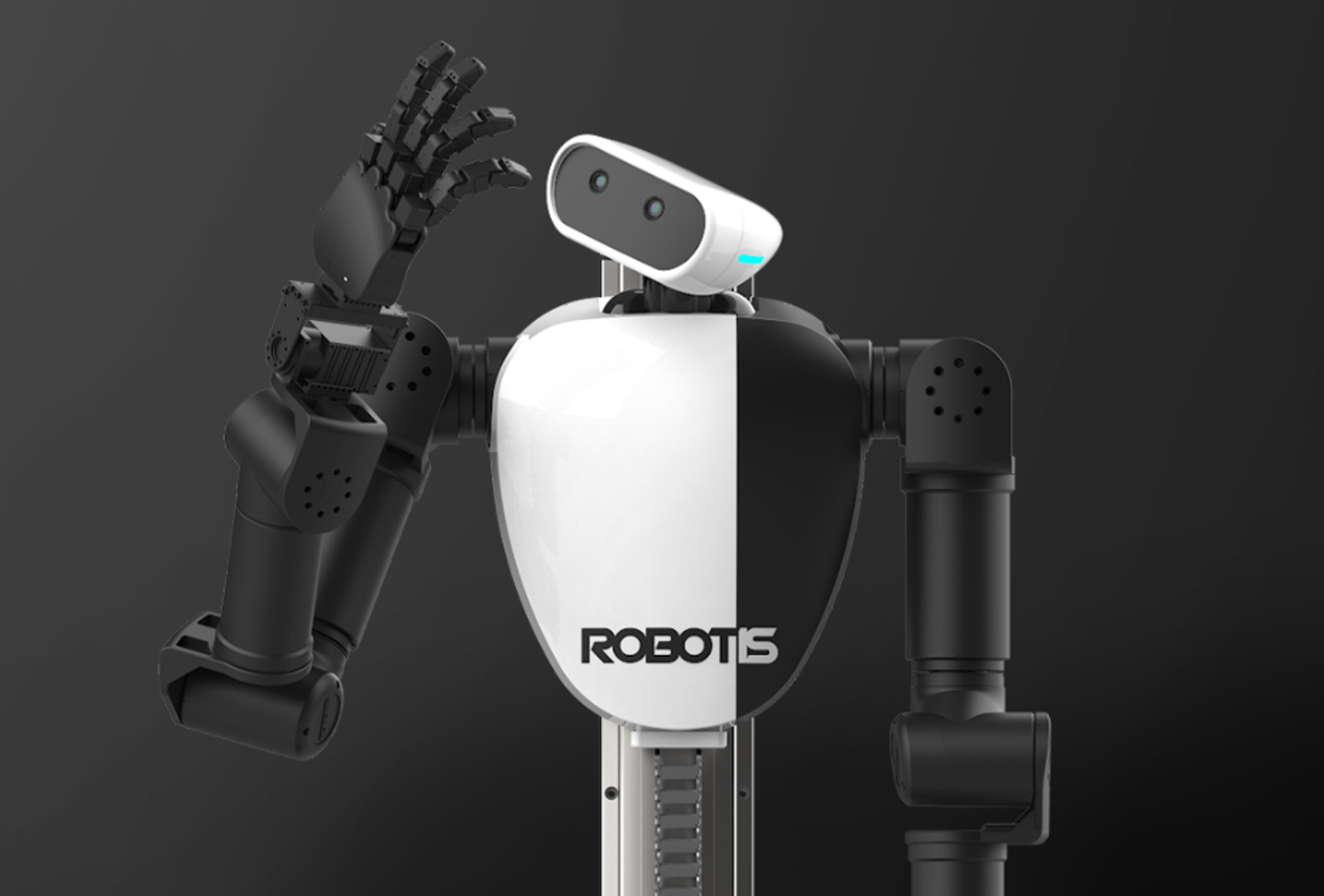
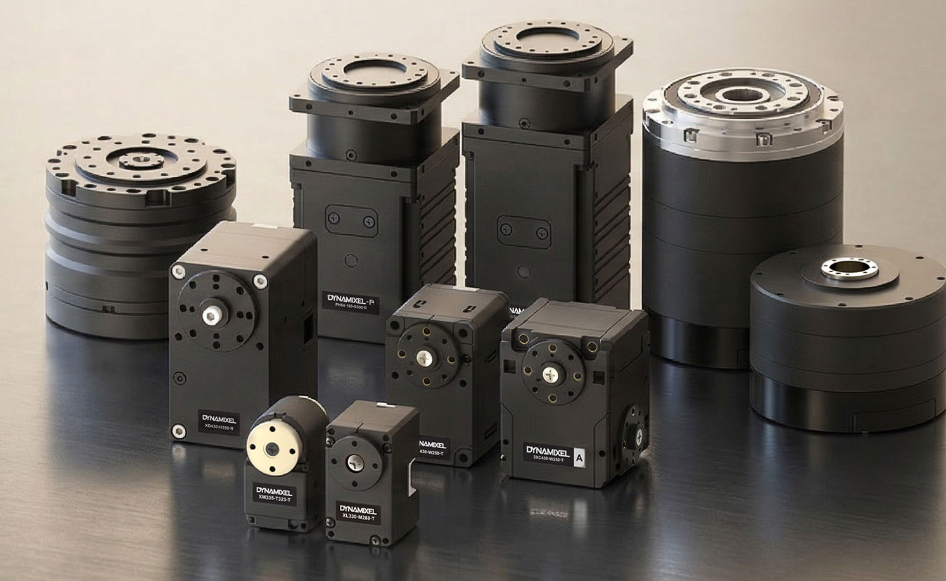
Founded in 2000 and listed on South Korea's KOSDAQ exchange, Robotis is the country's leading specialist in actuators — the motorised joints that give robots their movement. Its flagship product, the DYNAMIXEL smart actuator, is exported to more than 170 countries and has become the de facto standard component for robotics research and development worldwide. The company's customers include universities, research institutes, defence contractors and humanoid-robot developers at home and abroad. Its TurtleBot autonomous-robot platform has similarly established itself as a standard tool among the global robotics-developer community.
From 2023 onwards, a global boom in artificial intelligence and humanoid robotics transformed Robotis into one of Korea's most talked-about beneficiaries of the drive to domestically source robot components. As Tesla pressed ahead with its Optimus humanoid, Boston Dynamics expanded its ambitions and Figure AI emerged as a serious competitor, South Korea's own conglomerates — Hyundai, LG and Samsung — accelerated their investments in robotics. The resulting enthusiasm sent Robotis's share price up by more than 960% from its trough. The surge also drew sharp scrutiny to the company's shareholder-return policies and its use of treasury shares, placing it at the centre of a controversy over South Korea's corporate "Value-Up" programme.
Business foundations and financial performance
*Core business structure*
Robotis generates revenue from three main segments: smart actuators (DYNAMIXEL), robot platforms (TurtleBot and OpenMANIPULATOR), and an autonomous delivery robot called Gip-Gaemi. DYNAMIXEL is the cash engine, accounting for more than half of total sales; its precision positioning and durability have made it the standard choice for robotics laboratories globally. The company is reported to be working on high-torque variants suited to driving the joints of humanoid robots — the next frontier in what practitioners call "physical AI".
Gip-Gaemi, the autonomous delivery robot, is being trialled in apartment complexes and mixed-use commercial developments across South Korea, but has yet to reach large-scale commercial deployment. Internationally, the company is expanding its network of research-institution partners in North America and Europe.
*Financial results by year*
Year | Revenue | Operating profit/(loss) | Net profit/(loss) | Notes
2020 | c. ₩17.5bn | c. –₩1.5bn | c. –₩2.0bn | Covid-19 impact
2021 | c. ₩21.0bn | c. –₩1.0bn | c. –₩1.2bn | Robot-platform expansion
2022 | c. ₩24.0bn | c. –₩0.8bn | c. –₩1.0bn | DYNAMIXEL export growth
2023 | c. ₩27.0bn | c. –₩0.5bn | c. –₩0.7bn | AI-robot demand rise
2024 | c. ₩32.0bn | c. +₩0.5bn | c. +₩0.3bn | First move toward profitability
2025 | c. ₩40.0bn (est.) | c. +₩1.0bn (est.) | Unconfirmed | Robot-boom beneficiary
Robotis has operated at an operating loss for most of its history. High research-and-development spending relative to revenues, combined with front-loaded investment in new businesses such as autonomous delivery, has constrained profitability. Since 2024, rising orders for DYNAMIXEL from humanoid-robot manufacturers have kindled hopes of a durable swing into profit, though whether this can be sustained remains to be seen.
*Share-price performance and market valuation*
From the second half of 2023, as the AI and robotics theme gathered momentum, Robotis's shares entered a steep ascent. A succession of catalysts — Tesla's production plans for Optimus, Hyundai's deeper investment in Boston Dynamics, LG Group's announcement of a physical-AI strategy — fed expectations that Robotis would be a prime beneficiary of domestic component sourcing. The stock rose by more than 960% from its low. The flip side was an extreme valuation: the price-to-book ratio reached several dozen times, generating fierce debate about whether the price bore any relationship to underlying value.
Value-Up milestones
*Second half of 2023 — Robot-theme tailwinds; shareholder-return debate begins*
As Robotis gained prominence as a key robotics-components play, market interest in its shareholder-return policies intensified. The company announced plans to buy back its own shares, publicly citing the goal of supporting the share price and enhancing shareholder value. Investors interpreted this as an encouraging signal.
*January 2026 — The "sneaky disposal" controversy erupts*
After the share price had risen by more than 960% from its trough, Robotis began selling its treasury shares. In early January 2026, several media outlets published critical reports arguing that the disposals contradicted the shareholder-value rationale the company had originally invoked. The central allegation was that rather than cancelling the shares — which would have permanently reduced the share count and benefited all investors — the company had used them to fund employee stock-option exercises and other management purposes. One outlet deployed the headline "960% surge, zero cancellation" to capture the perceived betrayal.
The manner of disposal also attracted criticism. Reports indicated that Robotis had sold blocks of treasury shares at prices below the prevailing market price — a so-called block deal at a discount. This created an immediate overhang, putting downward pressure on the share price and, critics argued, transferring a short-term profit opportunity to the block-deal buyers at the expense of long-term retail shareholders.
*January 2026 — Company defends disposals as funding overseas expansion*
As criticism mounted, Robotis offered a partial defence. The company indicated that some of the treasury-share disposals were intended to finance the expansion of its overseas network and the building of strategic partnerships — specifically, equity-based deal structures with partners in North America and Europe. The market received this explanation sceptically, regarding it as insufficient justification for the scale and manner of the disposals.
*June 2026 — Technology credentials and governance risks highlighted simultaneously*
A detailed investigation published in June 2026 assessed Robotis's progress in domestically developing its actuator technology, while simultaneously flagging risks related to management conduct. The company was reported to be advancing its technical capabilities to meet the demands of the humanoid-robot era, but concerns over governance and the transparency of executive decision-making remained unresolved, according to the report.
Challenges and assessment
*Key challenges ahead*
The most pressing task facing Robotis is to clarify the purpose and governance of its treasury-share policy. Buying back shares on the stated pretext of enhancing shareholder value, and then disposing of them — without cancellation — to reward employees or meet financial objectives, falls short of internationally accepted standards of shareholder stewardship. The company needs to establish and pre-announce clear rules: either a credible cancellation schedule or transparent, pre-disclosed criteria for any future disposals.
The second challenge is building a sustainably profitable business. Robotis has posted operating losses in most years of its existence; its valuation reflects expectation rather than demonstrated earnings power. The crucial medium-term test is whether the anticipated surge in demand for humanoid-robot components translates into genuine order growth and improving margins — a shift from promise to performance.
The third challenge is governance reform. To address the market's lingering doubts about management transparency, the company will need to strengthen the independence of its board, broaden its channels for communicating with shareholders, and pre-disclose its medium-to-long-term business strategy and shareholder-return roadmap.
*Overall assessment*
Robotis has genuine industrial significance: it has demonstrated that a Korean company can build globally competitive robotics-component technology, and DYNAMIXEL's presence in more than 170 countries makes it a piece of critical infrastructure for the global robotics research community. As the physical-AI era arrives, that strategic position becomes more valuable.
Yet on Value-Up metrics, the verdict is mixed. The technological achievements and market position earn positive marks; the governance around treasury shares does not. The pattern — buying back shares when the price is falling to signal confidence, then disposing of them when the price has surged, with the proceeds flowing largely to insiders — represents a textbook conflict of interest. Robotis is frequently cited as an emblematic example of how KOSDAQ-listed companies can exploit South Korea's treasury-share rules to the detriment of ordinary shareholders.
Controversies and structural limitations
*The gap between stated intent and actual conduct*
The heart of the Robotis controversy is the mismatch between what the company said and what it did. It acquired treasury shares in the name of shareholder value, then — once those shares had appreciated dramatically — sold rather than cancelled them, with the proceeds channelled largely to employees through stock-option mechanisms. Cancellations reportedly amounted to virtually nothing; employee-facing use of treasury stock continued throughout. This mirrors a pattern repeatedly criticised in Korean capital markets: buy to build trust when prices fall, sell to capture gains when prices rise.
*Discounted block sales and overhang*
The mechanics of disposal compounded the harm. Reports of block deals executed below market price eroded the value of existing shareholders' stakes whilst handing short-term arbitrage profits to the buyers. Long-term retail investors were the clear losers.
*Extreme overvaluation and the paradox of Value-Up*
Robotis's market capitalisation has been driven almost entirely by the AI and robotics thematic premium, not by earnings. For a company that has spent years in the red, a price-to-book ratio in the tens — or higher — leaves any shareholder-return programme looking structurally hollow. The Value-Up programme is premised on returning profits to shareholders; where profits are negligible, the exercise risks becoming largely symbolic.
*Management risk and governance uncertainty*
The June 2026 investigation raised concerns about decision-making transparency under the company's founder-led management structure, though specific details had not been fully disclosed publicly at the time of writing. Markets appear to be applying a governance discount to the company's otherwise compelling technology and growth story.
Key metrics summary
Year | Dividend per share | Treasury shares acquired | Treasury shares cancelled | Operating profit | Est. P/B ratio
2020 | None | Unconfirmed | None | c. –₩1.5bn | 1–2×
2021 | None | Unconfirmed | None | c. –₩1.0bn | 2–3×
2022 | None | Unconfirmed | None | c. –₩0.8bn | 3–5×
2023 | None | Buybacks begin | None | c. –₩0.5bn | 10×+
2024 | None | Buybacks continue | Zero | c. +₩0.5bn | Several dozen×
2025 | None (est.) | Switched to disposal | Zero | c. +₩1.0bn (est.) | Several dozen×+