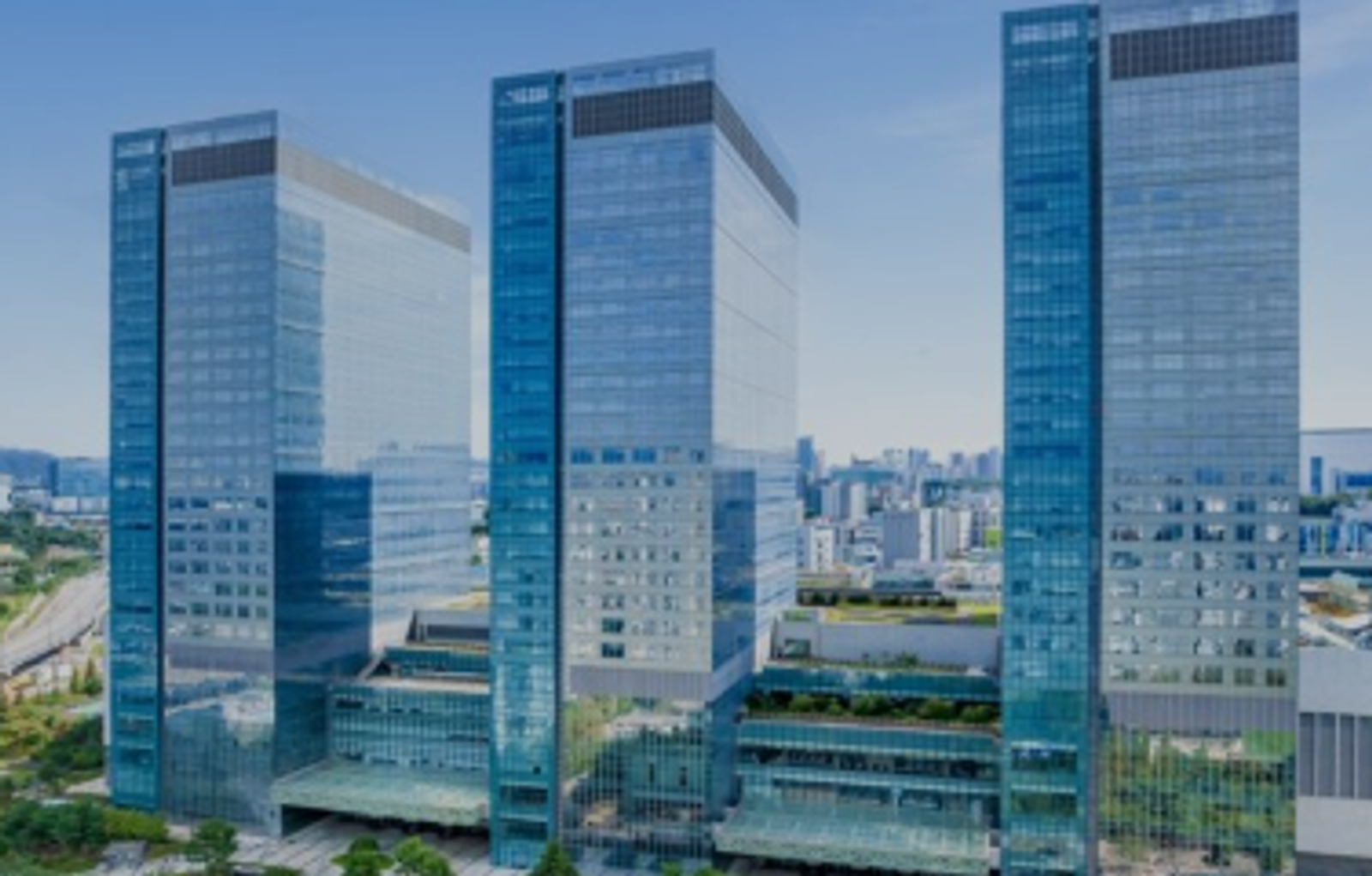
A three-year policy, ₩10 trillion in buybacks, ₩16 trillion in cancellations, ₩110 trillion pledged: the arc of Samsung's shareholder-value drive [As of October 2026]
The story in three lines
Samsung Electronics is pursuing shareholder returns of up to ₩110 trillion in 2026 alone—the largest by any South Korean company in history.
Third-quarter operating profit reached a provisional ₩107.4 trillion, the first time any Korean company has broken the ₩100 trillion mark in a single quarter. It is the fourth consecutive quarter in which Samsung has set a new all-time record.
Samsung's preference for cash dividends over share cancellations is shaped by a structural constraint that rarely makes headlines: financial-sector affiliates face a 10% cap on stakes in non-financial companies.
Company overview
Samsung Electronics is South Korea's most valuable listed company and has long served as the defining example of the so-called Korea Discount—the tendency for Korean equities to trade well below their intrinsic worth. Despite world-leading positions in memory semiconductors, smartphones, and displays, Samsung spent years with its price-to-book ratio (PBR) below one, meaning the market valued the firm at less than its net assets.
When the South Korean government formally launched its Corporate Value-up Programme in 2023—drawing on Japan's analogous initiative—the debate over ending chronic undervaluation moved to centre stage. Samsung was always at its heart: the company alone accounts for more than 20% of the KOSPI's total market capitalisation, so its behaviour sets the tone for the entire exchange.
From the announcement of a ₩10 trillion share buyback in November 2024, through a first ₩3 trillion cancellation in February 2025, a record ₩16 trillion cancellation in March 2026, and a declaration of up to ₩110 trillion in annual returns in August 2026, Samsung has stepped up its commitments in stages over three years.
Business fundamentals and financial performance
Shareholder returns are only credible if a company earns enough to sustain them. Samsung's capacity to return capital is inextricably tied to the memory-chip cycle.
Four business pillars
Samsung operates across four segments. The DS (Device Solutions) division encompasses memory chips—DRAM, NAND flash, and high-bandwidth memory (HBM)—alongside contract manufacturing (foundry) and in-house chip design (System LSI). It generates the overwhelming share of the group's operating profit and is the primary engine of shareholder returns. The DX (Device eXperience) division covers the Galaxy smartphone and tablet range under the MX business unit, as well as televisions and home appliances under VD/DA. SDC (Samsung Display Corporation) supplies OLED panels for smartphones and laptops. Harman, a US subsidiary, handles automotive audio and connected-car solutions.
Of these, DS—and memory in particular—dictates the group's overall direction. When the semiconductor downturn pushed DS into the red in 2023, group operating profit collapsed to ₩6.6 trillion. Conversely, the record ₩89.4 trillion operating profit posted in the second quarter of 2026 was driven by a surge in HBM shipments and rising DRAM prices.
Memory: structural shift or cycle repeating?
Samsung holds the world's largest production capacity in both DRAM and NAND flash. Memory has long been regarded as a boom-and-bust industry, with earnings whipsawed by commodity price cycles. Since the AI infrastructure investment wave accelerated in 2025, two competing views have emerged: that a genuine structural shift is under way, and that the old cycle is merely disguised.
The structural case rests on a qualitative change in demand. JP Morgan describes the current environment not as a conventional inventory-driven cycle but as a "structural demand-led long-term growth phase," with expansion forecast through 2027. Hyundai Motor Securities points to Nvidia's trillion-dollar data-centre investment scenario as evidence that semiconductor earnings visibility now extends to 2028. Meritz Securities notes that a single AI data-centre project can absorb as much memory as tens of millions of smartphones—an observation that underpins the bullish thesis. DRAM inventories stood at an average of 3.3 weeks in the third quarter of 2026, the lowest on record, while commodity DRAM prices hit a seven-year high.
The cyclical case draws, paradoxically, on Samsung's own success. William de Gale of BlueBox Asset Management warns that memory is an industry of "extreme volatility" and notes that every time someone declares the cycle dead, markets have subsequently turned cold. Dan Hutcheson of TechInsights argues that the recent price surge reflects an "immediate market imbalance" rather than a structural shift and forecasts a price decline in 2027. Others caution that today's investment boom is effectively pre-booking a supply glut for 2028–29.
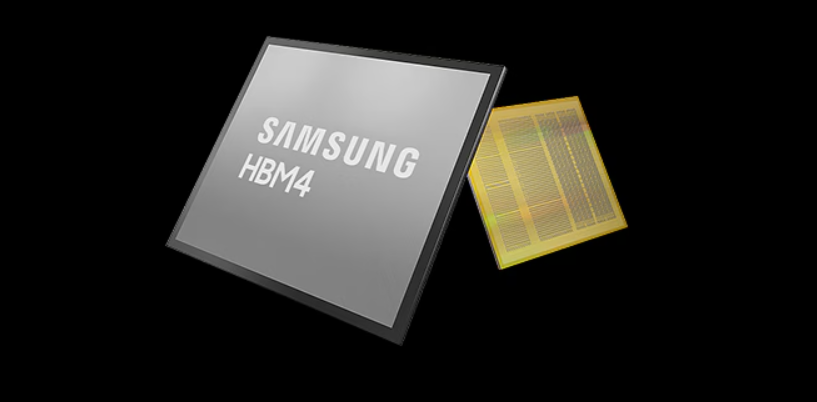
The central variable in this debate is HBM. High-bandwidth memory—stacked chips used in AI accelerators (GPUs and NPUs)—commands roughly five times the value per bit of standard DRAM. Samsung achieved a world first in 2026 by mass-producing sixth-generation HBM4, and supply of the HBM4 base die is reported to be nearly exhausted. Unlike commodity DRAM, HBM contracts are typically signed two to three years in advance, which significantly dampens price volatility. As Nvidia and other leading AI chipmakers establish the habit of locking in two to three years of supply, expectations are growing that HBM can act as a cyclical buffer. Gartner forecasts that HBM supply shortages will persist at least until 2027.
China: catching up fast, not yet overtaking
The most structurally significant external threat to Samsung's memory business is China. CXMT (ChangXin Memory Technologies) in DRAM and YMTC (Yangtze Memory Technologies Corporation) in NAND are expanding production capacity at speed.
DRAM: CXMT's global DRAM revenue market share more than doubled in a year, rising from 4% in the fourth quarter of 2025 to 9.5% in the second quarter of 2026, according to TrendForce. Over the same period Samsung held 39.4%, SK Hynix 24.9%, and Micron 23.3%. CXMT has unveiled a next-generation 4F² DRAM cell architecture that reduces cell area by roughly 33% compared with the current 6F² standard, and has signalled plans to ship server-grade DDR5 products before year-end. YMTC is also developing 16Gb LPDDR5 DRAM.
NAND: YMTC rose to third place globally by NAND shipment volume in the second quarter of 2026. Its revenue share climbed from 9% to 14% in a year, and the company projects that server products will account for 39% of its NAND revenue by 2028. NAND is where Samsung has felt Chinese competition most acutely, as low-cost Chinese supply is directly pressuring commodity prices.
Technology gap: The pace of catch-up is swift, but the underlying gap remains substantial. KB Securities estimates the DRAM technology lead of South Korean manufacturers over their Chinese peers at five to seven years (measured by time-to-mass-production), and other analysts put it at two to three generations. The gap is narrowest in commodity DRAM (roughly one to three years) and widest in HBM (more than three years). In the second quarter of 2026, HBM market share stood at SK Hynix 50%, Samsung 33%, and Micron 18%—Chinese suppliers have yet to achieve significant volumes. US export controls on semiconductor equipment also act as a structural barrier to Chinese firms advancing into leading-edge processes.
Where the threat bites: China's competitive pressure is most acute in commodity DRAM and NAND, not in HBM. As Chinese producers capture more of the commodity memory market, Korean manufacturers face margin compression on standard products. The faster Samsung and SK Hynix pivot towards HBM and high-value memory, the more insulated they become. Paradoxically, Samsung's early mass-production of HBM4 and its aggressive capacity expansion are themselves partly a response to Chinese competition.
Capacity expansion: the mega-factory race begins
To meet surging AI memory demand, Samsung has shared plans with supply-chain partners to build four new fabs domestically and overseas between 2026 and 2030. The capacity race is now fully joined.
Pyeongtaek campus: The heart of Samsung's memory production is in Pyeongtaek, Gyeonggi province. The P4 fab reached full operation in the first half of 2026, around six months ahead of the original schedule, and Samsung is targeting a more than 2.5-fold increase in HBM production capacity in 2026 versus 2025. P5 is under construction using fast-track methods, targeting a 2028 start, and in July 2026 the start of P5-2 was brought forward by roughly six months, to a 2029 target. P6 is planned for 2030. TrendForce estimates that, if this timetable holds, Samsung's HBM wafer input will exceed 200,000 per month by the end of 2026.
Yongin semiconductor cluster: The long-term centrepiece is a planned complex in Namsa-eup, Yongin—intended to be the world's largest semiconductor cluster. The original blueprint called for six fabs and ₩360 trillion of investment; plans are now being advanced to bring the first fab's start-up forward from 2030–31 to 2029. Although originally conceived as a foundry-only facility, revised designs that combine memory and foundry production are under discussion. SK Hynix is also building its Y1 and Y2 fabs in Yongin; the combined investment by the two rivals in a single city is expected to create the world's largest concentration of semiconductor manufacturing.
South-west Korea: Both Samsung and SK Hynix have announced investment plans of roughly ₩400 trillion each in the Gwangju–South Jeolla region. Samsung intends to build two front-end memory fabs there, a project that President Lee Jae-myung has asked to proceed in parallel with Yongin. Some equipment manufacturers have raised practical concerns about the availability of local infrastructure—particularly power and water.
Global competition: Samsung is far from alone. SK Hynix has completed the installation of equipment at its M15X fab in Cheongju and began operations in the first half of the year, while bringing forward the start of its first Yongin fab to the first half of 2027. A high-end packaging plant (P&T7) costing around ₩19 trillion is also planned for Cheongju. Micron has pledged more than $100 billion in long-term investment in Idaho and New York and is developing its Singapore packaging facility as an HBM4 hub. As one industry insider put it, "semiconductor manufacturing is ultimately a race against time"—today's capacity expansion is a battle to lock in market share in 2027 and 2028.
Foundry: a return to profit after four years in sight
Samsung's foundry business—contract chip manufacturing for external clients—is the unfinished chapter of its shareholder-value story, and potentially its most powerful growth driver. Internal sources suggest it could return to profit in the third quarter of 2026, ending four consecutive years of operating losses running into the trillions of won.
Three factors underpin the turnaround. First, yield rates on the 2-nanometre gate-all-around (GAA) process climbed above 60% in the first quarter of 2026, approaching the roughly 70% threshold for economic mass production. Second, Samsung secured a long-term supply contract with Tesla for autonomous-driving chips worth approximately ₩22.8 trillion ($16.5 billion), with 2-nanometre mass production set to begin in the second half of the year at its Taylor, Texas plant. Third, as TSMC's leading-edge lines approach full utilisation, some fabless chipmakers are beginning to evaluate Samsung as a credible alternative—AMD is reported to be considering a dual-sourcing strategy.
The Taylor fab, into which Samsung has poured $37 billion, had been a significant drag on earnings owing to its fixed-cost burden. As utilisation ramps up, depreciation charges that once inflated the cost base will increasingly be absorbed by higher volumes, allowing profitability to improve rapidly.
Earnings cycle and shareholder returns: the causal link
| Year | Operating profit | Key shareholder-return actions |
|---|---|---|
| 2022 | ₩43.4tn | Regular dividend of ₩9.8tn |
| 2023 | ₩6.6tn | Regular dividend of ₩9.8tn (FCF collapsed; no special dividend) |
| 2024 | ₩32.7tn | Dividend of ₩9.8tn + announcement of ₩10tn share buyback |
| 2025 | ₩43.7tn | Dividend of ₩11.1tn (including special dividend) + ₩8.4tn share cancellation |
| 2026 (H1) | ₩89.4tn (Q2; all-time record) | ₩16tn share cancellation + declaration of ₩90–110tn annual return (including ~₩30tn Q3 cash dividend) |
| 2026 (Q3) | ₩107.4tn (provisional; first Korean company to exceed ₩100tn in a single quarter) | Q3 cash dividend being distributed; decision on additional Q4 return method due January 2027 |
The shareholder-value programme: a timeline
2023: the policy launches, Samsung watches from the sidelines
When the government formalised its Value-up Programme in 2023, Samsung's circumstances were difficult. A semiconductor slump had cut operating profit by nearly 85% year-on-year; the share price had retreated to the low ₩52,000s, back to pre-pandemic levels; and the PBR hovered between roughly 1.0 and 1.2 times, repeatedly threatening to fall below book value.
At the time Samsung was in the final stage of a three-year shareholder-return policy agreed in 2021, under which it paid a fixed annual dividend of ₩1,444 per share and pledged to return at least 50% of free cash flow (FCF). With FCF collapsing during the downturn, however, no special dividend was paid after 2022. The market's verdict was harsh: foreign and domestic institutional investors complained that dividends were steady but there was no genuine commitment to boosting the share price.
2024: absent from the programme, but ₩10 trillion in buybacks
As the government's Value-up Programme gained traction in 2024 and listed companies queued to file their plans, Samsung was conspicuous by its absence. With Korea's largest company not participating, analysts noted that the programme covered only 45% of KOSPI market capitalisation by weight.
Samsung offered no official explanation. The most widely accepted interpretation was that, amid uncertainty over the semiconductor cycle, it was reluctant to commit to public medium-term targets, and that it intended to manage its forthcoming three-year policy separately from the government framework.
Nevertheless, on 15 November 2024, Samsung's board approved a ₩10 trillion share buyback—the largest since 2017. The first ₩3 trillion tranche was to be acquired and cancelled immediately; the remaining ₩7 trillion would be deployed at the board's discretion. The share price jumped more than 5% on the day.
February 2025: ₩3 trillion cancelled—and an unexpected complication
On 18 February 2025, Samsung's board resolved to cancel the full tranche of shares it had acquired, amounting to approximately ₩3.05 trillion. The cancellation was executed through the Korea Securities Depository on 20 February.
The move threw up an unforeseen complication. By reducing the total number of shares outstanding, the cancellation automatically raised the stakes held by Samsung Life Insurance (8.51%) and Samsung Fire & Marine Insurance (1.49%), pushing their combined holding towards the 10% limit that South Korean financial-sector law imposes on insurance companies' stakes in non-financial affiliates. The development intersected with a broader debate over legislation sometimes called the "Samsung Life Insurance Act," and was interpreted as a governance risk that could dilute the founding family's control over the group.
2025 dividend: ₩1,668 per share, ₩11.1 trillion in total
Samsung's total dividend for 2025 was set at ₩11.1 trillion. The per-share payment of ₩1,668 represented a 15.3% increase over the previous year and included a special dividend of ₩1.3 trillion—the first since 2021. Over the two years to 2025, Samsung paid out ₩20.9 trillion in cash dividends and completed share cancellations totalling ₩8.4 trillion.
March 2026: ₩16 trillion cancellation—a historic commitment
On 10 March 2026, Samsung announced the largest share cancellation in its history: 87 million shares—82.5% of the treasury stock it held, representing approximately ₩16 trillion at the prevailing price—would be cancelled before the end of the first half of the year.
The announcement was widely read as committing the remaining ₩7 trillion from the 2024 buyback programme to cancellation, in effect pledging to retire the entire holding. The cancellation plan was formally approved at the 57th annual general meeting on 18 March. Vice-Chairman Jeon Young-hyun, the chief executive, said Samsung would "honour its commitment to shareholders by enhancing value per share." Analysts also noted that proposed amendments to South Korean company law—which would require companies to cancel treasury shares rather than simply hold them—had created an additional incentive.
October 2026: quarterly profit tops ₩100 trillion for the first time
Samsung's provisional operating profit for the third quarter of 2026, announced on 8 October, was ₩107.4 trillion, on revenue of ₩195 trillion. The operating margin exceeded 55%. It was the fourth consecutive quarter of record earnings and represented an 8.8-fold increase from the year-earlier figure of ₩12.2 trillion. No South Korean company has previously posted quarterly operating profit above ₩100 trillion. Saudi Aramco briefly approached similar levels in the second quarter of 2022, but even major US technology companies have not reached this figure. The primary driver was a surge in HBM demand from AI data-centre customers.
August 2026: up to ₩110 trillion pledged—a Korean record
On 21 August 2026, Samsung's board approved the final implementation plan for its 2024–2026 three-year shareholder-return policy. Under the existing principle of returning at least 50% of FCF, the company committed to returning up to ₩90–110 trillion to shareholders in 2026 alone—the largest such commitment in Korean corporate history, more than five times the previous record of ₩20.3 trillion set in 2020.
The mechanics are as follows. A cash dividend of approximately ₩30 trillion for the third quarter (estimated at roughly ₩4,604 per share, according to Eugene Investment & Securities) will accrue to shareholders on the record date of 30 September 2026; investors needed to have purchased shares by 28 September to qualify. The size and form of any remaining return—cash dividend or further buyback and cancellation—will be decided by the board in January 2027, after full-year results are confirmed. Total returns for the three years 2024–2026 are forecast to reach ₩120–140 trillion.
The same board meeting also disclosed plans to purchase approximately ₩15 trillion of treasury shares for use in employee compensation, a detail that drew criticism from shareholders who would have preferred the sum to be returned to them.
September–October 2026: the founding family's share transfers and the dividend nexus
2026 is the year in which the Samsung founding family effectively completed payment of the roughly ₩12 trillion in inheritance tax levied following the death of former chairman Lee Kun-hee in October 2020. In the process, a large block of shares passed from Lee's widow, Hong Ra-hee—honorary director of the Leeum Museum of Art—to her son, Chairman Lee Jae-yong.
The transfer occurred in two stages. In September 2026, Hong sold 7,188,793 Samsung Electronics ordinary shares to Lee in an off-market transaction worth approximately ₩1.94 trillion; an open-market sale of such size would have risked moving the share price. In October, she gifted a further 11,158,000 shares worth approximately ₩2.6 trillion. Together the two transactions transferred shares worth roughly ₩4.5 trillion between mother and son.
As a result, Lee Jae-yong's direct stake in Samsung Electronics rose from 1.47% to 1.75%, while Hong's fell from 0.98% to 0.81%. Samsung described the transactions as personal family dealings with no net change in the founding family's aggregate holding.
The timing—coinciding with the announcement of the ₩110 trillion return policy—attracted scrutiny. During the inheritance-tax repayment process, Hong had borrowed from financial institutions and needed funds to service that debt; Lee, meanwhile, required cash for the acquisition cost (approximately ₩1.9 trillion) and for the gift-tax bill that the transfers would generate (estimated at ₩1.3–1.5 trillion). The third-quarter cash dividend of ₩4,604 per share alone will deliver more than ₩500 billion to Lee before tax. Observers have noted that the bumper cash dividend serves, among other things, as a financing mechanism for inheritance-related obligations within the founding family.
Separately, on 12 October Lee purchased 7,667,100 shares from Hong in an off-market deal at ₩250,500 per share; three days later the share price had fallen to the ₩210,000 range, generating a paper loss of roughly ₩310 billion.
Employee equity compensation: aligning insiders with shareholders
Alongside expanding shareholder returns, Samsung has restructured its internal compensation to align employees' interests with those of shareholders. After piloting an option for executives to receive profit-sharing bonuses (OPI, or Over-Performance Incentive) in the form of shares in 2024, Samsung extended the scheme to all employees from 2025 onwards—a structural mechanism intended to ensure that staff and shareholders face the same direction.
Board independence
Governance reforms have accumulated steadily. Since 2018, when Samsung separated the roles of chief executive and board chairman—with an independent outside director taking the chair—the board has continued to tilt towards independence. By 2025 it comprised three executive directors and six outside directors. The outside directors also exclusively staff the candidate recommendation committee, institutionalising independence in the board selection process.
Challenges and assessment
The sustainability test
Samsung's shareholder-value programme stands at an inflection point: the 2024–2026 three-year policy is drawing to a close, and the market is focused on what the next three years (2027–2029) will bring.
Three questions dominate the discussion on shareholder-return policy. Will Samsung raise its FCF payout ratio above the existing 50%? Will share cancellations become a routine commitment rather than a one-off event? And will Samsung formally file its Value-up plan under the government's disclosure programme?
Mirae Asset Securities suggests that if FCF exceeds ₩200 trillion annually from 2026 onwards, Samsung could raise either its base dividend or its payout ratio.
But whether the market awards Samsung a higher earnings multiple depends less on the mechanics of its return policy than on genuine improvements in business quality.
The durability of structural growth in memory is the first variable. Samsung's world-first mass-production of HBM4 and the near-tripling of HBM revenues have repositioned it in investors' minds: from a commodity-cycle company to a beneficiary of AI infrastructure spending. How long that repricing holds will determine the earnings multiple applied to the memory division.
Foundry's return to profitability is the second. The moment Samsung's contract chipmaking business moves into the black, the market will no longer be able to dismiss it as a pure-play memory company. A successful transition to "integrated device manufacturer" (IDM) status could lift Samsung's valuation multiple structurally—an outcome that goes beyond earnings improvement alone.
Assessment
Samsung's shareholder-value journey has had a consistent direction, but its pace and communication have at times failed to keep up with market expectations. The decision not to file a formal Value-up disclosure in 2024 left a symbolic wound; the absence of an immediate commitment to cancel the remaining ₩7 trillion from the buyback also prolonged uncertainty. Yet the outcomes have vindicated the approach: the ₩16 trillion cancellation and the ₩110 trillion return pledge have, in the view of most analysts, rebuilt market trust through action rather than words.
The foreign ownership ratio recovered to 51.9% as of January 2026. Since the Korea Value-up Index launched in September 2025, it has delivered cumulative returns of 274%, reflecting a broader acceleration of the discount-reduction story across the market. Whether the "Samsung model"—three-year policy cycles, phased cancellations, and restored special dividends—is fully absorbed by global institutional investors will become clear when the next three-year plan is unveiled in January 2027.
Ultimately, however, the durability of any shareholder-value programme rests on the underlying business. The premise of ₩110 trillion in annual returns is a memory business that generates hundreds of trillions of won in free cash flow every year. If the structural-growth thesis for AI data centres proves correct, that premise will hold for years. If the memory cycle reasserts itself, Samsung's returns will contract sharply, as they did in 2023. The pace at which Chinese manufacturers capture the commodity DRAM and NAND market, and the speed with which Samsung completes its pivot to HBM-centred production, will determine how resilient that premise proves.
Controversies and limitations
Profit-sharing dispute: shareholders versus employees
In May 2026, Samsung's record earnings rebound triggered an unexpected internal conflict. The Samsung Electronics branch of the Samsung Group Cross-Enterprise Union—which represents more than half of the workforce—voted to strike and demanded performance bonuses equivalent to 15% of operating profit, or roughly ₩45 trillion. Minority shareholder groups countered that such a payout would breach the principle of capital adequacy under company law, and threatened legal action against both the board and the union.
The episode exposed a structural tension within the Value-up framework: as corporate performance improves, who claims the gains—shareholders or employees? This question cannot be avoided when Samsung designs its next shareholder-return policy.
₩15 trillion in treasury shares for staff compensation
The same August 2026 board meeting that announced the ₩110 trillion return plan also disclosed plans to buy back approximately ₩15 trillion of treasury shares for employee compensation. Because these shares are earmarked for internal use rather than cancellation, they represent a cost to shareholders who might otherwise have expected that capital to be returned to them.
No commitment to cancel at the time of buying back
When the ₩10 trillion buyback was announced in November 2024, the board's language on the remaining ₩7 trillion was non-committal: it would "deliberate on the appropriate use." The shares were ultimately cancelled in full, but the lack of an upfront pledge sustained uncertainty for months. Many investors argue that future credibility requires Samsung to commit to cancellation at the point of announcing any repurchase.
Missing from the government's disclosure framework
Samsung has not filed a formal Value-up disclosure under the government's programme, even as it executed tens of trillions of won in actual returns. Given that Samsung's participation would have an outsized effect on the rest of the market—the company's absence is estimated to have kept the programme's coverage at 45% of KOSPI capitalisation—pressure from the financial regulator and institutional investors for Samsung to file formally continues to mount.
The 10% cap: the structural constraint behind the choice of cash dividends
Samsung's decision to deliver its third-quarter 2026 returns entirely through cash dividends—rather than combining them with share buybacks and cancellations—has a structural explanation that rarely surfaces in public commentary.
South Korean financial-sector law (the Financial Industry Structure Improvement Act, or FISIA) limits insurance companies' stakes in non-financial affiliates to 10%. As of the end of June 2026, Samsung Life Insurance's 8.51% stake and Samsung Fire & Marine Insurance's 1.49% stake sum to exactly 10.00%—the legal ceiling.
If Samsung cancels more of its treasury shares, the total number of shares outstanding falls, and the two insurers' percentage holdings automatically rise above 10% even though they have not bought a single additional share. A breach of the limit would compel them to sell the excess—driving down the very share price that the cancellations were intended to support.
The March 2026 cancellation of ₩16 trillion already forced the disposal of approximately ₩1.3 trillion of excess holdings. Shareholder returns that reduce the share count trigger compulsory selling by related insurers, which in turn exerts downward pressure on the price—the opposite of the intended effect.
Compounding the problem, proposed amendments to the Insurance Business Act—sometimes called the "Samsung Life Insurance Act"—would require insurance companies to value holdings in affiliated firms at market price rather than book value, and cap such holdings at 3% of total assets. If enacted, Samsung Life could be obliged to sell tens of trillions of won of Samsung Electronics shares.
The Korea Corporate Governance Forum has criticised Samsung's reliance on dividends, noting that its insurance affiliates have sold Samsung Electronics shares in the past when they breached ownership limits, and questioning why Samsung does not simply increase buybacks instead. The observation that Chairman Lee Jae-yong holds a direct stake of only 1.75% in Samsung Electronics—meaning that large cash dividends deliver disproportionate benefit to the founding family relative to their ownership share—has added a further dimension to the debate.
This constraint also lends force to a broader governance critique: the circular cross-shareholding structure that links Samsung C&T to Samsung Life Insurance and then to Samsung Electronics is itself distorting the shape of the company's shareholder-return policy.
What to watch
January 2027 board meeting: After full-year 2026 results are confirmed, the board will determine the remaining quantum and form of shareholder returns, and is expected to announce the 2027–2029 three-year policy framework.
Foundry third-quarter profit confirmation: The official third-quarter results call will reveal whether Samsung's contract chipmaking business has returned to profit for the first time in four years—a potential catalyst for a structural re-rating of the group's valuation multiple.
Key metrics summary
| 2022 | 2023 | 2024 | 2025 | 2026 (in progress) | |
|---|---|---|---|---|---|
| Dividend per share (₩) | 1,444 | 1,444 | 1,446 | 1,668 | ~4,604 (Q3 estimate) |
| Total dividend | ~₩9.8tn | ~₩9.8tn | ₩9.8tn | ₩11.1tn | ₩30tn (Q3 cash dividend) |
| Special dividend | None | None | None | ₩1.3tn | TBD |
| Share cancellations | None | None | ₩3tn (1st tranche) | ₩5.4tn (2nd tranche) | ₩16tn (3rd tranche; complete) |
| Total shareholder return | ₩9.8tn | ₩9.8tn | ₩9.8tn | ~₩19.3tn | ₩90–110tn (declared) |
| Operating profit | ₩43.4tn | ₩6.6tn | ₩32.7tn | ₩43.7tn | ₩89.4tn (Q2) → ₩107.4tn (Q3, provisional) |
| ROE | Under review | 4.1% | 9.0% | 10.9% | 27.3% (estimate) |
| PBR | ~1.2× | ~1.0× | 0.9× | 2.5× | Being compiled |
*This article is part of the Value-up History series. Updated as of October 2026