The largest buyback ever announced by a Korean listed company, net cash of ₩69 trillion, an operating margin of 76%—SK Hynix is testing the weight of its shareholder-return ambitions atop an AI supercycle.
In a single sentence: perched at the frontier of the AI semiconductor boom, SK Hynix has declared a record ₩40 trillion share buyback and cancellation programme—and must now prove that structural growth and cyclical risk can coexist within the same capital-allocation framework.
Three things to know
On 19th August 2026, SK Hynix's board approved a ₩40 trillion share buyback and cancellation plan—the largest ever announced by a company listed on a South Korean exchange, and 2.5 times the ₩16 trillion programme Samsung Electronics announced in March 2026.
Having secured roughly two-thirds of Nvidia's next-generation HBM4 allocation, SK Hynix recorded operating profit of ₩98 trillion and an operating margin of 76% in the first half of 2026, rewriting the record books for the memory industry.
Yet alongside the tailwinds—₩69 trillion in net cash, a new Nasdaq ADR listing, and the long-awaited return to profit of its American subsidiary Solidigm—the company faces gathering headwinds: the rise of Chinese rivals CXMT and YMTC, and analyst warnings of a potential memory-market glut in 2028–29.
Company overview
SK Hynix is the world's second-largest memory-chip maker, producing both DRAM and NAND flash. It traces its origins to Hyundai Electronics, founded in 1983, was spun off as Hynix Semiconductor in 2000, and was acquired by the SK Group—one of South Korea's largest conglomerates—in 2012. The company is headquartered in Icheon, Gyeonggi province, with manufacturing facilities in Icheon and Cheongju. Its workforce stands at approximately 40,000.
By revenue in 2026, DRAM accounts for roughly 65%, NAND for around 30%, and other products—including CXL memory and compute-in-memory chips—for approximately 5%. In high-bandwidth memory (HBM), the specialised AI accelerator chips that command a 5–7-times price premium over conventional DRAM, the company holds the global number-one position, with a market share of approximately 54% as of the second quarter of 2026. It is effectively the sole supplier of HBM3E and HBM4 to Nvidia's H200, B200, GB200, and next-generation Rubin GPU platforms.
Solidigm, the American subsidiary formed in 2021 following SK Hynix's roughly $9 billion acquisition of Intel's NAND business, recently turned profitable—posting revenue of ₩8.85 trillion and net profit of ₩830.7 billion—and has begun to recover accumulated losses of approximately ₩8 trillion.
Operating foundations and financial performance
HBM: the structure of supremacy—and its cracks
HBM is the memory of choice for AI accelerators, commanding a significant premium over standard DRAM. SK Hynix's share of the HBM market stands at roughly 54% as of the second quarter of 2026, well ahead of Samsung Electronics at 28% and Micron at 18%. According to Counterpoint Research, Nvidia has allocated roughly two-thirds of its HBM4 orders to SK Hynix—a concentration that suggests the gap will not narrow quickly.
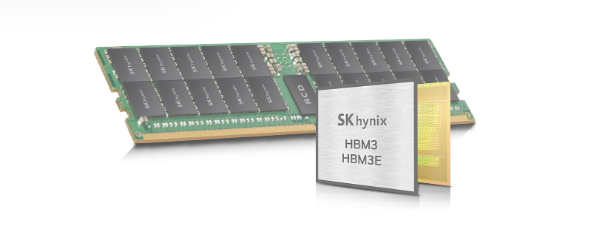
HBM4 is the sixth-generation HBM standard, succeeding HBM3E, and delivers bandwidth more than 60% higher than its predecessor. It is destined for Nvidia's Rubin GPU platform, and SK Hynix secured the title of world's first volume producer of HBM4 in the third quarter of 2026.
That said, the throne is not uncontested. Should Samsung Electronics complete qualification of its HBM3E chips with Nvidia, SK Hynix's share of that customer's orders could be diluted. Micron, too, is building competitive strength in HBM3E. Gartner forecasts that HBM supply will remain tight through 2027, but some analysts raise the possibility of oversupply after 2028.
Memory semiconductors: structural growth or the same old cycle?
SK Hynix's share price has become a live test of the most contested debate in semiconductor investing. The optimists' case is compelling. Global investment in AI data centres is growing structurally; DRAM inventory has fallen to 3.3 weeks—a record low as of the second quarter of 2026. JPMorgan argues that AI inference demand is creating an entirely new demand axis to replace smartphones and PCs, lending support to the structural-growth thesis.
The sceptics are equally forceful. TechInsights contends that the current DRAM boom reflects a temporary supply-demand imbalance caused by a concentrated burst of AI infrastructure spending, not a structural shift in the industry. Bluebox Asset Management warns that the extreme volatility of the memory market is a permanent structural feature, not a solvable problem, and points to an oversupply scenario for 2028–29.
The sustainability of SK Hynix's policy of returning more than 50% of free cash flow (FCF) to shareholders depends on how this debate resolves. FCF in the first half of 2026 reached a record high; but if the cycle turns as it did in 2023, the scale of shareholder returns could contract sharply.
China's chipmakers: closing fast, but not there yet
CXMT (ChangXin Memory Technologies) captured a 9.5% share of the global DRAM market in the second quarter of 2026, up from 4% a year earlier—a rapid advance. YMTC (Yangtze Memory Technologies) has risen to third place globally by NAND shipment volume. Chinese producers are unquestionably intensifying price pressure in commodity DRAM and NAND.
Yet in HBM and advanced NAND, the technology gap remains wide. KB Securities estimates China trails SK Hynix in HBM by at least three years. CXMT has announced a 4F² DRAM architecture, but high-volume production yields and HBM packaging capability are separate and more demanding challenges. Self-sufficient HBM production in China would also require extreme ultraviolet (EUV) lithography equipment, which remains subject to export controls.
For SK Hynix, the China risk lies not in HBM but in the commodity DRAM market. The faster CXMT grows, the greater the downward pressure on legacy DRAM prices—and on the industry's overall average selling price. The higher SK Hynix can push the proportion of HBM in its product mix, the more it insulates itself from that threat.
Capacity expansion: Yongin, Cheongju, and Indiana
SK Hynix is simultaneously pursuing three large-scale capital projects.
Yongin Semiconductor Cluster (Fab 1): The first fabrication plant in what is designed to be the world's largest semiconductor campus. SK Hynix is investing more than ₩20 trillion in Fab 1 alone, with completion targeted for 2027.
Cheongju P&T7 (packaging): A dedicated HBM packaging line, with construction beginning in the second half of 2026 and operations scheduled for 2028. Its primary purpose is to eliminate the packaging bottleneck that could otherwise constrain HBM4 output.
Indiana, United States (packaging): SK Hynix's first manufacturing footprint on American soil. Part of the proceeds from its July 2026 Nasdaq ADR listing will be directed here, with operations targeted for 2028. The facility is intended to deepen supply-chain ties with American customers including Nvidia and AMD.
The combined capital commitment across all three projects runs into tens of trillions of won. Whether that level of expenditure can coexist with a policy of returning more than 50% of FCF to shareholders is the central question for investors assessing the company's capital allocation. The ADR listing in July 2026—which involved issuing roughly 2.5% new shares to raise an estimated ₩29–33 trillion—represents a partial solution, though it is also a source of dilution for existing shareholders.
Financial performance
| 2022 | 2023 | 2024 | 2025 | H1 2026 | |
|---|---|---|---|---|---|
| Revenue (₩tn) | 44.6 | 32.8 | 66.2 | 86.2 | 128.7 |
| Operating profit (₩tn) | 7.0 | -7.7 | 23.5 | 50.1 | 98.2 |
| Operating margin | 15.7% | -23.5% | 35.5% | 58.1% | 76.3% |
| Net cash (₩tn) | — | — | — | 35.0 (Q1) | 69.4 (Q2) |
Analyst consensus for Q3 2026 (results due 28–29 October) puts operating profit at ₩78 trillion, with an operating margin approaching 80%.
Shareholder-return initiatives
November 2024: a 25% dividend increase and a formal returns policy
SK Hynix formalised its shareholder-return framework in November 2024. The two headline commitments were: first, a 25% increase in the per-share dividend from ₩1,200 to ₩1,500, targeting total annual dividends of roughly ₩1 trillion; and second, explicit codification of a policy to direct 50% of FCF to shareholders.
The announcement came at the early stages of a memory-cycle recovery and was read as a pre-emptive signal of intent. Whereas Samsung Electronics had taken three years to complete a similar 50%-of-FCF framework, SK Hynix was making the same commitment against a backdrop of more rapidly improving earnings.
2025–26: raising the threshold and an explosion in returns
On the strength of its 2025 results (operating profit of ₩50.1 trillion), SK Hynix upgraded its FCF distribution target from "50%" to "more than 50%." The addition of those two words signalled the company's willingness to distribute above the stated floor in periods of exceptional cash generation.
By the first half of 2026, with operating profit reaching ₩98.2 trillion, FCF had swollen to record levels—and the pool available under the "more than 50%" policy had grown commensurately.
July 2026: a Nasdaq ADR listing (ticker: SKHY)
SK Hynix listed American Depositary Receipts on the Nasdaq in July 2026, issuing roughly 2.5% new shares and raising an estimated ₩29–33 trillion. The listing significantly broadens the company's investor base, adding American institutional investors to a shareholder register previously dominated by Korean institutions and retail investors. Speculation about potential inclusion in the S&P 500—which would follow qualification under ADR listing requirements—has generated expectations of passive-fund inflows.
The approximately 2.5% dilution is a direct cost to existing shareholders; a substantial portion of the proceeds will fund the Indiana packaging facility, the Cheongju P&T7 expansion, and the Yongin Fab 1 project.
19th August 2026: a ₩40 trillion buyback and cancellation
On 19th August 2026, SK Hynix's board approved a plan to buy back and cancel approximately ₩40 trillion of its own shares—the largest such programme ever announced by a South Korean listed company, and 2.5 times the ₩16 trillion plan Samsung Electronics announced in March 2026.
Three motives underpin the decision. First, with net cash having risen ₩34 trillion in a single quarter to reach ₩69.4 trillion at the end of Q2, the company faced growing criticism for accumulating cash rather than deploying it. Second, it needed to demonstrate that the dilution from the ADR share issuance would be offset over time. Third, it offered the most direct possible signal of commitment to its newly enlarged global investor base.
Markets responded immediately. SK Hynix's share price surged intraday on the announcement and attracted strong foreign buying. But investors are still pressing for a clear timeline: precisely when will the full ₩40 trillion cancellation be completed?
Points of contention
The central challenge: massive returns alongside massive investment
SK Hynix's shareholder-return programme faces its sternest test. It must simultaneously execute a ₩40 trillion cancellation and commit tens of trillions to Yongin, Cheongju, and Indiana. Whether those two commitments can truly coexist will determine the credibility of future returns pledges.
At current earnings levels—₩98.2 trillion in operating profit in the first half alone—the arithmetic works comfortably. But the equation only holds while the cycle lasts. Were earnings to turn negative, as they did in 2023, the pace of the buyback programme would almost certainly slow.
Three things are worth watching on the returns front: whether the company publishes specific timelines for completing the buyback and the subsequent cancellation; whether the "more than 50%" FCF target actually translates into distributions exceeding the 50% floor; and what the next shareholder-return policy framework—covering 2027 and beyond—looks like.
On the business side, the critical variables are: the continued rise of HBM's share of total DRAM revenue (already approximately 50% in Q2 2026); Solidigm's ability to sustain profitability; and the on-schedule completion of Yongin Fab 1.
The Solidigm IPO episode: a sharp lesson in shareholder sensitivity
On 5th August 2026, reports emerged that SK Hynix was considering a Nasdaq listing for Solidigm. The following day, SK Hynix's share price fell 10.37%, closing at ₩1,495,000—a drop of ₩173,000. The sell-off echoed a pattern Korean investors know well from 2022, when LG Chem shareholders suffered heavily after LG Energy Solution was separately listed—a phenomenon known locally as "double-listing phobia."
The market's objections were threefold. First, admitting outside investors into Solidigm would dilute the future returns that SK Hynix's existing shareholders would otherwise capture in full. Second, the resulting ownership chain—SK Inc. → SK Square → SK Hynix → AI Company → Solidigm—would extend to five tiers, potentially deepening the holding-company discount. The Korea Corporate Governance Forum described it as a "five-layer double listing" and called for it to be halted immediately. Third, both the Financial Services Commission chairman and the Financial Supervisory Service governor told the National Assembly that the proposed listing might fall foul of regulations on subsidiary listings, adding regulatory risk to investor concerns.
On 25th September, Reuters reported that SK Hynix was considering an IPO that could value Solidigm at up to $150 billion and raise as much as $15 billion. SK Hynix's shares fell a further 5.42% on 28th September. On 8th October, Bloomberg reported that Goldman Sachs, Morgan Stanley, JPMorgan, and Citigroup had been appointed as underwriters, suggesting the listing was moving forward.
Then, on 23rd October 2026, SK Hynix announced that it was abandoning both the pre-IPO fundraising and the planned US listing of Solidigm. In an official statement, the company cited "current capital-market conditions and share-price performance." It added that Solidigm's growth trajectory remained intact and that it would continue to explore alternative means of financing new US production capacity.
Markets reacted positively. An analyst at iM Securities called the reversal "positive for SK Hynix, as it removes concerns about double-listing dilution."
The episode carries a broader lesson for the company's shareholder-return programme. The fact that a major overseas subsidiary listing triggered a double-digit share-price decline—and that the company subsequently reversed course—demonstrates that shareholder opinion can materially influence strategic decisions. That is precisely the dynamic that South Korea's "Value-Up" corporate governance initiative is designed to encourage. The reversal does, however, leave unresolved the question of how to fund new American manufacturing capacity. The choice between additional debt, a further ADR issuance, or a strategic partnership now ranks among the most consequential capital-allocation decisions the company faces.
The ADR dilution: a trade-off between shareholder value and globalisation
The roughly 2.5% new-share issuance in connection with the July 2026 ADR listing is an immediate cost to existing shareholders. Management's argument is that the proceeds fund capacity expansion that will generate superior long-term returns. The ₩40 trillion buyback and cancellation programme serves partly as a counterweight to that dilution—but the timing mismatch matters: dilution occurs now, cancellation comes later.
The cyclical risk: when the tide turns
SK Hynix posted an operating loss of ₩7.7 trillion in 2023. Dividends were maintained at ₩1,200 per share, but the 50%-of-FCF policy was effectively rendered meaningless. If the cycle turns while the ₩40 trillion programme is still underway, the company will have little choice but to moderate its pace. How it would communicate that adjustment—and what principles would govern the decision—has yet to be established.
Geopolitical risk: HBM and the export-control shadow
The US government regularly updates its restrictions on AI-related exports. Controls on Nvidia GPU sales to China indirectly affect demand for SK Hynix's HBM: any constraint on Nvidia's ability to ship to Chinese customers moderates the growth trajectory of HBM orders. The probability of SK Hynix itself becoming a direct target of export controls appears low for now, but supply-chain geopolitical risk is a permanent feature of the landscape.
Assessment
SK Hynix's value-up programme follows a different rhythm from Samsung Electronics'. Where Samsung has built credibility through steady, multi-year delivery on its commitments, SK Hynix has raised the stakes at the top of a cycle with a single, headline-grabbing announcement.
The ₩40 trillion figure exceeded market expectations. As the largest shareholder-return commitment in South Korean corporate history, it reads not merely as a financial transaction but as a statement of intent about closing the valuation discount that has long afflicted Korean equities—the so-called "Korea Discount." A net-cash position of ₩69 trillion provides tangible backing for that declaration.
But declarations and execution are different things. Just as Samsung took three years to cancel ₩16 trillion of shares and build trust through consistent delivery, SK Hynix's ₩40 trillion programme will be scrutinised at every quarterly results announcement. The company's credibility will be reinforced when it provides clear timelines, articulates explicit principles for managing execution through a potential cyclical downturn, and offers a concrete plan for offsetting ADR dilution.
Ultimately, the sustainability of the shareholder-return programme rests on the same foundation as everything else: business fundamentals. How long SK Hynix can defend its number-one position in HBM, and how effectively it can withstand Chinese competition in commodity DRAM and NAND, determines whether all of these headline figures retain their meaning.
What to watch
Q3 2026 earnings (28–29 October, analyst call): Whether the consensus estimates of ₩78 trillion operating profit and an 80% operating margin are met or exceeded. Any disclosure of a specific timeline and annual execution schedule for the ₩40 trillion buyback. HBM4 shipment guidance for Q4.
Yongin Fab 1 construction progress: With a 2027 completion target, the pace of construction and equipment installation will serve as a key indicator of whether capacity expansion plans are on track.
Solidigm's profitability trajectory: Whether the return to profit extends into 2027 will be a critical measure of SK Hynix's standing in the enterprise solid-state drive market.
Key metrics at a glance
| 2022 | 2023 | 2024 | 2025 | 2026 (in progress) | |
|---|---|---|---|---|---|
| Dividend per share (₩) | 1,200 | 1,200 | 1,200 | 1,500 | TBC |
| Total dividends (₩tn) | ~0.87 | ~0.87 | ~0.87 | ~1.0 | TBD |
| Share cancellation | None | None | None | None | ₩40tn (announced, in progress) |
| Total shareholder returns | ~₩0.87tn | ~₩0.87tn | ~₩0.87tn | ~₩1.0tn | ₩40tn+ (announced) |
| Operating profit (₩tn) | 7.0 | -7.7 | 23.5 | 50.1 | 98.2 (H1) |
| Operating margin | 15.7% | -23.5% | 35.5% | 58.1% | 76.3% (H1) |
| Net cash (₩tn) | — | — | — | 35.0 (Q1 2026) | 69.4 (Q2 2026) |
| HBM market share | — | — | — | ~50% | ~54% (Q2 2026) |
*Figures based on company disclosures and broker estimates. 2026 figures are subject to revision.*
*This article is part of the "Value-Up File" series. Updated as of October 2026.*