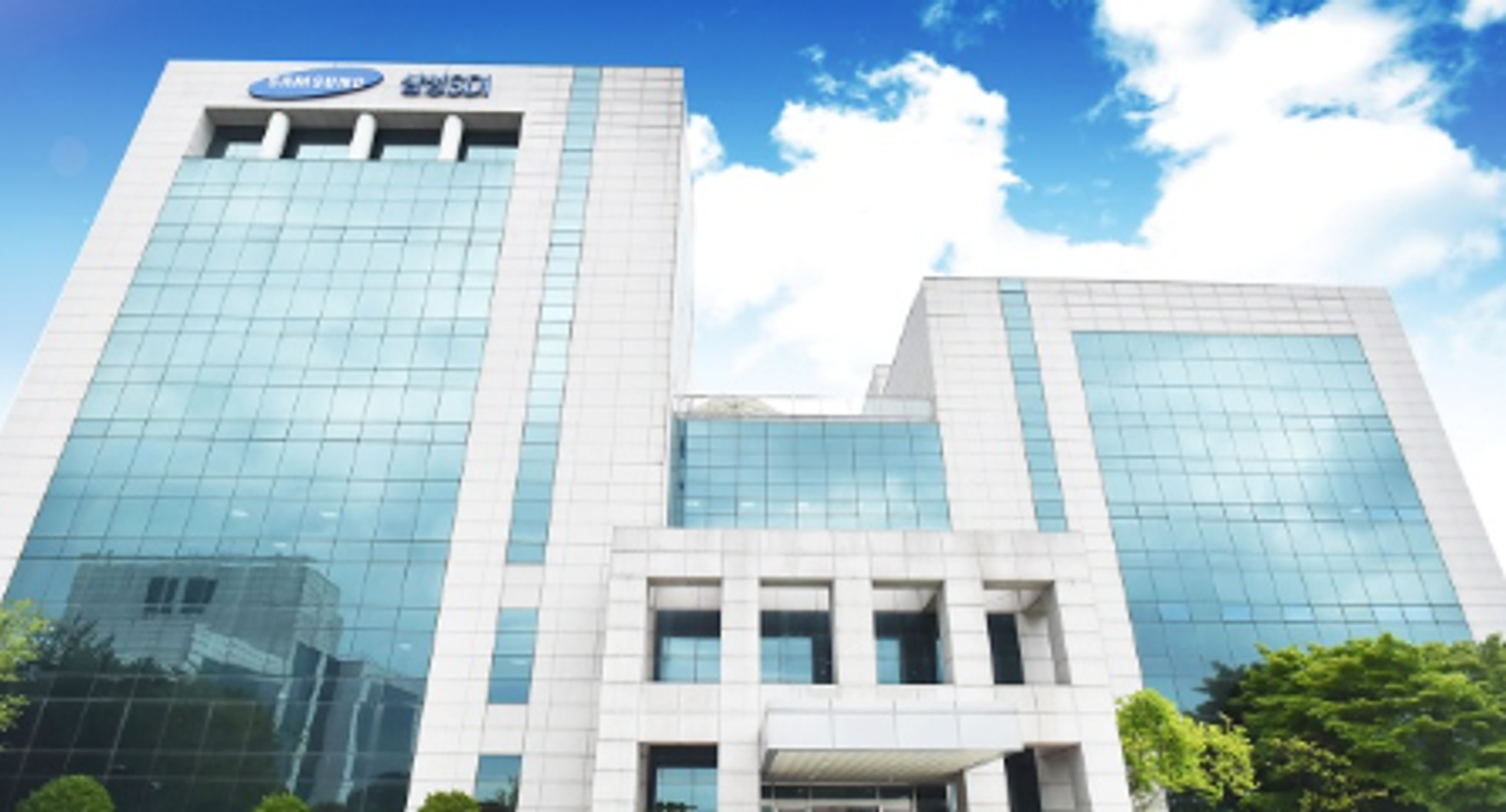
In a report published on the 3rd, DS Investment Securities maintained a "buy" rating and a target price of 840,000 won on Samsung SDI (KOSPI: 006400), forecasting that the battery maker will achieve a genuine operating profit in the third quarter of 2026 — its first without one-off boosts — after returning to overall operating profitability in the second quarter for the first time in seven quarters.
Samsung SDI's preliminary second-quarter revenue came in at 3.769 trillion won, up 5.4% from the previous quarter and 18.5% year-on-year. Operating profit, including America's AMPC manufacturing tax credits, reached 203.8 billion won, swinging from losses in both the prior quarter and the same period last year, and substantially exceeding the market consensus of negative 27 billion won.
The headline turnaround, however, was driven largely by a one-off factor: roughly 196 billion won in US reciprocal tariff refunds, which were credited to the energy storage system (ESS) division. Excluding that windfall, operating profit fell to around 8 billion won. Strip out the AMPC credits (107.7 billion won) as well, and the underlying business was still loss-making. Solid demand for uninterruptible power supplies (UPS) and battery backup units (BBU), higher utilisation at the small-format battery division, and a favourable exchange rate helped bring forward the headline recovery — but a structural improvement in profitability is not yet assured.
Below the operating line, equity-method gains of 401.8 billion won, reflecting an increase in the value of stakes in associates, lifted net profit to 472 billion won for the quarter.
DS Investment Securities projects third-quarter revenue of 4.012 trillion won, up 6.5% quarter-on-quarter and 31.5% year-on-year, with operating profit of 113.5 billion won. Although the headline figure represents a 44.3% sequential decline — as the tariff refund effect fades — the brokerage expects the core business, excluding both tariff-related items and AMPC credits, to turn profitable for the first time.
By segment, ESS revenue is forecast to grow 30–40% and sustain double-digit margins. The small-format battery division is expected to turn profitable, aided by full utilisation of available capacity and a richer product mix. The automotive battery segment faces headwinds, however: a project supplying Stellantis's US-manufactured vehicles for export to Europe is winding down, and while broader European volume model shipments should partially offset the shortfall, losses in that division are set to continue.
On a full-year basis, DS Investment Securities has sharply upgraded its 2026 estimates, now projecting revenue of 15.678 trillion won and operating profit of 373 billion won, against previous forecasts of 14.948 trillion won and an operating loss of 440 billion won. For 2027, it anticipates a more substantial recovery, with revenue of 19.53 trillion won and operating profit of 1.876 trillion won, implying an operating margin of 9.6%.
Investors should nonetheless weigh several risks. The share price stood at 397,000 won as of 31 July, roughly half the 52-week high of 723,000 won. While the brokerage's 840,000-won target implies upside of 111.6%, the stock has delivered a total return of negative 42.9% over the past three months, sharply underperforming the broader market. Other concerns include: the structural recovery of the automotive battery division remaining elusive; potential delays to the mass-production timeline for all-solid-state batteries (targeted for the second half of 2027); and rising net debt, forecast to reach 55% of equity by the end of 2026.
On the medium-to-long-term outlook, the ESS order book stands out. Confirmed orders already cover a substantial portion of capacity through 2029, and if likely project wins in the second half are included, demand would exceed production capacity from 2028 onwards. Additional capacity for BBU and UPS products is reportedly under internal review.
All-solid-state batteries are currently in sample-supply phase, with humanoid robots emerging as the most likely first commercial application. Samsung SDI already supplies high-power cylindrical cells to humanoid robot manufacturers and may secure further contracts. As physical AI — the embedding of artificial intelligence into robotic and physical systems — gathers pace, battery demand from this new growth vector warrants close attention.
For context, Samsung SDI posted operating profit of 1.545 trillion won in 2023, which collapsed to 363 billion won in 2024 before swinging to an operating loss of 1.722 trillion won in 2025. Whether the third quarter of 2026 marks a definitive exit from that two-year loss cycle, or whether recovery slips further, will be the central variable determining the stock's direction. The forecasts reflect one brokerage's view; actual results will depend on the pace of the global electric-vehicle demand recovery and any changes to US tariff policy.