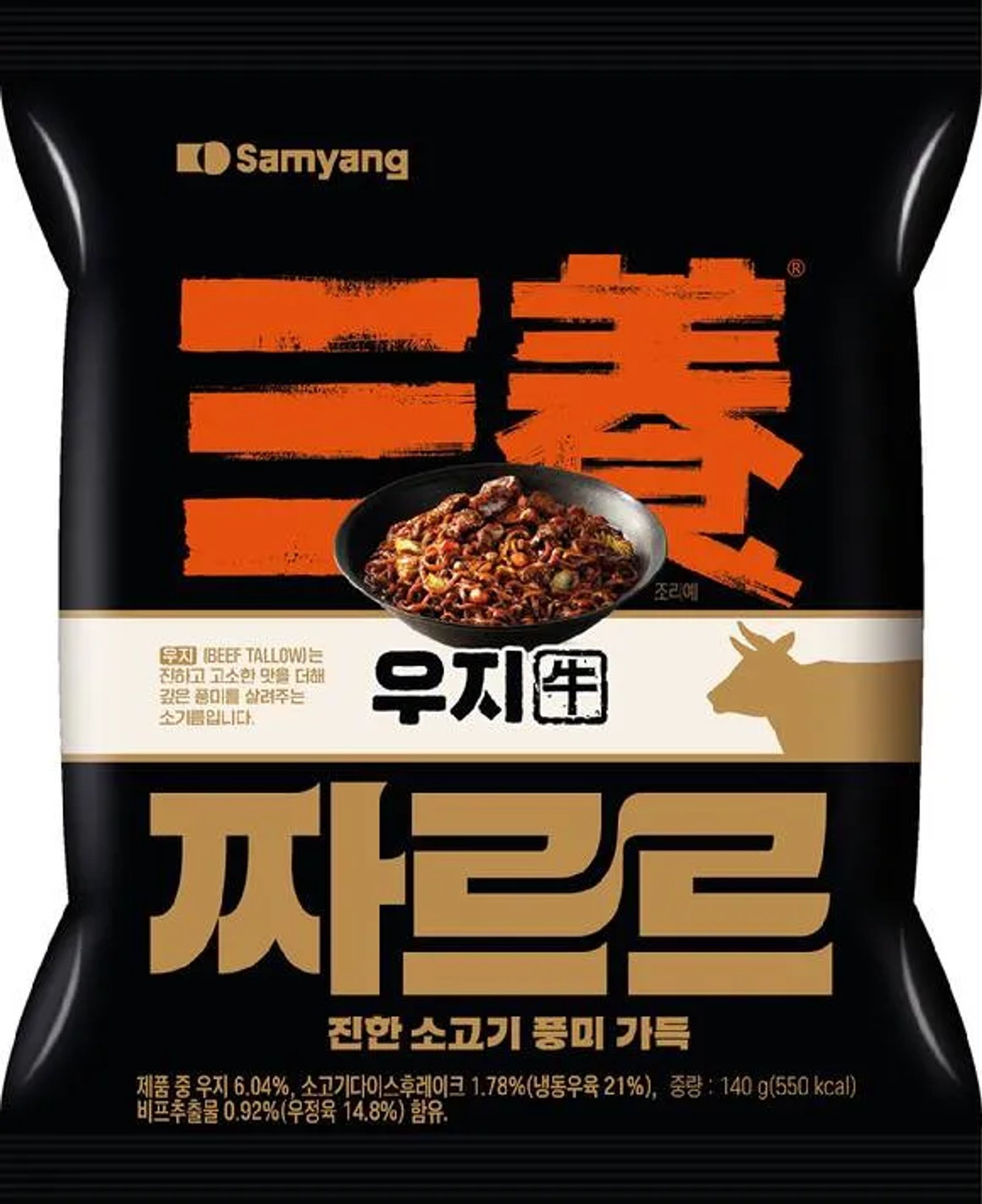
Samyang Foods' new "Jjarreur" is a premium jjajang (black-bean sauce) stir-fry noodle aimed squarely at the dry, sauce-tossed instant noodle segment. It marks the company's attempt to conquer a second front in that market — this time without the scorching heat that made its Buldak ("Fire Chicken") range a global phenomenon.
Background
The dry stir-fry noodle category in South Korea has long been the near-exclusive territory of Nongshim's Chapagetti, a jjajang-style product that has held the status of a national staple for decades. Many rivals have tried to unseat it; none has succeeded. Samyang, which essentially invented the spicy stir-fry noodle subcategory with Buldak, is now attempting to replicate that disruptive formula in a different flavour direction.
The launch also carries the flavour of a sequel. Last year Samyang released "Samyang 1963," a broth-based ramen that revived the rich, savoury character of noodles fried in beef tallow (a method common in early Korean instant noodles before vegetable oils took over). Jjarreur extends that same tallow-frying technique into a jjajang format.
The most distinctive feature of Jjarreur is its cooking method. Standard jjajang instant noodles require boiling, draining the water, then tossing the noodles with a powder or oil sachet. Jjarreur dispenses with the draining step entirely. The instructions call for boiling the noodles in a deliberately small volume of water — 330ml — and then pouring the liquid jjajang sauce directly into the pot without discarding the cooking water. The logic is straightforward: because the noodles are fried in beef tallow, the cooking water absorbs the fat's flavour as the noodles hydrate, and that beefy richness is then incorporated into the sauce rather than poured down the drain. There is no separate oil sachet for the same reason. As a practical bonus, eliminating the draining step removes the need to tip a pot of boiling water — reducing both inconvenience and the risk of scalding.
Taste Assessment
The beef tallow does make itself known. The savoury, slightly fatty aroma is unmistakable. The jjajang sauce — made from chunjang (fermented black-bean paste) roasted with onions at high heat — delivers an initial punch of sweetness and saltiness, followed by a lingering, full-bodied richness from the tallow. Large, diced beef flakes add a satisfying chew. The noodles themselves are thick and springy, and resist going soggy — welcome news for anyone who eats slowly.
The drawback is that the finished dish, despite its novel preparation, does not deliver the intensity the concept promises. Because the cooking water is retained rather than discarded, the sauce is thinner and gentler than the deeply concentrated coating one might expect from a premium stir-fry noodle. The opening burst of umami is impressive, but the flavour profile thereafter is somewhat one-dimensional. Chapagetti has a distinctive, almost caramelised depth to its black-bean base; Buldak has its ferocious, unforgettable heat. Jjarreur, for all its technical cleverness, occupies a more ambiguous middle ground. The cooking experience feels genuinely new; the taste memory it leaves behind does not.
Verdict
Jjarreur is not a poor product. Its no-drain cooking method is an intelligent way to weave Samyang's tallow-frying heritage into a modern eating ritual, and the reduction in kitchen hassle is a genuine convenience. But the innovative technique does not fully translate into an equally distinctive flavour. The impression that lingers is of a product that is not quite bold enough to threaten Chapagetti's long dominance of the category, nor distinctive enough to stand alongside Buldak as a brand-defining hit. There is real appeal here — just not enough of it to reshape the market.
★★★☆☆ (3.0/5.0)
In a word: "The method was inspired; the taste, merely competent."