Company Overview
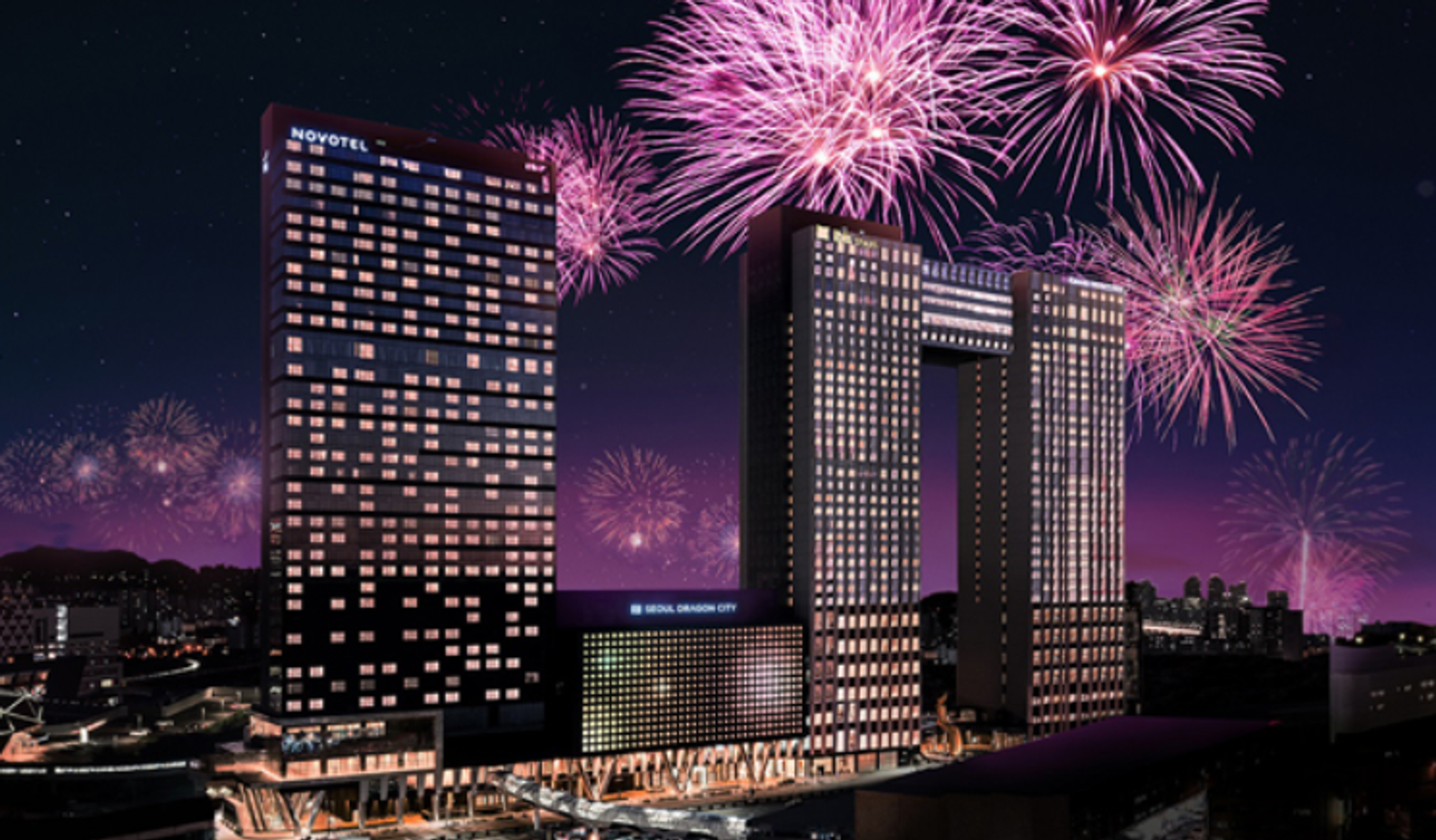
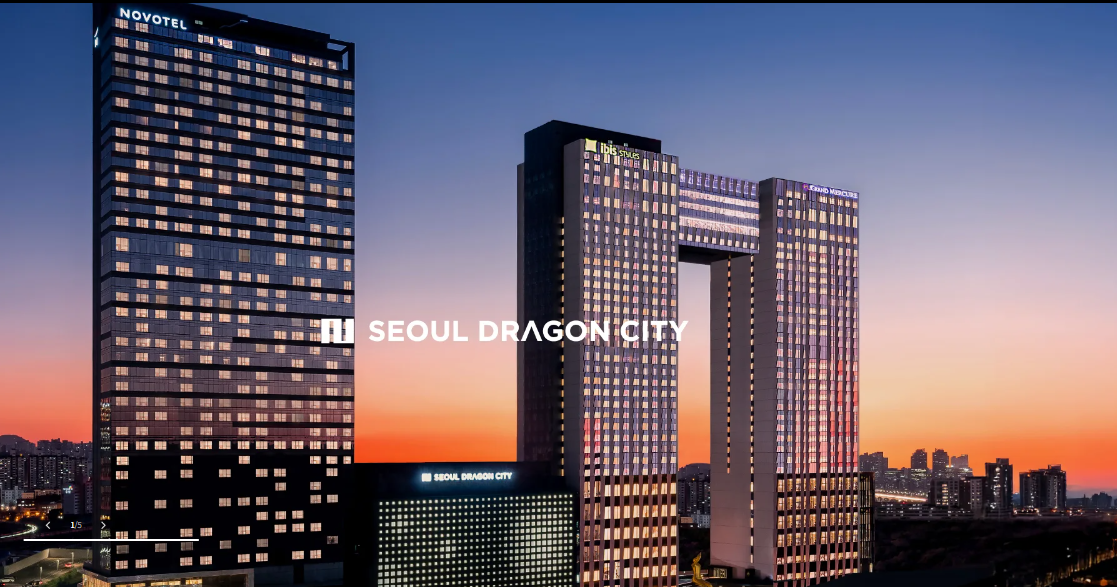
Seobu T&D is a Seoul-based conglomerate straddling commercial property and hotel operations. It holds substantial land and buildings across the Mapo, Yongsan, and Yangcheon districts of the capital, and runs a portfolio of city-centre hotels through affiliated entities. For years, the company has been regarded by Korean equity investors as a classic "asset play" — a stock whose market price sits well below the book value of its underlying real estate, producing a persistently low price-to-book ratio (PBR).
From 2024, Seobu T&D emerged as a prime candidate to benefit from the "Korea Value-Up Programme", a government-backed initiative urging listed companies to close the gap between their intrinsic and market values. The convergence of rising hotel occupancy, urban development projects approaching the construction phase, and the company's first meaningful share-cancellation decisions brought it to the centre of investor attention. Critics, however, warn that the story may amount to little more than accounting revaluation — "book-value-up" rather than a genuine improvement in cash returns to shareholders. The debate remains live.
Business Foundations and Financial Performance
Hotels: A sharp post-pandemic rebound
Seobu T&D's principal source of recurring revenue is its city-centre hotel operations in Seoul. The pandemic gutted occupancy rates, but from 2023 onwards a recovery in inbound tourism — particularly from overseas visitors — drove swift improvements in both occupancy and average daily room rates (ADR). By November 2024, occupancy had climbed above 80%, prompting talk of record-breaking annual results for the first time. By August 2025 brokers were formally forecasting second-half earnings records, and SK Securities raised its target price, citing structural growth in foreign tourist arrivals.
Property development: The Yongsan and Sinjeongdong projects
The deeper source of Seobu T&D's contested valuation is its landbank in central Seoul. Development projects on sites in Yongsan — one of the capital's most strategically significant districts — and in the Sinjeongdong neighbourhood are said to have moved into the pre-construction phase. Analysts argued in early 2026 that the combination of record hotel earnings and visible development momentum justified a sharp reassessment of the company's worth. In April 2026, SK Securities raised its target price by 54%, reflecting both the hotel boom and the prospective gains from construction breaking ground.
Key performance trends by year
Year | Key Characteristics | Hotel Occupancy Trend | Shareholder Returns
2023 | Early recovery in inbound tourism; earnings rebound begins | Gradual recovery | Minimal
2024 | Occupancy exceeds 80%; record earnings anticipated | Above 80% | Share-cancellation discussions begin
2025 | Second-half record earnings forecast; SK Securities target raised | Sustained strength | 500,000 shares cancelled; year-end dividend of ₩100 per share
2026 | Yongsan/Sinjeongdong construction imminent; target price up 54% | Boom conditions | Additional 650,000 shares cancelled
Value-Up Milestones
November 2024 — Occupancy breaks 80%: Record earnings come into view
Seobu T&D confirmed in November 2024 that hotel occupancy had surpassed 80%, the first time the market seriously began to discuss the possibility of all-time record annual results. The improvement in hotel profitability also laid the groundwork for subsequent shareholder-return announcements.
May 2025 — Capital-reduction dividends enter the conversation
A new mechanism gained traction in Korea's value-up debate: the so-called "capital-reduction dividend" (*gamek baedang*), a distribution funded by reducing paid-in capital rather than retained earnings. Because such payments are structured differently from ordinary dividends, they carry no dividend income tax liability for recipients, making them attractive to shareholders. Given the scale of Seobu T&D's asset base, the market began to speculate whether the company might adopt this route. The sustainability of any such policy was flagged as the critical question.
June 2025 — SK Securities raises target price: Tourism beneficiary highlighted
SK Securities upgraded its target price for Seobu T&D in June 2025, citing the structural recovery in foreign visitor numbers and the dual appeal of hotel earnings momentum alongside latent property development value. The report reinforced the stock's status as one of the more compelling value-up candidates.
August 2025 — Second-half record earnings forecast: Stock outperforms
In August 2025, multiple brokers formally forecast that Seobu T&D would achieve record second-half earnings. Renewed attention to the property development pipeline added a second catalyst, and the shares responded with notable strength.
December 2025 — 500,000 shares cancelled; year-end dividend of ₩100 per share
Seobu T&D announced in December 2025 that it would cancel 500,000 treasury shares and pay a year-end dividend of ₩100 per share. Share cancellation directly increases the value of each remaining share by reducing the total count in issue. The market welcomed this as a tangible shift from rhetoric to action — the first concrete shareholder-return commitment from a company previously known for its inertia on capital allocation.
December 2025 — Expectations build for a structural re-rating in 2026
As the year drew to a close, analysis suggesting that Seobu T&D's hotel operations and development projects were both entering a new phase of maturity fuelled expectations of a durable step-change in the company's valuation from 2026 onwards. The convergence of earnings improvement, approaching construction milestones, and a nascent shareholder-return policy was seen as potentially sufficient to justify a meaningful re-rating of its PBR.
April 2026 — SK Securities raises target price by 54%
SK Securities delivered a 54% uplift to its target price in April 2026, one of the most aggressive revisions in the company's coverage history. The broker cited the continued hotel boom and the gathering momentum of the Yongsan and Sinjeongdong development projects as dual justifications — a formal acknowledgement that both the operating and the asset dimensions of Seobu T&D's value warranted substantially higher marks.
June 2026 — Additional 650,000 shares cancelled
Six months after its initial cancellation, Seobu T&D announced the retirement of a further 650,000 treasury shares. The increased scale of the second tranche — larger than the first — signalled to the market that its shareholder-return posture had become a sustained policy rather than a one-off gesture. The announcement coincided with a broader period of shareholder activism on Korean exchanges, in which pressure to eliminate the drag of excess treasury shares on valuations had been intensifying.

Challenges and Assessment
Remaining challenges
First, converting development projects into actual cash flows. The Yongsan and Sinjeongdong sites are described as approaching the construction phase, but permitting risk and schedule delays are persistent hazards in urban Korean property development. A considerable lag will likely separate ground-breaking from meaningful revenue generation.
Second, deepening and sustaining shareholder returns. The share cancellations of 2025–26 are a positive signal, but the dividend of ₩100 per share looks modest relative to the company's asset base. A more systematic capital-return framework — potentially including capital-reduction dividends — has yet to be articulated.
Third, managing dependence on inbound tourism. Hotel earnings are heavily exposed to the ebb and flow of foreign visitor numbers, which in turn are sensitive to global economic conditions and geopolitical shocks. Broadening the revenue base through domestic demand and ancillary facilities would reduce this vulnerability.
Overall assessment
Seobu T&D has made measurable progress in constructing a credible value-up narrative over the 2024–26 period, with three mutually reinforcing themes — hotel earnings recovery, development momentum, and share cancellations — advancing in parallel. The escalating series of buyback retirements (500,000 shares, then 650,000) can reasonably be read as a policy shift rather than a transient response to market pressure. SK Securities' 54% target-price increase represents the most explicit institutional endorsement of this composite value thesis to date.
Yet the persistence of a low PBR implies that the market retains meaningful scepticism about whether development profits will materialise on schedule and whether shareholder returns will continue to expand. The central question is not whether the potential value exists — it plainly does — but how quickly and transparently management can convert latent assets into cash that shareholders can actually receive.
Controversies and Limitations
The "book-value-up" critique
In February 2025, the Korean financial press — including the business daily Chosunbiz — ran critical coverage questioning whether asset revaluations by listed companies were producing genuine share-price uplift or merely flattering accounting ratios. Seobu T&D was cited as a textbook example. Its Seoul property holdings can depress its stated PBR, creating a superficially appealing value signal, but the underlying assets generate no incremental cash for shareholders until they are developed and sold or leased.
The "mirage" warning for asset-heavy stocks
Reporting in February 2026 grouped Seobu T&D alongside other Korean land-rich companies — including Sampyo Cement and Harim Holdings — and warned investors of a recurring pattern: such stocks surge when value-up sentiment is high, then retreat sharply when tangible results fail to appear. Seobu T&D is not immune to this dynamic; any delay in development timelines or softening of hotel demand could produce significant share-price volatility.
The symbolism of a ₩100 dividend
The year-end dividend of ₩100 per share demonstrates that a distribution policy exists, but its absolute size has drawn criticism as insufficient relative to the company's asset wealth. A concentration on share cancellations at the expense of cash dividends may also leave institutional and foreign investors — who often prefer the latter — feeling underserved.
An incomplete value-up disclosure framework
Korea's Value-Up Programme operates on a voluntary disclosure basis, and it is not entirely clear whether Seobu T&D has published a formally structured, forward-looking capital management plan of the kind the programme envisages. The gap between responding to individual events (a share cancellation here, a dividend announcement there) and presenting a coherent multi-year roadmap for value creation remains a weakness worth addressing.
Key Data Summary
Year | Year-End Dividend (per share) | Shares Cancelled | Hotel Occupancy | Broker Target Price Trend | PBR Characteristics
2023 | Not confirmed | Not confirmed | Gradual recovery | — | Persistently low PBR
2024 | Not confirmed | Under discussion | Exceeds 80% | Initial upgrades | Asset revaluation debate emerges
2025 | ₩100 | 500,000 shares | Sustained strength | SK Securities raises target | Value-up expectations priced in
2026 | Not confirmed | 650,000 shares | Boom conditions | SK Securities +54% | Development momentum anticipated