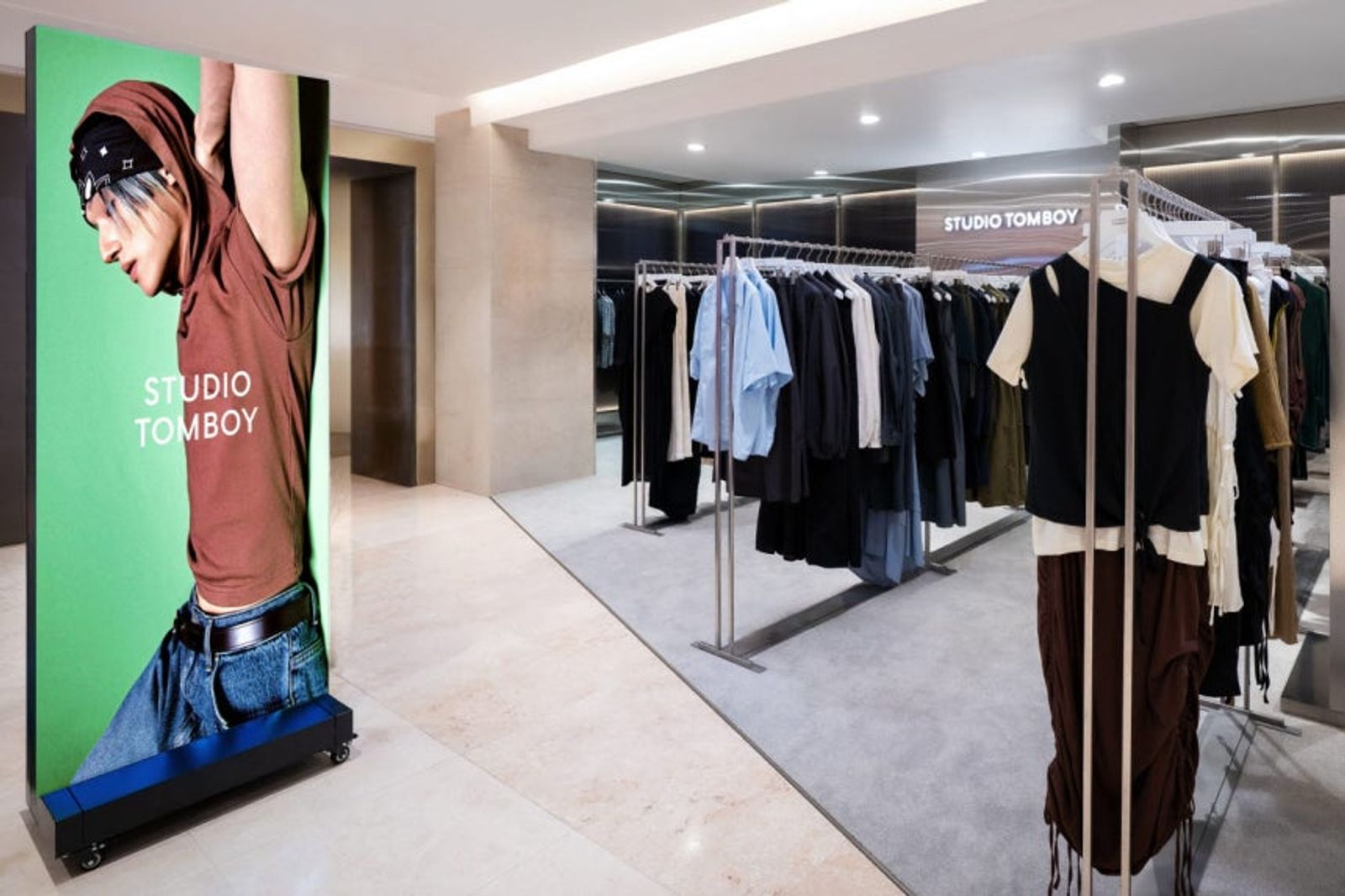
Shinsegae Tomboy, a fashion subsidiary of the Shinsegae retail conglomerate, has identified South-East Asia as its next major growth frontier, launching a concerted push into the region at a moment when Korean pop culture has turbocharged local appetite for Korean style. The move reflects a broader scramble among South Korean fashion firms to plant their flags in one of the world's most dynamic consumer markets.
K-Fashion Exports Approach Record Highs
According to the Korea Fashion Industry Association, overseas revenues for South Korean fashion companies have grown steadily, with South-East Asia posting the sharpest regional growth rates. Surveys indicate that brand awareness for Korean fashion labels across key markets — Vietnam, Thailand, Indonesia and Malaysia — has more than doubled over the past five years. Euromonitor International projects that the South-East Asian fashion market will expand at an annual average rate of around 8% through 2028.
Shinsegae Tomboy holds a portfolio of multiple brands, including the women's label CC Collect and the casual wear brand Tomboy, giving it the ability to target a broader range of consumer tastes simultaneously — an advantage analysts say sets it apart from more narrowly focused rivals.
Why South-East Asia, and Why Now
South-East Asia is home to roughly 680m people, more than half of whom are aged 35 or under. This youthful demographic has absorbed Korean culture through streaming dramas and pop music, and tends to regard K-fashion not merely as clothing but as a vehicle for cultural identity.
"South-East Asian consumers are beginning to view Korean fashion brands as aspirational in the same way they once looked up to European and American luxury labels," one industry insider observed. Korean brands occupy a distinctive niche: they are far more affordable than Western luxury goods, yet respond to trends at considerably greater speed — a proposition that might be described as accessible premium.
The rapid build-out of e-commerce infrastructure across the region since the Covid-19 pandemic has further eased market entry. Platforms such as Shopee and Lazada each count hundreds of millions of monthly active users, and Korean brands have used these channels to build awareness before committing to costly physical retail.
Lessons From Those Who Went First
The outlook is not uniformly rosy. The experiences of Korean brands that have already entered the region vary sharply.
LF's Hazzys and Kolon FnC's Kolon Sport have leveraged their experience in China to achieve stable results in South-East Asia. By contrast, a number of smaller Korean fashion brands that aggressively expanded their store networks in the region during the mid-2010s were forced to retreat after falling out with local distribution partners and mismanaging inventory. Industry specialists are blunt about where companies tend to go wrong. "Partner selection and inventory management are the most common causes of failure," one said. The prevailing wisdom now favours an online-first approach to minimise initial risk, followed by a phased expansion into physical retail.
Japan's Uniqlo offers a useful template. The company established a commanding position in South-East Asia by adapting its sizing to local body types, choosing fabrics suited to the tropical climate, and investing in large flagship stores that deliver a distinctive brand experience. Whether K-fashion brands can pair their "Korean aesthetic" with equally careful localisation — adjusting to regional climates, physiques and cultural sensibilities — is widely regarded as the decisive variable.
Competitive Landscape and Strategic Challenges
Shinsegae Tomboy will face rivals well beyond its domestic competitors. Chinese fast-fashion giants SHEIN and Temu are squeezing the lower end of the market on price, while global apparel chains such as Zara and H&M have already established firm distribution networks in the region's major cities.
In this environment, Shinsegae Tomboy's clearest point of differentiation is its positioning as a Korean premium casual brand — targeting the mid-to-upper price segment where quality and trend-responsiveness are valued together, and which low-cost global brands leave largely unserved. Whether that pitch resonates with local shoppers remains to be seen.
Social media marketing, conducted in partnership with local influencers and content creators, will be essential. Given the rapid rise of TikTok's shopping features across South-East Asia, short-form video content is expected to serve as the primary tool for early market penetration.
Outlook and Policy Implications
Shinsegae Tomboy's regional push carries significance beyond a single company's overseas ambitions. It reflects a structural shift in the South Korean fashion industry as a whole: with domestic demand saturated and the population shrinking, expanding abroad has become less a growth option than a survival imperative.
Analysts argue that individual corporate efforts need to be reinforced by government support. They recommend that bodies such as KOTRA (Korea Trade-Investment Promotion Agency) strengthen assistance with local distribution networks, and that frameworks be created to allow smaller fashion brands to co-operate with larger ones in running pop-up events and showrooms.
Should Shinsegae Tomboy achieve meaningful results in the region, it will serve as an important reference point for those that follow. South-East Asia is fast becoming the first serious test of whether K-fashion can emerge as a major export driver in its own right — joining K-pop and K-beauty as a pillar of the Korean Wave.