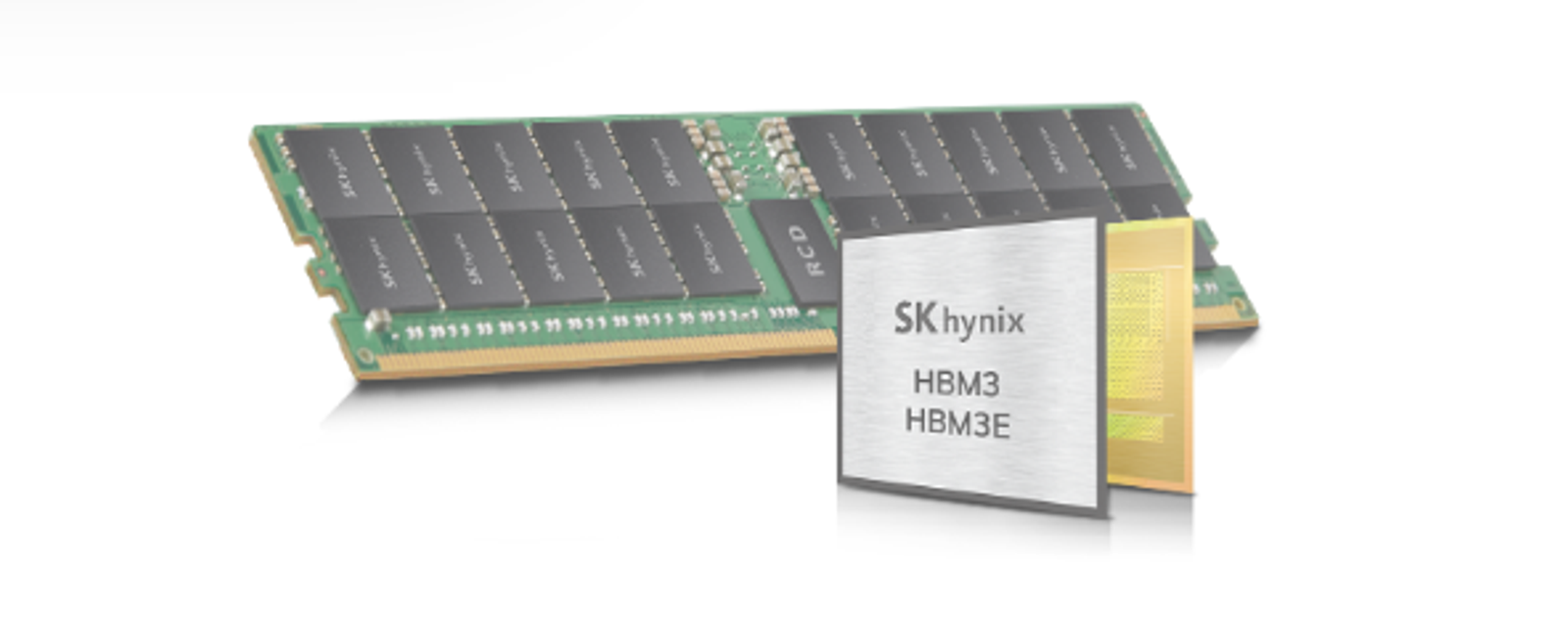
SK Hynix posted operating profit of ₩83.3 trillion for the third quarter, beating the analyst consensus of ₩77.0 trillion by roughly 8%. The South Korean memory chipmaker then declared that its DRAM and HBM output is effectively sold out through 2029, and unveiled a shareholder return plan worth approximately ₩100 trillion for the year. Markets responded emphatically: the KOSPI (South Korea's benchmark index) surged 6.63%, reclaiming the 6,000 level for the first time in ten trading days. A note of caution is warranted, however. The "sold out" claim includes demand that is still under negotiation, and the special dividend that boosted the payout figure is a one-off.
The quarter in numbers
Quarterly revenue exceeded ₩100 trillion for the first time. The numbers across the board were striking.
| Item | Q3 result | Quarter-on-quarter | Year-on-year | Note |
|---|---|---|---|---|
| Revenue | ₩104.6 trillion | +31.9% | +327.9% | Consensus: ₩98.2 trillion |
| Operating profit | ₩83.3 trillion | +37.6% | +632.1% | Consensus: ₩77.0 trillion |
| Operating margin | ~79.7% | Q2: ~76.3% | Q3 last year: ~46.6% | Consensus estimate: 78.4% |
| Net profit | ₩39.8 trillion | -57.7% | +215.7% |
At the end of the quarter, net cash (cash and equivalents minus borrowings) stood at ₩98.7 trillion, with gross cash of ₩114.5 trillion against debt of ₩15.8 trillion. The sharp quarter-on-quarter fall in net profit is explained by a large non-operating gain in the second quarter that did not recur; pre-tax profit in Q2 was roughly double operating profit, whereas in Q3 it came in below operating profit. The precise cause of the swing in non-operating items has not been confirmed.
What "sold out through 2029" actually means
During the earnings call, management said that, taking long-term supply agreements (LTAs) into account, DRAM and HBM capacity is "effectively fully sold out" through 2029. The claim rests on two layers.
The first layer is firm: LTAs with 14 key customers, including major cloud providers, cover more than 50% of total production capacity in 2027 and 2028. The second layer adds demand from customers that have concrete purchasing plans and are in active negotiations; together, management says, these fill capacity through 2029. Reports from the call suggest demand is running at more than twice the available supply.
This does not mean every tonne of output through 2029 is locked in by binding contracts. Nor are prices fixed: LTA pricing is reportedly designed to reflect market conditions within agreed bands. Even so, the significance is real. In previous downturns, customers cut short-term orders and prices collapsed. This time, more than half of capacity is tied to multi-year agreements, providing a structural floor that did not exist before. SK Hynix has now put specific figures—14 customers, more than 50% of capacity—behind a claim that the industry's risk-sharing model has fundamentally changed.
| Item | Management commentary |
|---|---|
| HBM4 | Full mass production began in Q3; yields exceed targets. In Q4, HBM4 is expected to surpass HBM3E in both shipment volumes and revenue share. Custom HBM products for key customers are in preparation. |
| DRAM | Q3 bit shipments +~10%; server DDR5 shipments +40%-plus; average selling price up by the high-20s percentage. Q4 shipment growth forecast in the mid-20s percentage. |
| NAND | Average selling price up by the mid-20s percentage, driven by expansion of 321-layer eSSD products. |
| 2027 demand | DRAM growth forecast in the mid-20s percentage; NAND in the high-teens percentage. |
| Capital expenditure | 2027 capex expected to rise materially year-on-year, including the start-up of the first fab in Yongin. No specific figure was given; new fab ramp-ups will be managed flexibly based on market demand and customers' financial conditions. |
| Supply outlook | Memory supply shortages are expected to persist through 2030. |
Management pushed back on concerns about an "AI peak", pointing to rising cloud-provider revenues and order backlogs among its customers. That said, this is the company's own assessment. Even if demand genuinely exceeds supply by a factor of two, that does not resolve the broader question—central to this year's market jitters—of whether AI infrastructure investment will generate adequate returns for those footing the bill.
Shareholder returns: the detail
The headline figure of approximately ₩100 trillion in returns for the year breaks down as follows.
| Item | Detail | Status |
|---|---|---|
| Total 2025 returns | ~₩100 trillion (cash dividends ₩30 trillion-plus; share buybacks and cancellations ₩60 trillion-plus). Excludes shares for employee compensation. | Projected |
| August buyback (₩40 trillion) | Purchases completed; cancellation imminent. | Completed |
| Q3 dividend | ₩20,000 per share (₩10,000 performance-linked + ₩10,000 Kioxia special dividend); total ~₩14 trillion. | Resolved |
| New buyback (₩20 trillion) | ~₩10 trillion for shareholder return purposes (all to be cancelled); ~₩10 trillion for employee compensation. | Resolved |
| Going forward | Board to set buyback size quarterly. Special dividends conditional on large investment gains. Kioxia proceeds to be split between Q3 and the year-end dividend. | To be determined |
| Solidigm IPO | Cancelled. Management judged that external fundraising offers limited advantage in current market conditions. |
Items already formally resolved total approximately ₩64 trillion: the ₩40 trillion August buyback, the ₩10 trillion cancellation tranche, and the ₩14 trillion Q3 dividend. The remaining ~₩36 trillion needed to reach ₩100 trillion will come from the year-end dividend and future quarterly buyback resolutions.
A few qualitative points matter here. The special dividend is a one-time item funded by gains on the Kioxia investment; management made clear that special dividends are event-driven rather than recurring policy. The ongoing return commitment—at least 50% of free cash flow, plus quarterly buybacks—remains the baseline. The ~₩10 trillion in shares earmarked for employee compensation will not be cancelled and is excluded from the ₩100 trillion total. Against any future downturn, the ₩98.7 trillion net cash position provides considerable capacity to maintain returns even if earnings soften.
Market reaction
The KOSPI closed at 6,012.44, up 374.10 points or 6.63%—its first close above 6,000 in ten trading days and a second consecutive day of gains after a 3.09% rise the previous session. A "sidecar" circuit-breaker mechanism (which briefly restricts programme trading when prices move sharply) was triggered for the second day running at 9:54 a.m. SK Hynix ended 10.89% higher at ₩1,487,000; Samsung Electronics rose 9.01% to ₩242,000. Compared with the closing prices on 16 October (₩1,272,000 and ₩215,500 respectively), SK Hynix is up approximately 17% and Samsung Electronics approximately 12%. The KOSDAQ, the smaller-company index, rose 3.69% to 771.28.
Foreign investors were net buyers of approximately ₩820 billion; domestic institutions bought a net ₩960 billion. Retail investors sold a net ₩1.8016 trillion. Total turnover was ₩19.8 trillion. Contributing tailwinds included a 1.18% gain on the Nasdaq the previous session (driven by expectations around an AI chip collaboration between Anthropic and Broadcom), as well as anticipation of Samsung Electronics' own Q3 results, due on the 29th. Samsung Electronics preference shares, SK Square, Samsung Life Insurance, and Samsung C&T also rose on dividend expectations.
Our interpretation
Three things were confirmed simultaneously. First, earnings vindicated the thesis that share prices had fallen sharply even as profit forecasts remained intact or were rising. Second, the company put concrete numbers—14 customers, 50%-plus of capacity—on the long-term contract coverage and supply-demand balance that had previously been described only in general terms. Third, the return programme was quantified.
All three structural arguments made in our earlier coverage—HBM's technology premium, the risk-sharing effect of long-term contracts, and the shareholder return commitment—now have fresh and specific evidence behind them.
That said, a single day's rally does not settle the argument. Despite today's 6.63% surge, the KOSPI remains roughly 9% below its 8 October close of 6,625.93. Retail investors' ₩1.8 trillion in net selling is a reminder that profit-taking pressure at these levels is substantial. Back-to-back sidecar triggers illustrate that volatility has not abated. The "sold out" characterisation includes demand still under negotiation, and prices will move with the market—an arrangement that flatters sellers in a boom and offers only partial protection in a downturn. The fundamental question about AI investment returns remains unanswered. And the earnings call reflects management's perspective; what matters next is what customers' own investment plans and the outcome of 2027 HBM price negotiations actually show.
What to watch
Foreign investor flows: Whether today's net buying continues or reverses as the rally matures.
Samsung Electronics Q3 results (29 October): A ₩30 trillion dividend resolution is expected at this month's board meeting—a direct comparison point for SK Hynix's return structure.
SK Hynix buyback cancellation schedule and year-end dividend: The remaining size and timing of the Kioxia special dividend payout.
Q4 consensus (operating profit: ₩87.3 trillion): The pace of HBM4 transition and DRAM pricing trends into year-end.
2027 capital expenditure: The scale of investment tied to the Yongin fab start-up and the risk of oversupply.
2027 HBM4 price negotiations: Achieved prices versus initial asking prices.
AI infrastructure funding conditions: The largest external variable for this cycle.