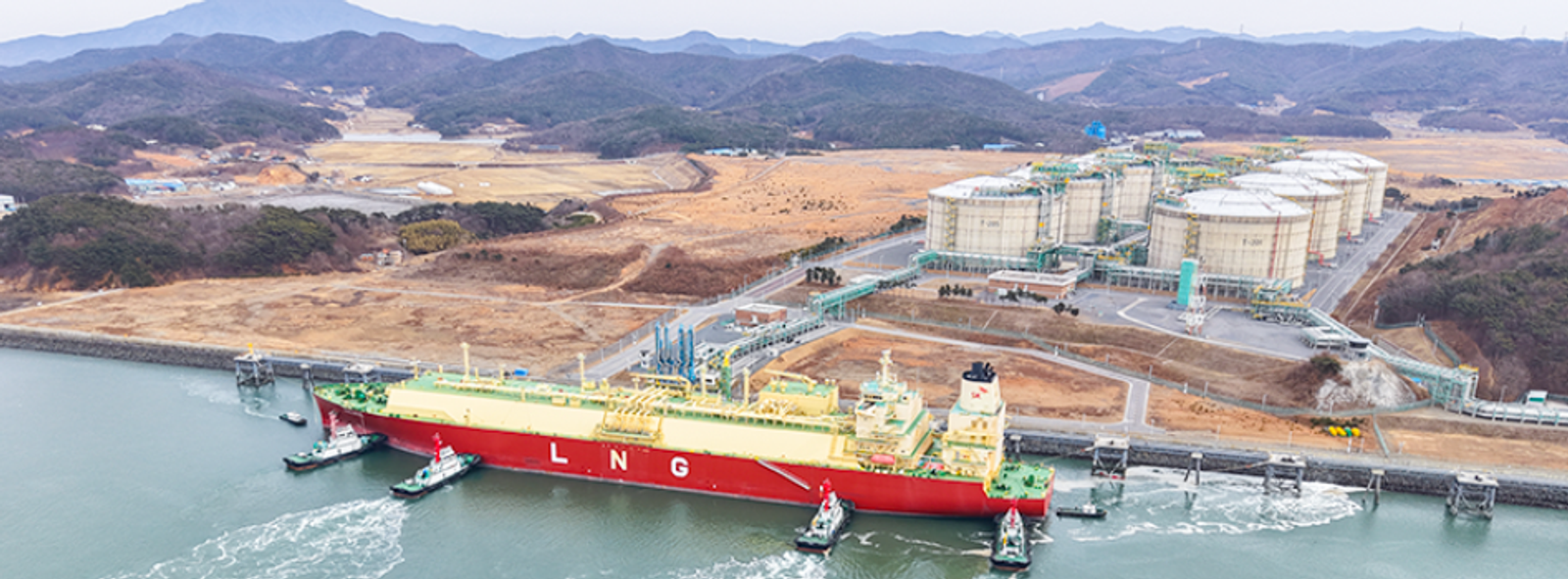
iM Securities maintained its buy recommendation and target price of 190,000 won for SK Innovation (KOSPI: 096770) on July 31st, citing deepening instability in global refined-product markets as the Russia-Ukraine war continues and a prolonged US-Iran confrontation adds fresh pressure to supply chains.
A blockbuster quarter
SK Innovation reported operating profit of 3.49 trillion won for the second quarter of 2026 (April–June), a 61% increase on the previous quarter and more than double the market consensus of 1.55 trillion won. The stock closed at 116,600 won on July 30th, implying upside of 63% to iM Securities' target.
The earnings surprise reflected several converging forces. Strong refining margins kept the energy division highly profitable, while the lubricants business posted a dramatic improvement. The battery subsidiary SK-On recorded a large one-off gain from a combination of tax refunds, unsold-inventory compensation, and the liquidation of a joint venture. Inventory revaluation gains alone reached 1.2 trillion won across all business units.
Lubricants steal the show
The lubricants division was the standout performer. Second-quarter operating profit rose 267% quarter on quarter to 691.9 billion won, a record high, driven by an 83% surge in domestic export prices for base oil and favourable lagged cost effects from cheaper used cooking oil (UCO) feedstock, which widened spreads sharply. Divisional revenues also hit an all-time high of 2 trillion won.
Other units were less buoyant. Combined operating profit from the energy, Geocentrix, and Incheon petrochemicals segments fell 27% quarter on quarter to 1.52 trillion won, weighed down by margin compression from lagging effects and reduced utilisation during scheduled maintenance. SK E&S — the group's gas and power arm — earned only 105.9 billion won, down 63% on the prior quarter, reflecting the off-season for heating demand and plant shutdowns.
SK-On: still structurally loss-making
Although SK-On reported operating profit of 821.8 billion won for the quarter, iM Securities cautions against reading this as a genuine turnaround. Strip out the one-off items and the battery unit remains in the red. Fixed costs have nonetheless declined since the JV liquidation in May, which has reduced the underlying loss.
A softer second half, but a higher earnings floor
iM Securities expects SK Innovation's second-half earnings to fall short of the first half, owing to inventory losses and a moderation in refining margins; the base comparison is also demanding given that operating profit reached 5.6 trillion won in the first six months alone. Even so, the firm argues that as long as structural supply tightness persists, the company's underlying earnings capacity has been permanently re-rated upward.
The anatomy of the supply squeeze
Two overlapping conflicts lie at the heart of the supply disruption. The Russia-Ukraine war has pushed Russian refined-product throughput to multi-year lows, while the collapse of a memorandum of understanding in July has intensified uncertainty over Iran's energy exports. China has again restricted exports of diesel, kerosene, and petrol; Russia has extended its petrol export ban through the year-end. European LNG inventories stand at only 55% of capacity, implying a concentrated pre-winter restocking demand that is likely to tighten the market further.
iM Securities describes the simultaneous boom in refining and lubricants as close to a self-reinforcing loop. As diesel shortages prompt refiners to shift production away from base oil and towards diesel, base-oil supply contracts, pushing base-oil prices higher in tandem. With greenfield crude distillation unit (CDU) capacity additions remaining scarce, and no early end to either conflict in sight, the brokerage sees little prospect of this dynamic reversing quickly.
The Houthi threat to Red Sea shipping adds another layer of risk. Since the closure of the Strait of Hormuz, the Red Sea has become the conduit for 70–80% of Saudi Arabia's crude exports. Any blockade there would compound supply disruptions and risk a further spike in oil prices.
Limited direct exposure for SK Innovation
iM Securities judges the direct impact on SK Innovation to be manageable. The company has raised its intake of American crude to 20–30% of total supply and diversified its Middle Eastern sources across Kuwait, Iraq, and the UAE. In the second half, rising system marginal prices (the benchmark for Korean electricity tariffs) are expected to boost profits at SK E&S, further reinforcing the brokerage's view that SK Innovation offers the most attractive relative proposition among South Korean refiners.
Valuation
iM Securities forecasts SK Innovation's revenues at 104.6 trillion won for 2026, with operating profit of 7.84 trillion won — more than seventeen times the 449 billion won earned in 2025. On projected earnings per share of 17,103 won, the stock trades at just 6.8 times forward earnings, a multiple the brokerage characterises as undemanding.
Risks to watch
Investors should note several caveats. Much of the second-quarter outperformance was flattered by inventory revaluation and SK-On's one-off gains; underlying earnings quality deserves scrutiny. If either conflict ends sooner than expected, or if China and Russia lift export restrictions or Saudi Arabia decides to ramp up output, refining margins could reverse sharply. Finally, whether SK-On can achieve a lasting exit from structural losses remains a key variable for the group's long-term value.