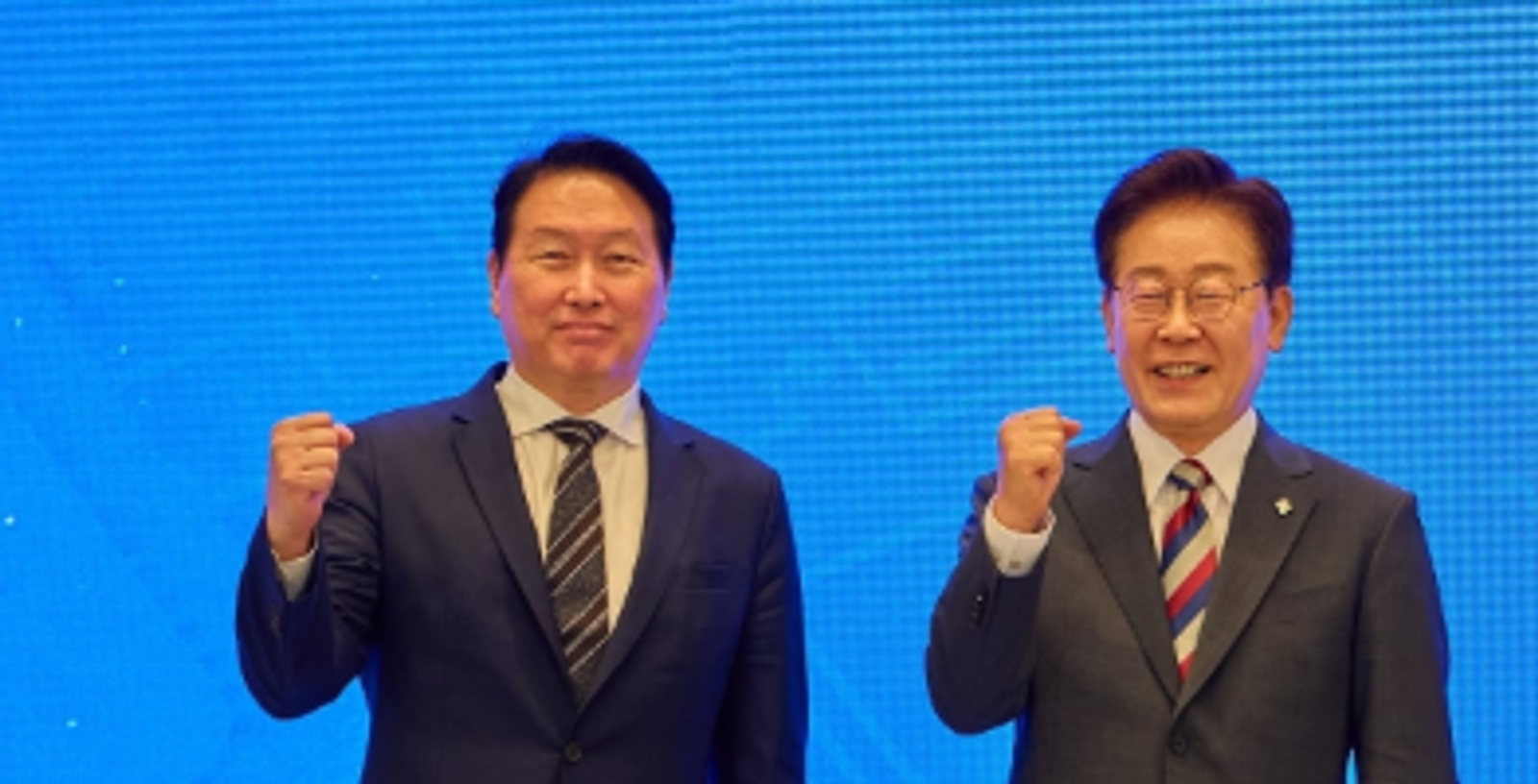
Chey Tae-won, chairman of SK Group, visited the proposed site for a semiconductor fabrication plant in Gwangju on October 9th 2025, declaring that he would find "the fastest possible way to break ground." His appearance amounted to a public pledge: construction will begin without delay the moment water supply and electricity infrastructure are in place.
The Gwangju fab is part of a broader effort by SK's semiconductor arm — led by SK Hynix, South Korea's largest memory-chip maker — to diversify its domestic production base beyond the greater Seoul area. The site was secured amid fierce competition between regional governments eager to attract advanced manufacturing; Gwangju, a city in the south-west of the country, beat rivals with promises of land provision and infrastructure support. Local officials and residents are counting on the project to generate tens of thousands of direct and indirect jobs and to anchor a cluster of component suppliers.
Yet formidable obstacles remain before a single shovel enters the ground. Semiconductor fabs are among the most resource-intensive industrial facilities in existence. A single large plant can consume tens of thousands of tonnes of ultra-pure water per day and draw electricity equivalent to the entire demand of a mid-sized city. Neither supply is currently guaranteed in Gwangju. By naming water and power as explicit preconditions for construction, Mr Chey was openly acknowledging that the project's timeline is hostage to infrastructure negotiations — a candid admission for the head of one of South Korea's largest conglomerates (known as chaebol).
The visit signals that SK's leadership intends to accelerate momentum personally. The group is already committed to an enormous domestic expansion: SK Hynix is building a semiconductor cluster in Yongin, in Gyeonggi Province near Seoul, with planned investment exceeding 120 trillion won (roughly $90 billion). If Yongin is SK's flagship metropolitan hub, Gwangju is intended as the cornerstone of a production network outside the capital region. Should both projects proceed simultaneously, SK's total domestic chip-manufacturing investment would likely surpass anything previously attempted by a Korean company.
Industry observers expect the earliest plausible groundbreaking in Gwangju to fall in the second half of 2026, assuming infrastructure negotiations conclude on schedule. That timetable is, however, at risk. Securing adequate water supply and grid capacity requires co-ordination among multiple government bodies — including the local municipality, Korea Electric Power Corporation (KEPCO), and the Ministry of Environment — and such multi-agency processes routinely slip. Gwangju city authorities have reportedly committed to supporting infrastructure development beyond simply providing the land, but the specifics remain to be formalised.
Mr Chey's site visit served a dual purpose: reaffirming SK's investment intentions and applying visible pressure on local government to accelerate the necessary approvals. The group says it will announce an official construction schedule once infrastructure commitments are secured.