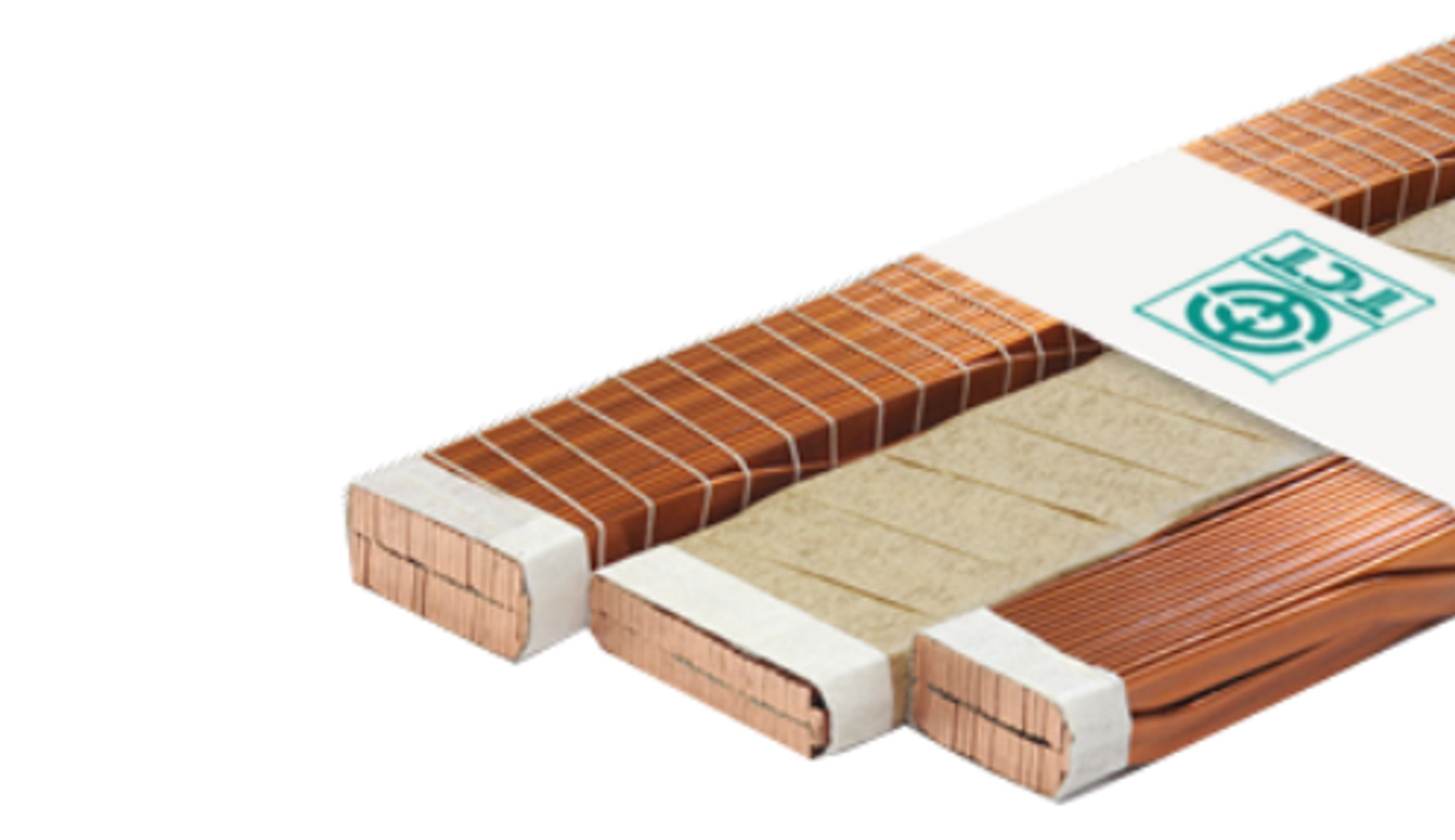
In a research note published on 2nd September 2026, DS Investment Securities forecast that TC Materials (KOSPI: 125020), a supplier of key copper materials for transformers and power cables, will deliver a sharp earnings step-up in 2027, driven by a major expansion of its continuous transposed conductor (CTC) production capacity.
DS Investment Securities estimates TC Materials' full-year operating profit at 21.3bn won in 2026, a 213% jump on the prior year, rising further to 36.7bn won in 2027, a gain of 72%. The brokerage has not issued a formal price target (rated Not Rated), and the shares closed at 6,040 won on 1st September.
What the company does
TC Materials produces copper-based electrical conductors — enamelled round wire, rectangular copper wire, and CTC — used in cables and power transformers. Its customers include several of South Korea's leading power-equipment manufacturers: HD Hyundai Electric, Hyosung Heavy Industries, Iljin Electric, and LS Cable & System.
The CTC expansion
The centrepiece of the investment case is an aggressive build-out of CTC capacity. The company currently operates five CTC production lines. It plans to add eight more lines in sequence by October this year, bringing the total to 13. Monthly CTC output is expected to more than triple to roughly 1,600 tonnes.
CTC is the key winding material used in transformers ranging from medium-voltage units up to ultra-high-voltage equipment. Because it commands meaningfully higher margins than standard rectangular copper wire, a rising share of CTC in the revenue mix translates directly into improved profitability.
A disappointing second quarter
Second-quarter 2026 results (April–June) fell short of margin expectations despite solid top-line growth. Operating profit came in at 3.8bn won, up 164.2% year on year, but the operating margin contracted to just 3.1% — roughly half the 6.3% recorded in the first quarter. The culprit was a mismatch in copper price pass-through timing: different customers use different reference dates when setting the copper-linked component of product prices, and a sharp spike in copper costs during the quarter meant the company absorbed losses that its pricing formulae could not immediately offset.
The share price fell sharply after the results. It currently sits 42% below its 52-week high of 10,410 won.
To address the problem, TC Materials is reportedly negotiating with customers to shift to a pricing structure based on the prevailing copper price in the month of actual shipment. DS Investment Securities believes that if this repricing arrangement is secured, the second quarter will prove to be a trough and quarterly margins should recover thereafter.
A clear growth trajectory, punctuated by volatility
The broader revenue trend is unambiguous. Sales grew from 169bn won in 2021 to 304bn won in 2024 — an increase of almost 80% in three years. DS Investment Securities projects revenues reaching 479.9bn won in 2026 and 632.8bn won in 2027. Profitability, however, has been erratic. The operating margin improved from 0.6% in 2021 to 3.4% in 2023 before slipping back to 2.3% in 2025. This volatility stems from the structural lag between movements in copper prices and their reflection in selling prices — a recurring risk that will persist until the repricing negotiations are concluded.
Structural demand tailwinds
The demand backdrop remains favourable. Global spending on electricity grid upgrades is accelerating, as ageing infrastructure reaches the end of its serviceable life and the proliferation of AI-driven data centres pushes up power consumption. According to BloombergNEF, annual global grid investment is projected to reach $777bn by 2030. Order backlogs at TC Materials' key customers — HD Hyundai Electric and Hyosung Heavy Industries among them — continue to rise steeply, giving reasonable visibility on the company's own pipeline.
Risks investors should weigh
Several caveats deserve attention. First, the absence of a formal price target from DS Investment Securities signals that the brokerage does not yet have sufficient conviction to underpin a valuation. Second, even if the 13-line capacity build is completed on schedule in October, new equipment typically requires time to ramp to targeted utilisation rates. Third, the most profitable segment of the CTC market — conductors with a high strand count destined for large ultra-high-voltage transformers — also carries the highest barriers to entry, including stringent customer qualification and quality-certification requirements.
On valuation, the shares trade at a price-to-earnings multiple of 85 times on 2025 estimates, inflated by a still-modest net profit base of around 2bn won. Should the 2026–27 earnings projections materialise, that multiple would compress rapidly. Whether they do will hinge primarily on the outcome of the copper-pricing negotiations and the speed at which the new CTC lines reach full capacity.