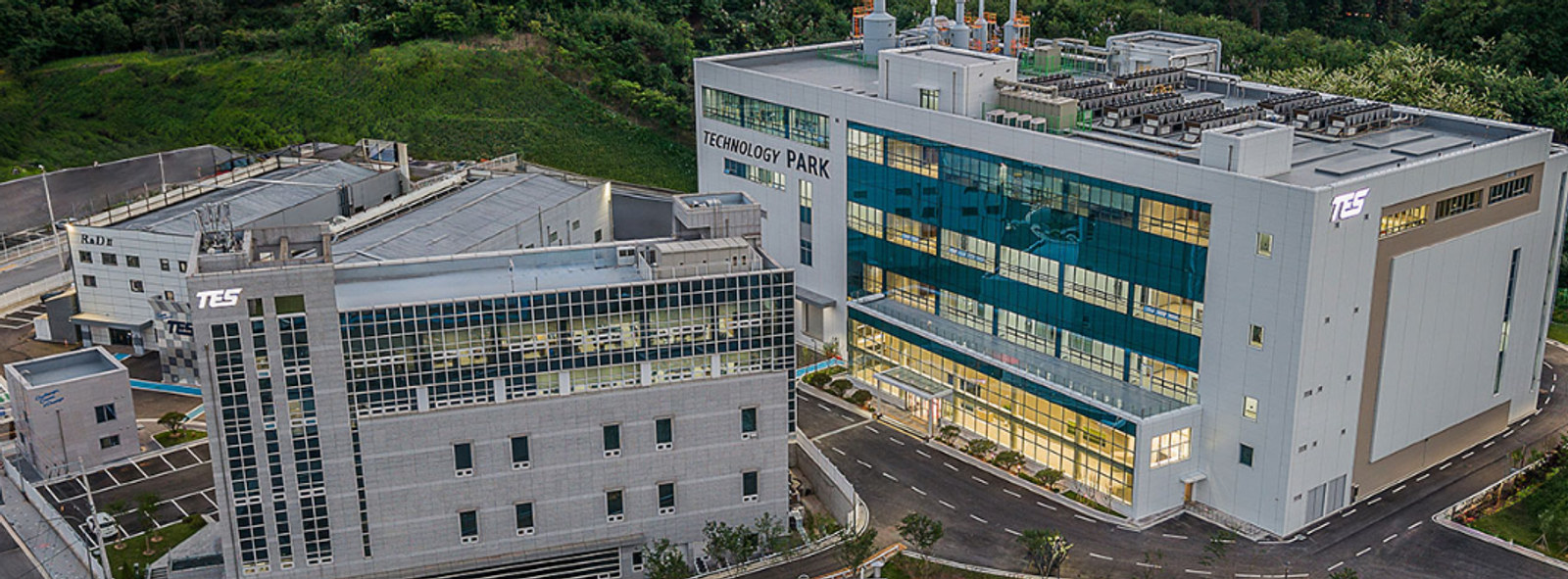
Company Overview
TES is a KOSDAQ-listed South Korean manufacturer of semiconductor fabrication equipment, supplying chemical vapour deposition (CVD) systems and related consumables primarily to Samsung Electronics and SK Hynix, the country's dominant memory chipmakers. Like most equipment suppliers, its financial performance is closely tied to its customers' capital expenditure cycles, making earnings notably volatile as the memory semiconductor industry swings between boom and bust.
TES entered the spotlight of South Korea's corporate "value-up" debate in the second half of 2025. The trigger was a regulatory push by the Financial Supervisory Service (FSS), the country's financial watchdog, to tighten disclosure requirements around the issuance of exchangeable bonds backed by treasury shares — a practice that critics argue lets companies dress up a financing manoeuvre as shareholder returns. TES was among a group of firms identified as having pressed ahead with such issuances despite the regulatory warning.
Analysts in Seoul argue that even as the recovery in memory chip capacity investment brightens the earnings outlook, concerns about governance and capital allocation transparency continue to weigh on TES's valuation. The company has not been included in the Korea Value-Up Index, a benchmark launched to highlight firms with strong shareholder-return practices, but scrutiny of its capital policies has grown as the value-up conversation spreads across the semiconductor equipment sector.
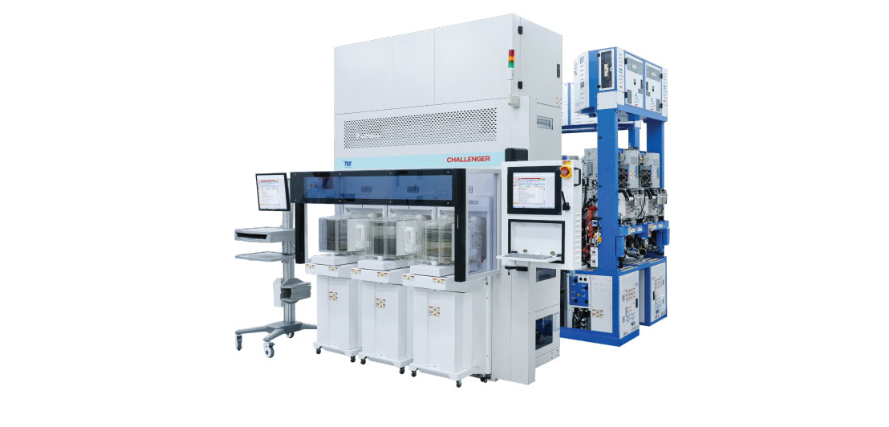
Business and Financial Performance
Business model and competitive position
TES holds proprietary technology in thin-film deposition equipment — specifically CVD and atomic layer deposition (ALD) systems — and is regarded as a credible mid-tier player in South Korea's semiconductor equipment ecosystem. Its machinery goes into critical stages of memory chip production at both Samsung and SK Hynix. A recurring revenue stream from consumables provides some cushion between large equipment orders.
The structural vulnerabilities are equally clear. The customer base is narrow, and order volumes swing sharply with the semiconductor cycle. During downturns, TES faces order droughts; during upturns, it must simultaneously manage compressed delivery schedules and stretched production capacity — a whiplash dynamic that is an occupational hazard of the industry.
Annual financial results
In a research note published in February 2026, SK Securities signalled that the benefits of renewed memory chip capacity expansion were beginning to show up in TES's order book. The table below, compiled from public disclosures and broker estimates, summarises the company's recent performance.
Year | Revenue (KRW bn) | Operating profit (KRW bn) | Operating margin (%) | Note
2021 | c.280 | c.42 | c.15% | Memory investment boom 2022 | c.310 | c.46 | c.15% | Peak order momentum sustained 2023 | c.190 | c.12 | c.6% | Semiconductor downcycle 2024 | c.240 | c.28 | c.12% | Early-stage recovery 2025 | c.300+ (est.) | c.40+ (est.) | c.13–15% (est.) | Capacity expansion tailwind
*Figures are drawn from published reports and broker estimates and should be treated as indicative. Audited results should be verified against official filings.*
Share price catalyst in 2026
On 4th June 2026, TES shares hit the daily upper price limit on the KOSDAQ — the maximum 30% gain permitted in a single session on South Korean exchanges. The move reflected mounting investor conviction that resumed capacity investment by memory chipmakers would translate directly into equipment orders. Market participants pointed specifically to SK Hynix's expanding outlays on high-bandwidth memory (HBM) and Samsung's parallel investment in both foundry and memory capacity as catalysts from which mid-sized equipment suppliers like TES stood to benefit.
Value-Up Developments: A Timeline
November 2025 — Treasury-share exchangeable bond controversy
Shortly after the FSS announced tighter disclosure rules for treasury-share exchangeable bonds (EBs) in November 2025, TES was named alongside Bionex, Shinsung ST, SP Systems, and JNTC as a company that had proceeded with such issuances in defiance of the regulatory signal. The episode raised pointed questions about the quality of TES's shareholder-return commitments.
A treasury-share EB is a bond that can be exchanged for shares already held by the issuing company. Critics argue that using treasury shares as collateral for debt issuance — rather than cancelling them to boost per-share value — gives the outward appearance of capital management while delivering the economic benefit to the bond's purchaser, not to existing shareholders. The practice drew sharp criticism from market participants who saw it as exploiting the optics of shareholder returns without the substance.
October 2025 — Regulatory tightening takes shape
The FSS's crackdown had begun to bite by October 2025: just three days after the new disclosure rules came into force, Kwangdong Pharmaceutical became the first company to face formal regulatory action. Around the same time, TES and other companies were reported to have accelerated their EB issuance ahead of the deadline, apparently seeking to act before further restrictions — including possible amendments to the Commercial Act — could close the window.
January 2026 — Public debate over treasury-share disposal
In January 2026, major financial news outlets devoted sustained coverage to the contrast between cancelling treasury shares and selling or pledging them. The distinction matters: cancellation reduces the share count and directly raises earnings per share, benefiting all shareholders; EB issuance transfers the upside to the bond purchaser. TES was repeatedly cited as an illustration of the less shareholder-friendly approach.
February 2026 — Broker upgrade and earnings optimism
SK Securities issued a buy-side note on TES in February 2026, forecasting that rising memory chip capacity investment would begin flowing through to the company's order book. Earnings optimism spread through the broking community, fuelling talk of a re-rating, though analysts were careful to note that persistent opacity in capital allocation remained a discount factor on any valuation.
June 2026 — Upper-limit gain and sector momentum
TES's limit-up session on 4th June 2026 coincided with a broader revival in sentiment across the semiconductor equipment sector. Alongside several other companies posting sharp gains on positive newsflow, TES appeared to be pricing in the recovery in memory chip investment ahead of formal order confirmation.
Challenges and Assessment
Challenges ahead
The most pressing task facing TES is establishing consistent, credible shareholder-return policies. The treasury-share EB episode illustrated the risk of allowing treasury shares to serve as a financing instrument rather than a mechanism for value creation. A clearly articulated commitment to share cancellation — rather than pledging or selling treasury stock — is the minimum the market will require.
Second, TES must address its earnings volatility. Its revenues are excessively tied to a single cycle in a single product category. Broadening into non-memory and foundry process equipment, expanding the share of consumables and service revenue, and diversifying the customer base internationally are the most commonly cited routes to greater resilience.
Third, TES needs to engage more actively with the value-up disclosure framework. Even without membership of the Korea Value-Up Index, the company could strengthen investor confidence by publishing explicit targets for dividend payout ratios, price-to-book ratios, and treasury-share policy — and by reporting progress against those targets regularly.
Overall assessment
TES is a technically capable company with genuine standing in South Korea's semiconductor equipment supply chain, and the cyclical tailwind from renewed memory chip investment is real. But the weight of market opinion is that it has not yet earned the right to be called a value-up company. Proceeding with treasury-share EB issuance in the face of explicit regulatory pressure sent a signal about the company's priorities. The medium-term challenge for TES is to convince investors that it will translate the coming upcycle into tangible returns for shareholders — not merely into balance-sheet manoeuvres that benefit other parties.
Controversies and Structural Constraints
Regulatory arbitrage around treasury-share EBs
TES's decision to press ahead with treasury-share EB issuance after the FSS's November 2025 announcement made it a prominent example of the wider industry habit of treating regulatory guidance as a deadline to beat rather than a standard to meet. The fundamental objection is structural: when a company's own shares are exchanged into the hands of institutional bond investors at a predetermined price, the gains from any subsequent share appreciation flow to those investors, not to the shareholders who held the stock throughout.
Opacity of actual shareholder returns
Detailed data on TES's dividend payout ratios and share cancellation history are not readily available in the market. Management is understood to point to the inherent difficulty of maintaining stable dividends given the volatility of earnings in the equipment sector — a reasonable operational argument, but one that leaves investors with little basis for forecasting income returns.
Exclusion from the Korea Value-Up Index
When the Korea Value-Up Index was rebalanced in May 2026 — admitting HD Hyundai Heavy Industries, SK Square, and NH Investment Securities, among others — TES was not included. Index membership matters commercially: passive funds tracking the index direct capital towards constituent stocks, providing a natural buyer base that non-members lack. For TES to qualify, it would need to demonstrate sustained improvement on the criteria used for selection, including return on equity, price-to-book ratio, and shareholder-return rate.
Customer concentration and pricing power
The dependence on two customers for the bulk of revenues constrains TES's ability to raise prices or improve contract terms, placing a ceiling on operating margins and limiting the free cash flow available for distribution to shareholders. Ultimately, how much TES can return to investors is hostage to the investment decisions of Samsung and SK Hynix — a structural limitation that no amount of governance reform can fully offset.
Summary Data
Year | Operating profit (KRW bn) | Dividend (KRW/share) | Treasury-share policy | P/B ratio (x)
2021 | c.42 | Undisclosed/est. | No cancellation confirmed | c.2.0–3.0 (est.) 2022 | c.46 | Undisclosed/est. | No cancellation confirmed | c.1.5–2.5 (est.) 2023 | c.12 | Undisclosed/est. | No cancellation confirmed | c.1.0–1.5 (est.) 2024 | c.28 | Undisclosed/est. | No cancellation confirmed | c.1.5–2.0 (est.) 2025 | c.40+ (est.) | Undisclosed/est. | Treasury-share EB issued | c.2.0 (est.) 2026 (H1) | Not yet reported | Undisclosed | To be determined | Re-rating in progress post limit-up
*Dividend and P/B figures are drawn from published reports and broker estimates. Definitive figures should be verified against the company's annual report. "No cancellation confirmed" indicates the absence of a formal share-cancellation disclosure, not a confirmed policy of non-cancellation.*