Company Overview
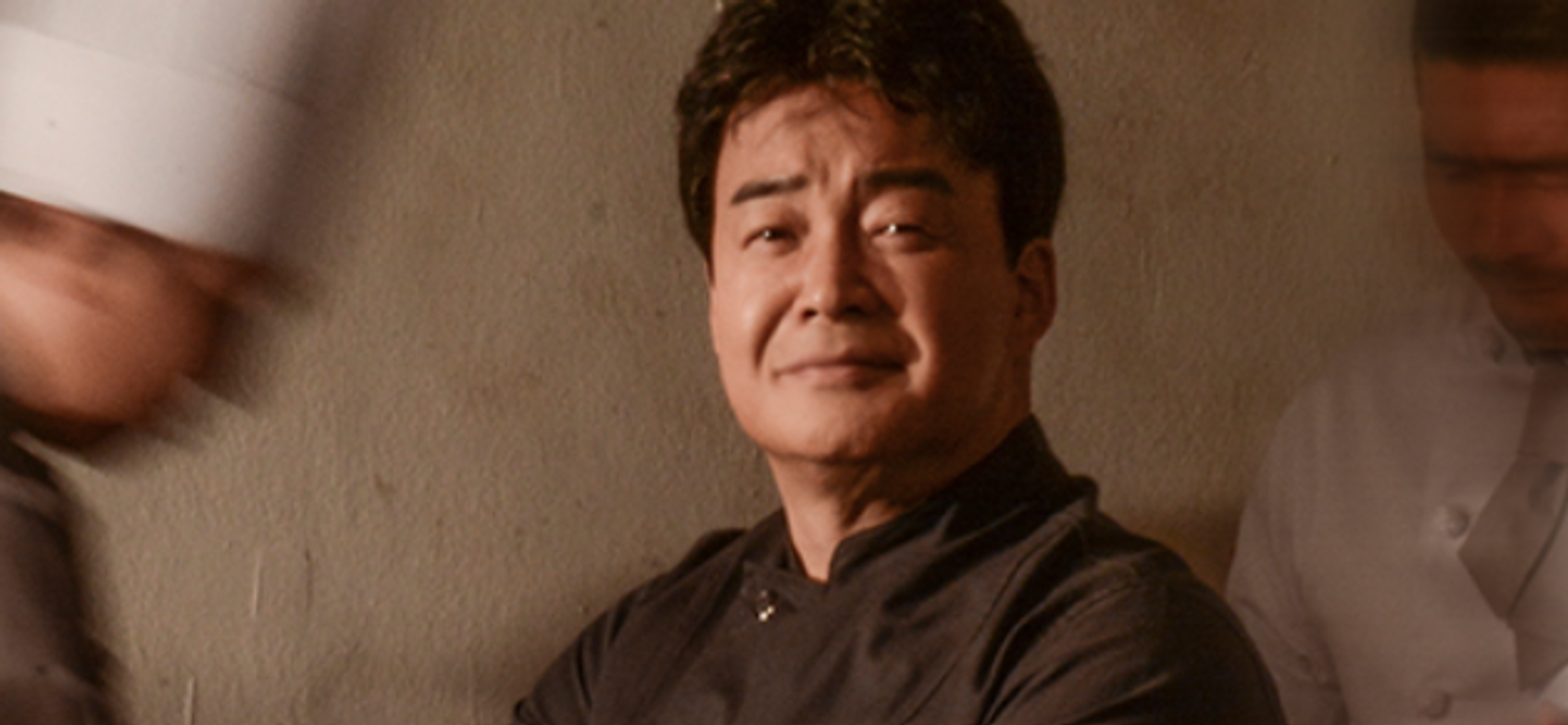
Daebak Korea is South Korea's leading multi-brand restaurant franchise group, founded in 1994 by Baek Jong-won — a celebrity chef and television personality who has become one of the country's most recognisable faces. The company operates more than 20 dining brands, including Hong Kong Banjum 0410, Saemaeul Sikdang, Hanshin Pocha, and Bbaek Coffee. It listed on the KOSPI — South Korea's main stock exchange — in November 2024 to considerable fanfare, but has since fallen into a prolonged slump as what analysts now call the "Baek Jong-won risk" has taken hold, dragging down its share price, financial results, and corporate governance standing simultaneously.
The company's position within South Korea's broader "Value-up" programme — a government-backed initiative encouraging listed firms to improve their price-to-book ratios, return on equity, and shareholder returns — is an awkward one. Daebak Korea's challenges run deeper than low valuations: restoring fundamental business credibility must come before any serious conversation about rewarding shareholders.
Business Model and Financial Performance
*A multi-brand franchise structure*
Daebak Korea generates revenue through three main streams: franchise royalties and fees, food ingredient supply to franchisees, and sales from company-owned outlets. With more than 2,000 franchised locations nationwide, the group has long argued that brand diversification insulates it from swings in consumer dining demand. That logic holds in theory, but the structure carries an inherent tension — between the obligation to sustain franchisee profitability and the need to protect head-office margins — which has periodically erupted into open conflict with franchise owners.
*A pivot to sauces and overseas markets*
From 2025, Mr Baek publicly committed the company to a strategic pivot: moving from restaurant franchising towards the manufacture and distribution of packaged sauces. His stated philosophy — "a recipe that cannot be adapted must ultimately become a sauce" — signals a deliberate shift towards higher-margin, storable consumer goods that are less exposed to the cyclicality of eating out. By early 2026, early signs of overseas sales growth had begun to emerge, with the company seeking to ride the global wave of interest in Korean food.
*Financial results, year by year*
Year | Revenue (est.) | Operating profit/(loss) | Key developments
2022 | c. KRW 320bn | Profit | Post-pandemic recovery; brand expansion
2023 | c. KRW 380bn | Profit | IPO preparations; valuation discussions
2024 | c. KRW 400bn+ | Profit turning to loss | KOSPI listing (November); franchisee disputes intensify
2025 | Estimated decline | Operating loss | 52-week share price low; "Baek risk" widens
2026 (H1) | Partial recovery hoped for | Likely continued loss | Sauce business and overseas sales gaining traction
The sharp deterioration in results following the listing reflects a combination of factors: a slowdown in consumer dining, reputational damage from franchisee disputes, and controversies surrounding Mr Baek's personal public image.
Value-up Timeline: Key Milestones
*November 2024 — KOSPI listing: a starting gun, not a finish line*
Daebak Korea's IPO attracted strong retail interest, buoyed by Mr Baek's celebrity status and the apparent resilience of its multi-brand portfolio. Yet the share price fell below its offer price almost immediately after listing — a signal, in the market's view, that the company needed to rebuild its underlying business before it could credibly talk about enhancing shareholder value.
*March 2025 — A triple crisis confirmed*
By the time Daebak Korea faced its first annual general meeting season as a listed company, three problems had crystallised simultaneously: deteriorating earnings, a falling share price, and deepening conflict with franchise operators. The combination prompted questions among investors about the sustainability of the business model and the company's ability to defend shareholder value. Some critics argued, privately, that the decision to list had been premature.
*September 2025 — The sauce pivot announced*
At a public event in September 2025, Mr Baek formally declared the company's intention to reorient itself around sauce products. Markets interpreted this as something more than a product-line extension: a signal of a fundamental structural shift away from franchise-based revenues towards a manufacturing and consumer goods model. Investors began to regard this transition as the central plank of any medium-term recovery story.
*March 2026 — Governance takes centre stage*
The 2026 AGM season saw governance reform and expanded shareholder returns emerge as dominant themes across South Korea's food industry, with treasury share cancellations and formalised dividend policies becoming standard talking points. Daebak Korea stood somewhat apart from this trend — and attracted criticism when it emerged that Mr Baek's personal dividend income had roughly doubled compared with the previous year, even as the company reported an operating loss.
*April 2026 — The dividend controversy*
Reporting in April 2026 confirmed that the controlling shareholder had received approximately twice the dividends of the prior year, despite the company operating in the red. For minority shareholders, the optics were damaging: a structure in which the founding owner's income from dividends rises while the business loses money strikes many as a governance failure. The episode is now viewed as emblematic of the structural weaknesses in Daebak Korea's shareholder relations framework.
*April 2026 — Early overseas momentum*
Around the same time, the company reported tentative progress in expanding overseas sales of its sauce products, drawing on growing international appetite for Korean food. Mr Baek described global expansion through sauces as the new engine of the company's value-creation story. Though early-stage, this development offered investors their first concrete reason for cautious optimism in some time.
Challenges and Assessment
*Three obstacles to a genuine Value-up*
The most pressing task is demonstrating that the sauce and overseas business can grow large enough, quickly enough, to compensate for weakness in the core franchise operation. Building international distribution networks, adapting brands for local markets, and navigating foreign food-safety regulations are each significant undertakings in their own right.
The second challenge is repairing relations with franchisees. Sustainable brand growth — and, by extension, the food ingredient supply revenues that flow from it — depends on a healthy franchise ecosystem. Without credible progress on franchisee profitability, the core business cannot recover.
The third challenge is governance. The concentration of decision-making around a single founder-owner, the absence of meaningful board independence, and the lack of a transparent shareholder returns policy all act as structural deterrents to institutional investors. Introducing credible ESG reporting and strengthening board oversight are prerequisites for any lasting re-rating.
*Market assessment*
Roughly eighteen months after listing, Daebak Korea occupies an awkward position in South Korea's Value-up conversation. On the three central metrics of the programme — price-to-book improvement, return on equity, and shareholder returns — it is underperforming on all counts. Nevertheless, some analysts decline to write off the company's prospects entirely. The brand equity embedded in Mr Baek's name and the global tailwind for Korean food remain genuine assets. The question is whether the company can harness them within a governance structure that investors can trust.
Controversies and Structural Weaknesses
*The Baek Jong-won risk*
The most fundamental constraint on Daebak Korea's re-rating is the extent to which its corporate value is fused with the image of one individual. A listed company whose share price and brand reputation move in lockstep with a single founder's television appearances, public statements, and personal controversies falls well short of standard governance expectations. Without institutional mechanisms to reduce this "single-personality dependency", Value-up risks remaining aspirational rather than real.
*Dividends paid up, profits paid down*
The dividend controversy of early 2026 is not merely a public-relations problem. Paying a controlling shareholder higher dividends during a period of operating losses — without a commensurate benefit to minority shareholders — is a concrete illustration of the governance deficiencies that critics have long identified: insufficient board independence, and an inadequate framework for protecting smaller investors.
*Persistent franchisee tensions*
For a restaurant franchise business, the health of the franchise network is not a peripheral issue — it is the business. Prolonged conflict with franchisees risks triggering a cascade of negative consequences: brand attrition, a shrinking store count, and declining food ingredient supply revenues. As of writing, there is no clear evidence that the structural tensions between head office and franchisees have been durably resolved.
*Slow transition to listed-company standards*
Whether Daebak Korea is moving with sufficient urgency to adopt the disclosure standards, board-centred governance, and ESG reporting frameworks expected of a KOSPI-listed company remains unclear. At a time when the rest of the South Korean food industry is racing to improve governance credentials, the company is perceived by many market observers as lagging behind.
Summary Data
Year | Operating result | Dividend policy | Treasury shares | Est. P/B | Key issue
2022 | Profit | Pre-IPO, n/a | n/a | n/a | Pre-listing expansion
2023 | Profit | Pre-IPO, n/a | n/a | n/a | IPO preparations
2024 | Profit → loss | First dividend as listed co. | Not disclosed | c. 1× | KOSPI listing (Nov)
2025 | Operating loss | Dividend maintained (est.) | Unconfirmed | Below 1× | 52-week low; triple crisis
2026 (H1) | Continued loss (risk) | Controlling shareholder dividend doubled | Unconfirmed | Low P/B | Overseas sales; dividend row
Daebak Korea's Value-up history illustrates, with some irony, that a stock market listing is a beginning, not an achievement. The company's new growth axes — packaged sauces and international markets — could eventually support a genuine revaluation. But that outcome requires the sauce pivot to generate real revenues, governance standards to be raised to those expected of a public company, and the trust of franchisees and minority shareholders alike to be rebuilt. Until those conditions are met, the Value-up label will ring hollow.