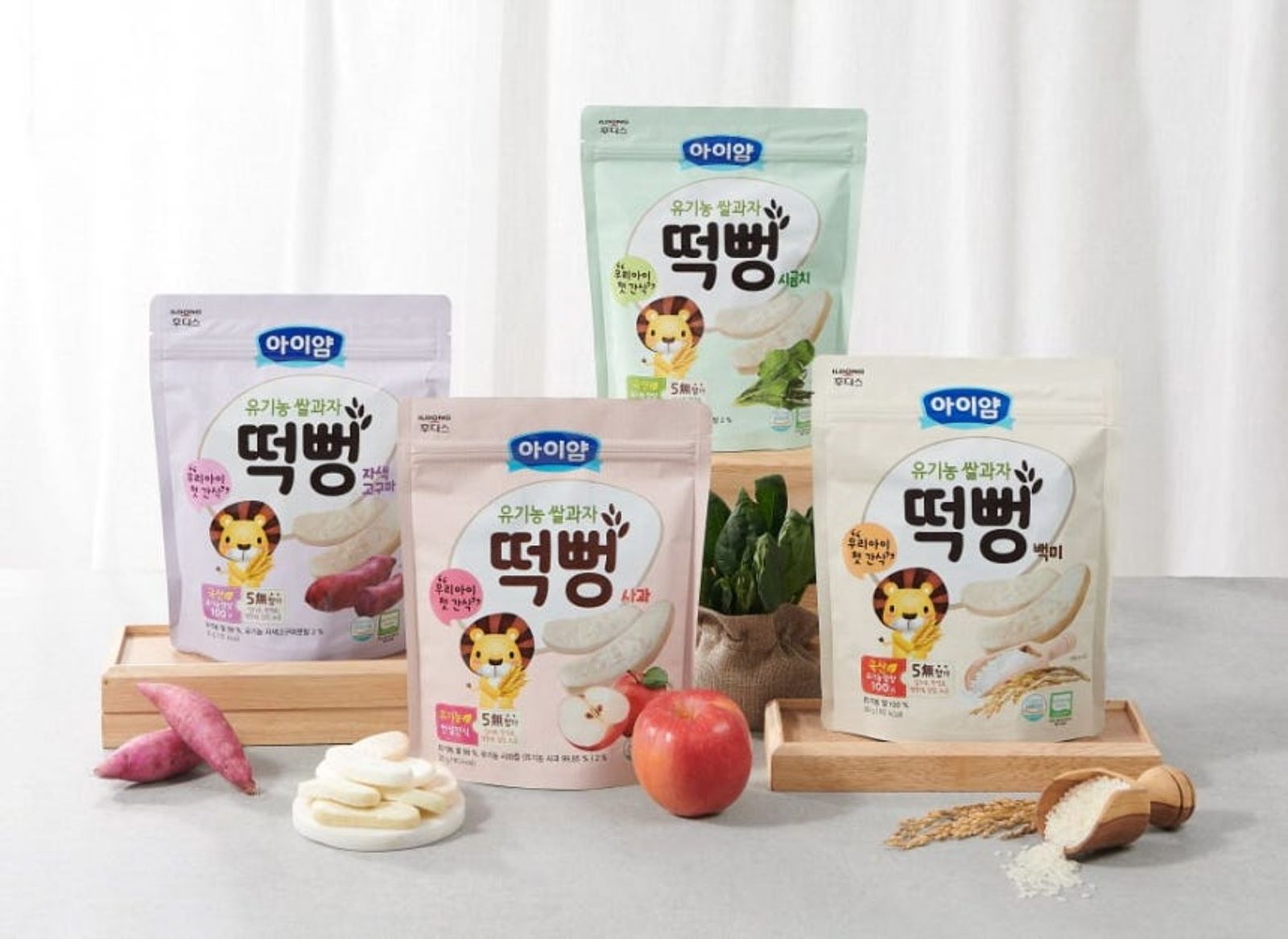
A small, featherlight rice cracker is upending South Korea's infant snack market. The product in question is the *tteokppong* — a puffed rice finger food for babies and toddlers — which has surpassed 20m in cumulative sales to become the defining product in its category. Its rise is more than a passing fad: it reflects a durable shift in consumer behaviour.
Why puffed rice, and why now?
*Tteokppong* is made by expanding rice grains under high heat and pressure. It contains no additives, dissolves easily in the mouth (reducing the risk of choking), and is well-suited to self-feeding — making it an ideal first finger food. Its alignment with Baby-Led Weaning (BLW), an approach increasingly endorsed by paediatricians that encourages infants to feed themselves rather than being spoon-fed purées, has amplified its appeal among health-conscious parents.
South Korea's infant and toddler snack market has been growing at more than 10% per year since the early 2020s. Paradoxically, a sharp decline in birth rates has not dampened spending. Instead, the so-called "gold kids" phenomenon — concentrating resources intensively on a single child — has driven per-child expenditure steadily higher. According to the Korea Agro-Fisheries and Food Trade Corporation (aT), the market for infant health foods and snacks exceeded one trillion won (roughly $750m) in 2023.
Ingredient-conscious parents built this market
The driving force behind the *tteokppong* boom is a cohort of intensely label-conscious mothers. Before making a purchase, they scrutinise ingredient lists, cross-check additives on parenting forums, and share findings across online communities. Posts about *tteokppong* number in the thousands on Naver's popular "Mum Cafés" and parenting platforms such as I Am Mom. Authentic reviews from other parents feed a virtuous cycle of repeat purchases.
"If the infant snack market was once dominated by large confectionery and beverage conglomerates, it has now been restructured around smaller specialist brands that win consumer trust through ingredient transparency," said one industry executive. That assessment is borne out by the data: *tteokppong* is led by small and mid-sized specialist producers, several of which have made organic certification the centrepiece of their marketing.
Digital channels accelerated the spread
Behind the 20m figure lies a transformation in distribution. *Tteokppong* built its following not on supermarket shelves but through Coupang (South Korea's dominant e-commerce platform), Naver Smart Store, and Instagram group-buying channels. Parents of young children rely heavily on online research, and in that environment product reviews and recommendation algorithms play a decisive role in purchase decisions.
YouTube parenting channels and Instagram influencers systematically introduced *tteokppong* as an essential snack at the weaning stage, effectively codifying it as a must-have. This is a textbook example of modern food distribution, in which content simultaneously educates consumers and drives sales.
A global trend, not a Korean quirk
The *tteokppong* phenomenon has clear international parallels. Japan's *Bikkoro*-style puffed rice snacks have long dominated the equivalent category there. In Britain, Kiddylicious, and in the United States, Happy Baby Puffs occupy similar positions in their respective markets. The common thread across all these products is threefold: simple ingredients, organic certification, and portion-friendly packaging.
Grand View Research forecasts that the global infant snack market will grow at a compound annual rate of 6.8%, reaching approximately $10bn by 2028. Against that backdrop, South Korean manufacturers are beginning to explore export opportunities — several brands have already begun selling to Korean diaspora communities in the United States and Australia.
Growing pains: price inflation and unverified claims
Rapid growth brings its own problems. As lookalike products have proliferated, quality has become inconsistent. Some brands deploy terms such as "additive-free" or "organic" in their marketing without necessarily holding the relevant food-safety certifications — a gap that consumer groups say requires tighter labelling standards and a more rigorous verification regime for infant foods.
Pricing is also contentious. A single container of *tteokppong* (approximately 40–50g) retails anywhere from 3,000 won to 8,000 won depending on the brand — a range that reflects brand premium more than meaningful differences in ingredients. Critics argue that some products sell at a steep mark-up on little more than a premium image, with no substantive difference in formulation to justify the price.
The low-birth-rate paradox
There is a striking irony at the heart of this market's growth. South Korea recorded a total fertility rate of just 0.72 in 2023, the lowest ever measured in the country. Yet per-child spending on infant products continues to rise year on year. The fewer the children, the more parents are willing to spend on each one.
This means that even as the infant population shrinks in absolute terms, the market is reorganising itself around premium, high-value products. "In a low-birth-rate era, the infant food market will be driven not by more children, but by parents who are determined to give their child the very best," said one expert in children's nutrition. The competitive battleground, in other words, is premiumisation rather than volume.
Implications
The *tteokppong* story is not simply that of a hit product. It is the convergence of three broader forces: better-informed consumers, a digital distribution infrastructure that empowers niche brands, and a heightened social sensitivity around food safety and ingredients. For manufacturers, it signals that ingredient transparency and earned trust are now the primary sources of competitive advantage. For regulators, it is a prompt to strengthen labelling requirements and quality-certification frameworks for infant food products.
Twenty million times, a South Korean parent has reached for a small puffed rice cracker. That cumulative gesture encapsulates a profound change in consumer standards — and the new market order those standards are creating.