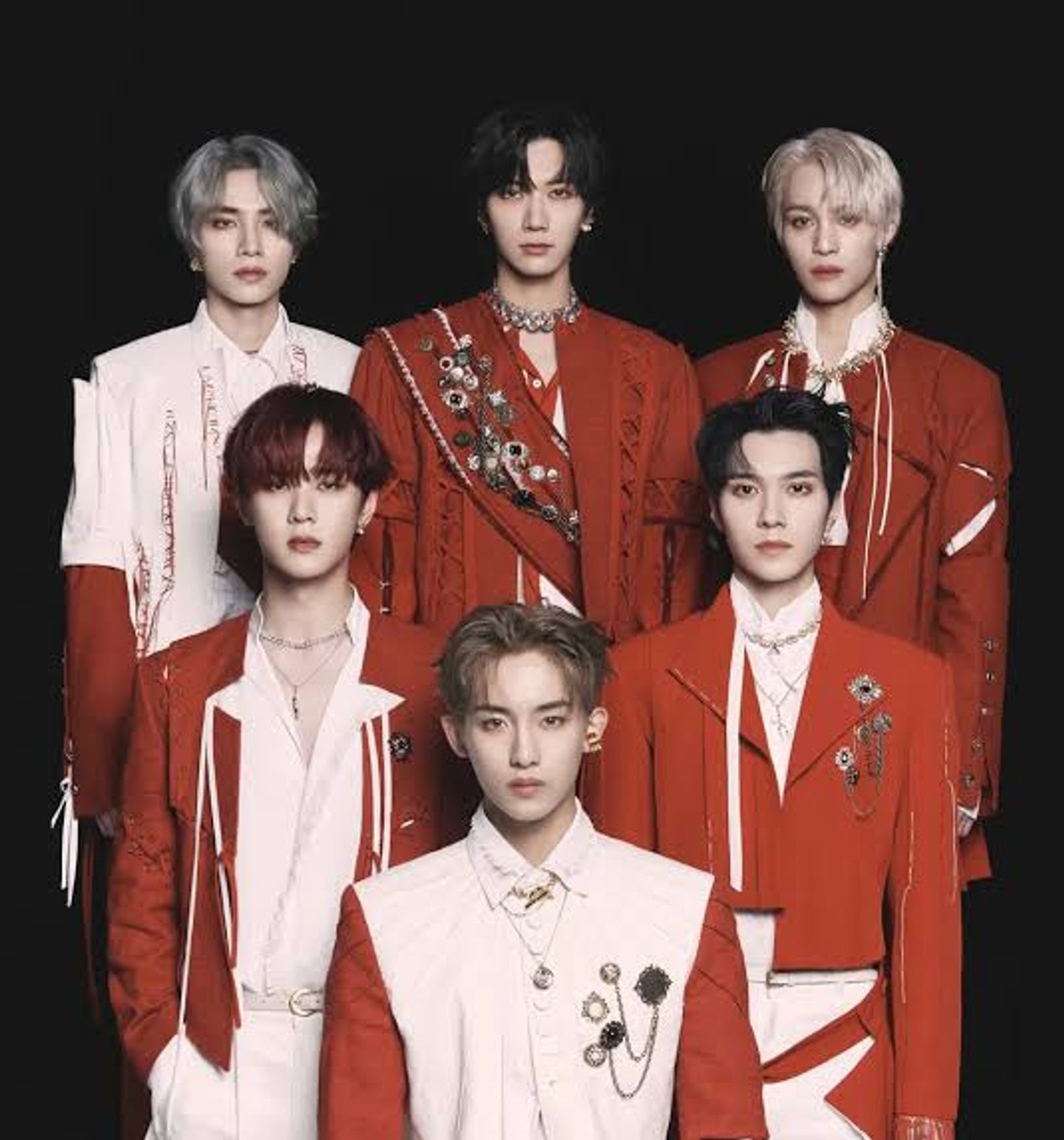
WayV (威神V) is a male group signed to Label V, a joint venture between SM Entertainment and Chinese partners. The group debuted on 17th January 2019 with seven members: Kun, Ten, WinWin, Lucas, Xiaojun, Hendery, and Yangyang. The name echoes the English word "wavy" in its pronunciation — a detail that drew early attention from fans, who noted it matched a dream recounted by member WinWin in a pre-debut documentary.
Origin story: the group that was nearly called NCT V
WayV's creation cannot be understood without reference to the geopolitical constraints bearing down on the K-pop industry. After South Korea agreed to host the American THAAD missile-defence system in 2016, China retaliated with what became known as the "hallyu ban" (한한령) — an informal but sweeping set of restrictions that effectively blocked Korean cultural content from the Chinese market. Rather than accept that barrier, SM devised a workaround: instead of sending a Korean group into China, it would build a group composed entirely of Chinese members.
Lee Soo-man, SM's founder and then chief producer, confirmed this logic publicly in a 2021 lecture at KAIST, South Korea's leading science university. He revealed that the group had originally been planned under the name "NCT V" — positioning it explicitly as the China-localised unit of SM's NCT franchise — but that the hallyu ban had forced a name change to WayV.
The original intent shows up in telling details. WayV's debut track, "Regular," was the same song as the title track from NCT 127's first studio album, including a lyric referencing "NCT" that was left unaltered. Some observers read this as SM's attempt to quietly assert the group's NCT lineage while keeping it beneath the notice of Chinese regulators. The shared universe between WayV and NCT was, in any case, built in from the start. Among fans, the group acquired the affectionate nickname "Hong Gildong" — the protagonist of a Korean folk tale who is forbidden from calling his father his father — a shorthand for a group that could not publicly claim its own parentage.
Personnel changes, and a new album after eight months
Despite being conceived as a fixed-lineup group, WayV has experienced unusual membership instability. In August 2021, Lucas suspended activities following allegations of dating multiple women simultaneously and of emotionally manipulative behaviour; he formally departed in May 2023. WinWin, who had concentrated on solo activities in China, stopped participating in WayV's albums and schedules once the group began shifting its focus to South Korea in 2024, and left entirely when his contract expired in 2026. The group now operates as a five-member unit: Kun, Ten, Xiaojun, Hendery, and Yangyang.
Against this backdrop, WayV released its eighth mini-album, *Vision Wings*, on the 10th of this month — its first new material in eight months, following a winter special album in December last year. The seven-track record centres on the title song "鸢" (*Vision Wings*, meaning "kite"), which appears in both Chinese and English versions. The album's concept is built around six Chinese homophones — 鸢 (kite), 源 (origin), 圆 (wholeness), 元 (beginning), 愿 (wish), and 园 (paradise) — each assigned to a separate track. Identical in sound but distinct in meaning, they are presented as a set of interlocking ideas about the essential forces that drive the group. WayV has also announced a solo concert tour, "BORN THIS Way," at KBS Arena in Seoul on 12th and 13th September.
The harder question: what happens when the ban fades?
WayV's founding rationale was always straightforward: use a group of Chinese members to reach a market that Korean acts could not enter. But the core premise of that strategy has grown shakier in recent years. WinWin, the member most closely identified with WayV's China-facing mission and the most visible embodiment of the group's original purpose, has now left. Combined with Lucas's earlier exit, the seven-member lineup that debuted with such deliberate intent looks increasingly distant from what was first imagined.
The group's growing orientation towards the South Korean market adds another layer of irony. The pivot suggests that its founding identity — as a vehicle specifically designed for China — has gradually diluted over time. Seen in that light, the new album's insistence on Chinese wordplay and homophonic layering reads as something more than a creative conceit: it looks like an attempt by the group to reaffirm, to itself as much as to anyone, what makes it distinctive.
WayV was born of an unusual historical moment. Whether it can sustain a compelling and independent identity now that the moment which created it is passing is the question that will define its next chapter.