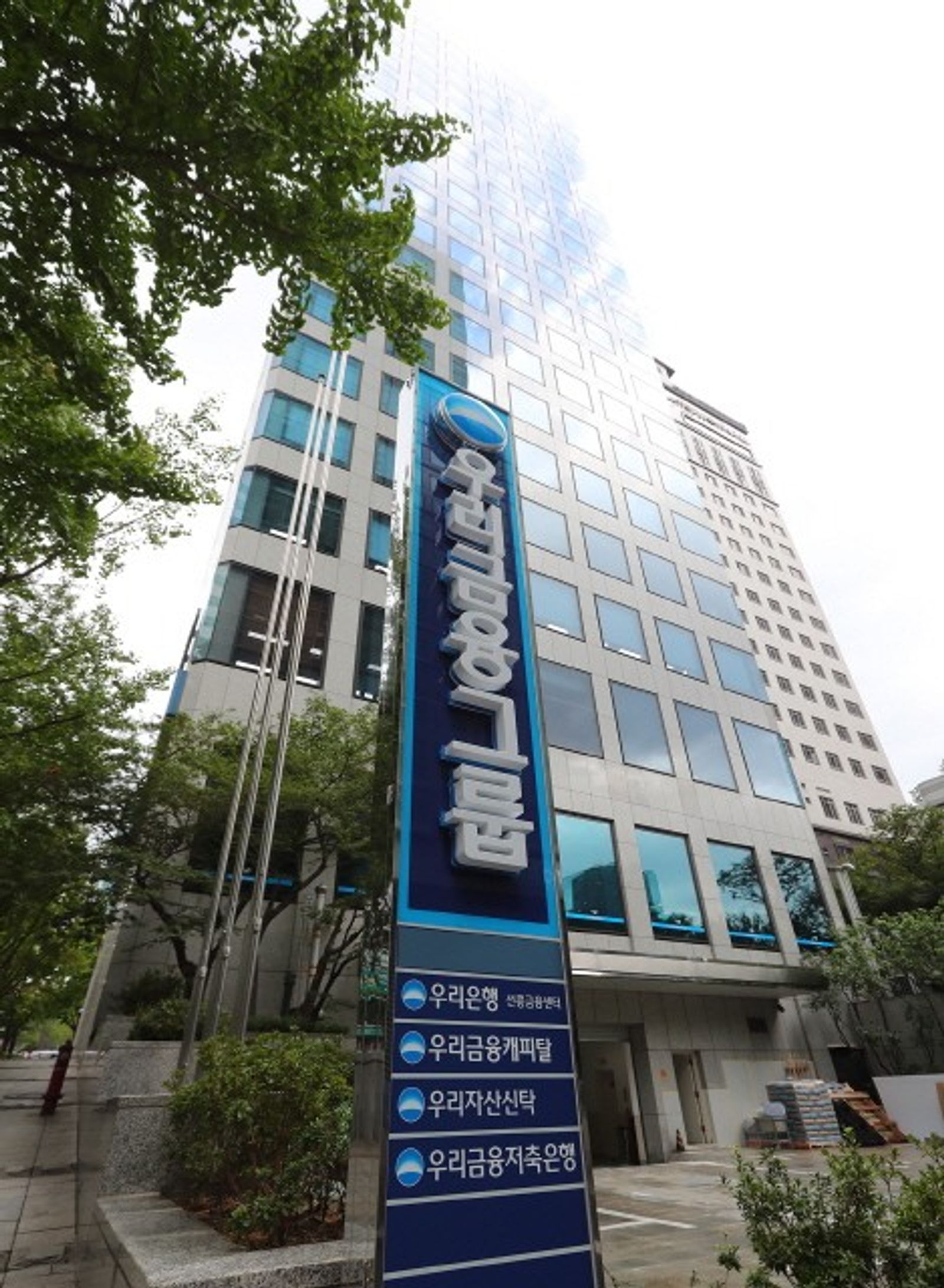
Company Overview
Woori Financial Group, whose crown jewel is Woori Bank, is one of South Korea's four major financial holding companies. Since its re-listing as a privatised entity in 2019, the group has carried the twin burdens of completing its transition to full private ownership and rebuilding its credibility with capital markets. By 2023, total assets had surpassed 500 trillion won, cementing its place among the country's largest lenders — yet its price-to-book ratio (PBR) had languished between 0.3 and 0.4 times for years, making it a textbook casualty of the so-called "Korea discount."
The formal debate over shareholder value — known domestically as the "value-up" agenda — was ignited in late 2023, when financial regulators began pressing banks to strengthen their capital ratios, and gathered force in early 2024 when the government launched its corporate value-up programme. The arrival of chairman Lim Jong-ryong brought a further shift in tone: under his leadership, Woori formalised a twin-track strategy of share buybacks and cancellations alongside higher dividends. The group's persistently low Common Equity Tier 1 (CET1) ratio, however, remains the binding constraint on shareholder returns, and market scepticism has not yet been fully dispelled.
Business Foundation and Financial Performance
A revenue model built on Woori Bank
Woori Financial's earnings are heavily concentrated in its banking subsidiary. Interest income accounts for more than 80% of group operating profit, making results acutely sensitive to interest-rate movements. The high-rate environment of 2022–23 widened net interest margins (NIM) to record levels, but as South Korea entered a rate-cutting cycle from 2024, profit growth has begun to moderate.
The non-banking portfolio — comprising Woori Card, Woori Financial Capital, and Woori综合金融 (a short-term credit finance unit) — is considerably thinner than that of rivals KB Financial, Shinhan Financial, and Hana Financial Group. This structural gap is widely seen as a vulnerability. To address it, Woori has been pursuing the acquisition of two mid-sized insurers, Tongyang Life and ABL Life, in a bid to diversify revenue.
Annual financial performance
Year | Net profit | Operating profit | DPS (dividends per share) | Total shareholder return ratio
2021 | c.2.6tr won | c.3.2tr won | 600 won | c.25%
2022 | c.3.1tr won | c.3.8tr won | 1,000 won | c.30%
2023 | c.2.5tr won | c.3.3tr won | 1,000 won | c.33%
2024 | c.2.7tr won | c.3.5tr won | 1,050 won | c.35%
2025 (est.) | c.3.0tr won | c.3.7tr won | 1,100 won (est.) | c.40% (target)
*Note: Some figures are based on disclosed data; estimates are included.*
CET1: the critical variable
When assessing Woori's ability to deliver on its value-up commitments, investors focus primarily on one metric: the CET1 ratio. At end-2024, Woori's CET1 stood at roughly 12.0%, below KB Financial (above 13%) and Shinhan Financial (upper end of the 12% range). Reporting from June 2026 indicates that Woori has set itself the target of lifting its CET1 by 70 basis points (0.7 percentage points) year-on-year — a threshold the market regards as a prerequisite for any significant acceleration in share cancellations.
Value-Up Timeline
2022 — Chairman Lim takes the helm; shareholder returns declared a priority
Upon taking office, Chairman Lim Jong-ryong placed "enhancing shareholder value" at the centre of his management agenda. His early commitment to stepped-up engagement with domestic institutional investors and foreign shareholders raised market expectations.
2023 — Quarterly dividends introduced; buyback programme launched in earnest
Woori introduced a quarterly dividend structure in 2023, providing investors with greater consistency and predictability of income. The group simultaneously began a more systematic share repurchase programme, establishing a dual-return framework of dividends and buybacks. The public debate over the government's corporate value-up programme, which gathered momentum that year, further intensified competition among the major financial groups on shareholder returns.
March 2024 — Government value-up programme announced; bank stocks in the spotlight
When the Financial Services Commission and the Korea Exchange formally unveiled the corporate value-up programme, bank shares — quintessential low-PBR stocks — attracted an immediate surge of interest. Woori was reported to have begun preparing a group-level value-up plan, with reaching a PBR of 1.0 times set as a medium-to-long-term aspiration.
Second half of 2024 — Cancellation plan crystallises; 35% return ratio targeted
In the second half of 2024, Woori set out a phased schedule for cancelling treasury shares and publicly committed to pushing its total shareholder return ratio to 35%. The strategy combined a stable dividend payout with incremental buyback-and-cancellation activity to grow overall returns.
2025 — Industry-wide buyback race intensifies; aggregate cancellations reach 2.3 trillion won
The pace of share cancellations across South Korea's financial holding companies accelerated sharply in 2025. According to Money Today's reporting in April 2026, the four major financial groups collectively cancelled 2.3 trillion won worth of shares during 2025, with a 50% shareholder return ratio set as a shared medium-term ambition. Woori participated in this competitive dynamic, repeatedly affirming its commitment to expanding returns even as its CET1 deficit relative to peers acted as a brake.
March 2026 — Tongyang Life and ABL Life acquisition triggers minority shareholder dispute
Woori pursued a comprehensive share-swap arrangement to acquire Tongyang Life and ABL Life, marking its entry into the insurance sector. The move was met with fierce resistance from Tongyang Life minority shareholders, who argued that the exchange ratio was set unfairly against their interests. In June 2026, Woori publicly pledged to strengthen shareholder returns as part of its response to the discontent, and filed an amended disclosure raising the share purchase price by 10% — though some observers questioned whether the concession was sufficient to fully resolve the dispute.
June 2026 — CET1 improvement target and buyback linkage made explicit
Multiple financial news outlets reported in June 2026 that Woori had formally identified lifting its CET1 ratio by 70 basis points as its primary capital management task. The market understood this to mean that large-scale additional cancellations would remain off the table until the CET1 gap had been narrowed. Chairman Lim simultaneously undertook overseas investor-relations roadshows, meeting institutional investors in Japan and Taiwan to communicate the group's commitment to shareholder returns.
July 2026 — Prospect of additional 350 billion won buyback emerges
Reports in early July 2026 indicated that Woori was considering a further share repurchase worth 350 billion won. The move was interpreted as an effort to accelerate progress on closing the CET1 gap and to demonstrate commitment to its shareholder return schedule. Competition among the major financial groups on value-up measures is expected to intensify further in the second half of the year.
Challenges and Assessment
Key challenges ahead
Three priorities stand out.
First, a genuine improvement in the CET1 ratio. The estimated 70–100 basis point shortfall relative to leading peers is the structural obstacle to expanding returns. Reducing risk-weighted assets and accumulating internal capital to close this gap is the precondition for credible value-up execution.
Second, broadening the non-banking revenue base. The proposed acquisition of Tongyang Life and ABL Life could provide meaningful income diversification through insurance, but as the minority shareholder dispute has illustrated, managing governance risk during M&A processes must go hand in hand with the acquisition itself.
Third, navigating macro headwinds, particularly the exchange rate. As noted in reporting from June 2026, a persistently weak won presents an awkward complication: a higher won-dollar exchange rate inflates the Korean-won value of foreign-currency risk-weighted assets, mechanically pushing the CET1 ratio lower and constraining the pace of buybacks and cancellations.
Overall assessment
The direction of Woori's value-up effort is broadly endorsed by the market. The adoption of quarterly dividends, the public commitment to share cancellations, and the intensified overseas investor-relations activity all represent genuine steps towards a more shareholder-friendly posture. Yet in terms of speed and scale, the gap between Woori and the front-runners — KB Financial and Shinhan Financial — has not meaningfully narrowed. As of July 2026, Woori's share price continues to underperform the broader KOSPI index, reflecting a market view that the value-up programme has so far delivered less than investors had hoped.
Controversies and Structural Limitations
Underwhelming sector-wide results
Reporting from early July 2026 noted that while the KOSPI index had nearly doubled over several years, Korean bank stocks had risen by only about half as much. This underperformance exposes both the limitations of the value-up programme itself and the deep-seated structural forces that keep bank valuations depressed: regulatory capital requirements, provisioning obligations, and tightening household-debt rules all conspire to suppress any meaningful re-rating.
The Tongyang Life dispute and governance concerns
The shareholder friction that erupted during the Tongyang Life and ABL Life acquisition process in the first half of 2026 raised fresh questions about Woori's corporate governance. Minority shareholders contended that the share-swap ratio had been constructed to their disadvantage. Woori's response — a 10% uplift in the share purchase price — was viewed by some as inadequate. More broadly, the episode stoked concern that the simultaneous pursuit of acquisitions and shareholder returns creates an unresolved tension over capital allocation priorities.
The structural CET1 dilemma
The CET1 shortfall relative to peers is not a problem that can be solved quickly. Aggressive share cancellations directly erode the capital base, pushing the CET1 ratio lower — meaning that Woori faces a persistent dilemma between the twin objectives of expanding shareholder returns and maintaining an adequate capital buffer. Until this structural tension is resolved, market specialists broadly agree that achieving a shareholder return ratio comparable to leading competitors will remain out of reach.
The exchange-rate wildcard
The sustained strength of the dollar against the won through mid-2026 has emerged as an unwelcome external variable. A higher exchange rate automatically expands the won-denominated value of dollar-denominated risk-weighted assets, depressing the CET1 ratio without any change in the underlying business — adding a layer of unpredictability to Woori's value-up delivery timeline.
Key Metrics Summary
Year | DPS | Buybacks/Cancellations | Operating profit (est.) | PBR (x) | CET1 (%)
2021 | 600 won | Minimal | c.3.2tr won | c.0.28x | c.11.0%
2022 | 1,000 won | Repurchases begun | c.3.8tr won | c.0.33x | c.11.5%
2023 | 1,000 won | Repurchases stepped up | c.3.3tr won | c.0.35x | c.11.8%
2024 | 1,050 won | Cancellations expanded | c.3.5tr won | c.0.38x | c.12.0%
2025 (est.) | 1,100 won | 350bn won + additional | c.3.7tr won (est.) | n/a | 12.7% (target)
*Total shareholder return ratio: c.35% in 2024 → c.40% in 2025 → 50% as medium-to-long-term target. PBR figures are estimates based on year-end closing prices and may differ from formally disclosed data.*